An Asteroid Grew a Tail, and Ice Is One of Two Suspects
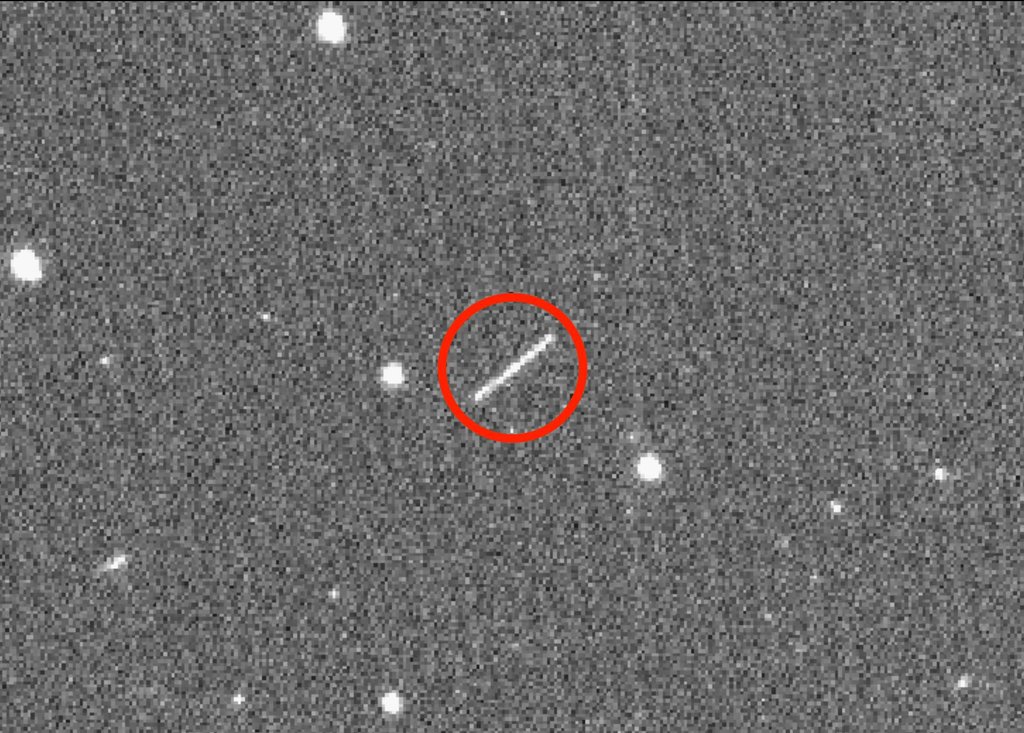
A machine learning filter running on the Zwicky Transient Facility's nightly alert stream flagged a tail on asteroid 6993 (1995 BJ4) on Aug. 5, 2026. Erin Clark of Northern Arizona University and colleagues report the object as newly active, an asteroid that is shedding dust the way a comet does.
Writing in The Astrophysical Journal Letters, the team says it built the detection tools for the far larger nightly data volumes expected from the Vera C. Rubin Observatory, and has been using the Zwicky Transient Facility as a testbed. Fewer than 100 active asteroids are known, the paper states, a sample the authors call too small to establish what drives the activity.
The same tail shows up in earlier survey images, in exposures from that survey and from ATLAS (as early as June 25, 2026), pointing away from the Sun. The authors argue rotation is unlikely to be the main driver. The spin period they measured from earlier observations, about 3.9 hours, is well short of the roughly 2.2 hours at which a body this size starts flinging material off its surface. That leaves two candidates in their account: an impact or sublimation (ice turning straight to gas as the asteroid warms).
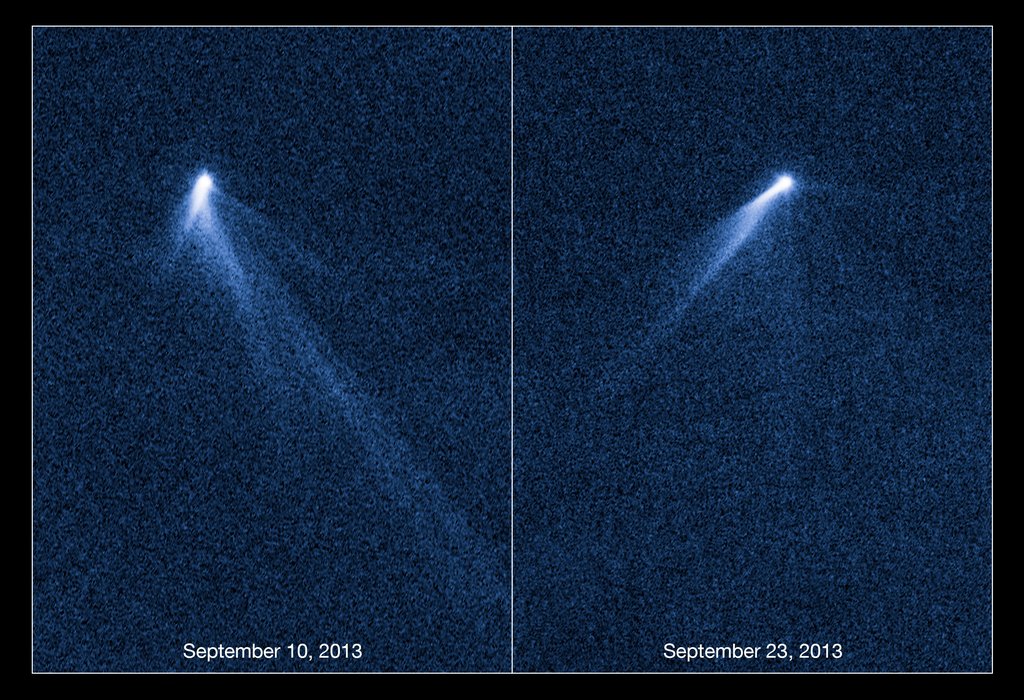
If sublimation is the driver, the authors write, 6993 would be the largest known main belt comet, the term for an asteroid whose tail comes from its own ice. It is 11.85 km across, and it would be the member of that group orbiting farthest from the Sun. Its surface also reflects more light than the main belt comets the authors compare it with, which they say does not fit the dark class the object had been assigned from its color.
The asteroid reaches its closest approach to the Sun in January 2027. It has dimmed since July, which the authors call plausible evidence for an impact; a tail that instead strengthens as the asteroid nears the Sun would, they write, support ice.
Sources
- The Astrophysical Journal LettersPeer-reviewed
- arXivPreprint