Lab-Grown Human Brain Tissue Filled the Cortex of Mice Bred Without One
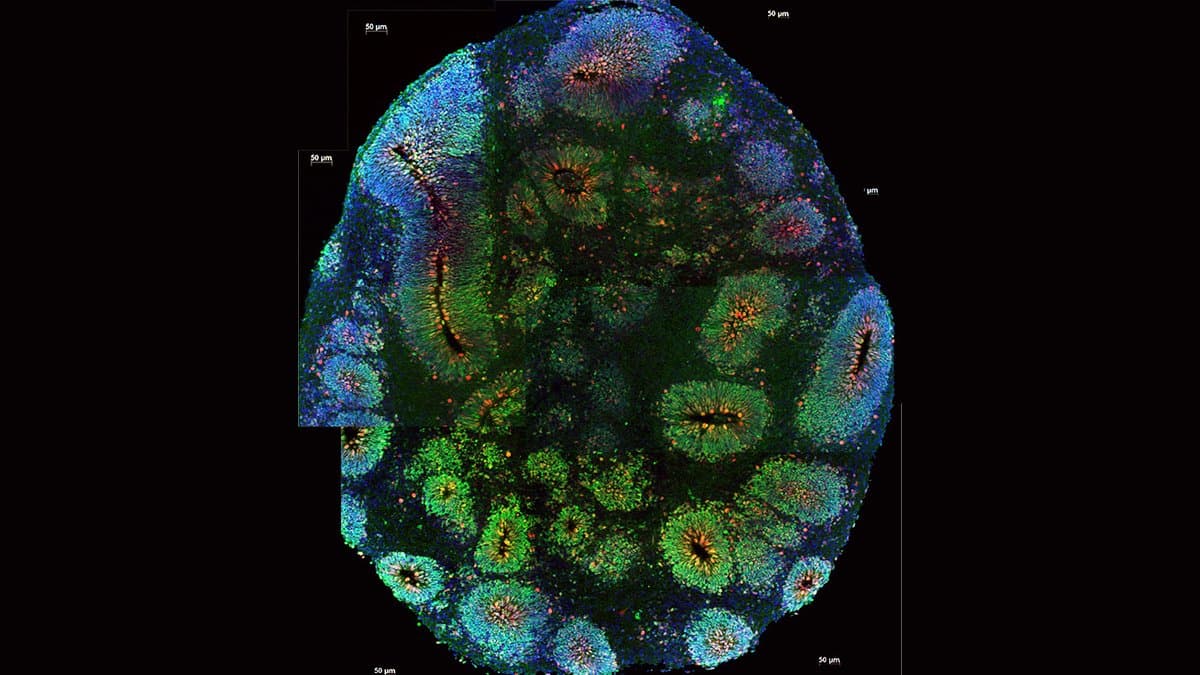
Mice bred without a neocortex grew a substitute made of human cells. A team at Stanford University genetically deleted the neurons that build the mouse neocortex and hippocampus, then transplanted four human cortical organoids, clusters of brain tissue grown from reprogrammed human stem cells, into the empty cortical cavity of each newborn animal.
The point is to remove the competition a human graft faces in an intact rodent brain. Writing in Nature on Sept. 16, Konstantin Kaganovsky, Sergiu P. Pașca and colleagues say they expect the method, which they call xenocortication, to be useful for reading circuit activity and behavior from human neurons to study development, model disease and test treatments.
Three months after transplantation, MRI put the human graft at 91.9% of the animals' combined cortical tissue volume, measured in seven mice. Grafts took in 86.2% of the 29 transplanted animals. The human tissue produced a range of cortical cell types, sent fibers as far as the spinal cord, and showed organized activity across the whole graft that the authors compare to developing circuits. Neurons of the amygdala and piriform cortex survived the deletion.
Grafted, cortex-free and normal mice all moved at similar rates in an open chamber and on a gait-recording walkway with differences in how the animals coordinated their paws. Mice without a cortex were impaired on a working-memory task, a pattern only partly seen in the grafted group.
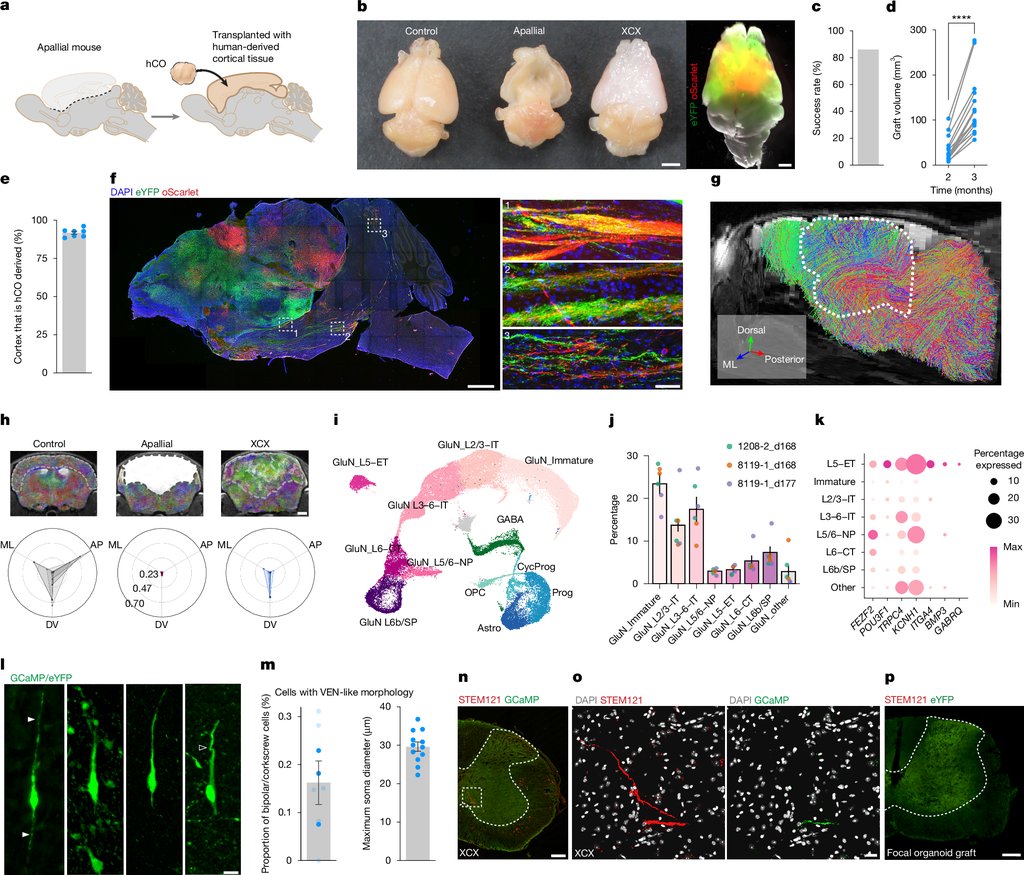
Held at 5% oxygen for five hours, three of three grafted mice showed a marker of oxygen shortage in the human tissue but not in neighboring mouse tissue, and two days later put more paws on the ground while walking than before.
The paper's ethics statement records consultation with bioethicists at Stanford, review by the Stanford Neuroscience Institute Executive Committee and an external independent ad hoc ethics committee, with "the possibility of altered or improved capacities in the experimental mice" among the topics discussed. The authors recommend that future work with the model be done "in close consultation with ethicists in designing, conducting, interpreting and communicating this work."
Sources
- NaturePeer-reviewed