In Mouse Embryos, the Brain Starts From Two Cell Groups, Not One
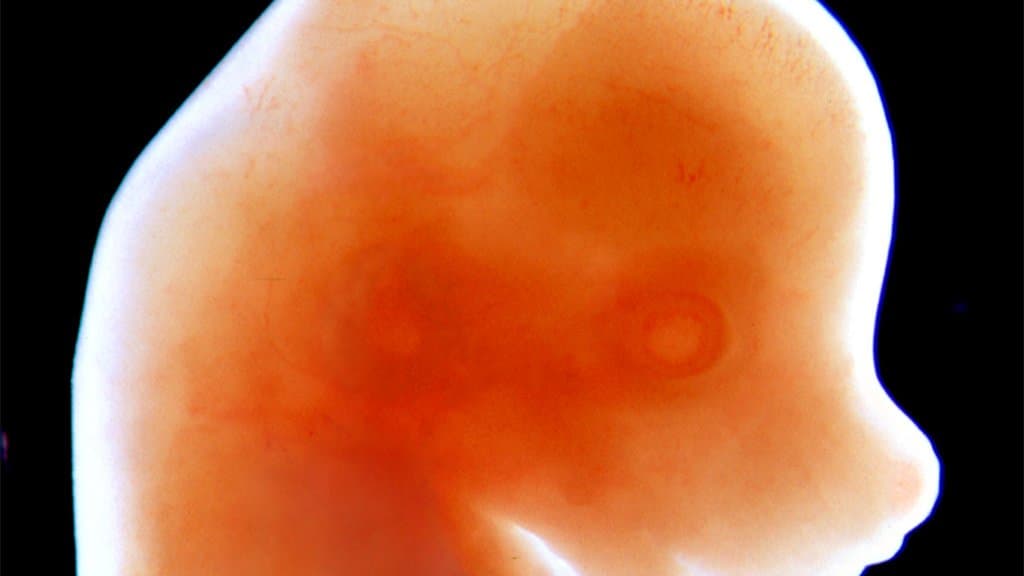
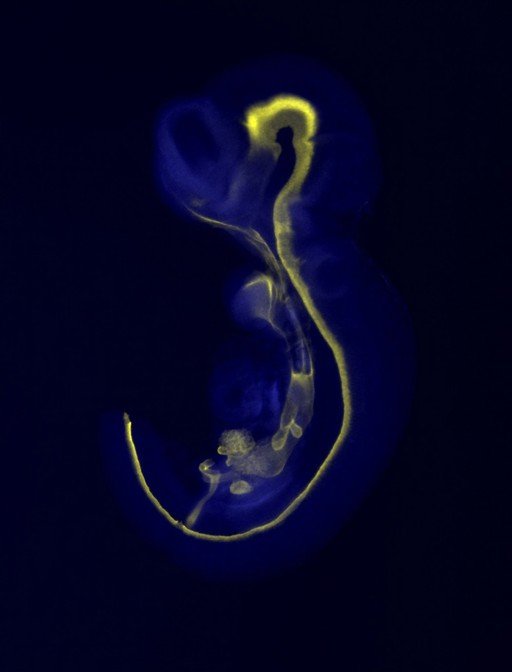
Lineage tracing in mouse embryos supports a picture in which the brain grows from two separate founder cell populations rather than one, Rayyan T. Jokhai, Kyle M. Loh and colleagues at Stanford University report in Nature Neuroscience. The two appear at the same time during gastrulation, an early embryonic stage. By following what each cell became, the team found one population committed to the forebrain and midbrain and the other to the hindbrain.
The work also produced something usable. From human pluripotent stem cells, which can be steered into different tissues, the group generated motor neurons belonging to a single segment of the hindbrain, rhombomere 5/6. The paper says such cells had been difficult to generate in a dish.
The human arm of the work is cell culture, not embryos. Steered toward one founder state or the other, the stem cells were already locked to matching fates: forebrain and midbrain for one, hindbrain for the other. The two also differed in which stretches of DNA lay open for the cell to read, patterns that already pointed to the brain regions each was headed for.
The paper appeared on September 18, 2026, and opens by calling the question unresolved: whether one founder population generates the whole brain or several exist, each restricted to certain regions. Its mouse data support the second. On that basis the authors postulate that the brain is a composite organ growing out of two lineage-restricted progenitors. They write that the pair may be evolutionarily conserved across 550 million years, from hemichordates, a group of marine worms, to mammals.
Sources
- Nature NeurosciencePeer-reviewed