A Single Molecular Cut Separates Blood Vessel Growth From Inflammation in Mice
Mice engineered so that a piece of one blood vessel protein can no longer be cut away grew normal blood vessels but reacted far less to inflammation, researchers at Heidelberg University and the German Cancer Research Center report. Their findings appear in a research letter, a short-format report, published on Oct. 1, 2026, in the Journal of Clinical Investigation.
The protein, Tie1, sits on the cells that line blood vessels, and it has been linked to two jobs at once: helping new vessels grow, and switching vessels into an inflamed state that lets immune cells cross into surrounding tissue. Because the two functions occurred together, it was hard to say which effects belonged to which. The mouse pulls them apart, and the authors propose that the cutting step itself could be a way to damp down inflammation in blood vessels without disturbing vessel growth.
The letter identifies a single spot on mouse Tie1, labeled R747, where the protein is cut during inflammation, and describes a mouse line altered so that the cut cannot be made. The authors report that these mice were born in the expected proportions with no developmental abnormality. They grew up with normal vessel growth and support-cell coverage in the retina, no difference in lifespan, and tumor vessels comparable to unaltered animals.
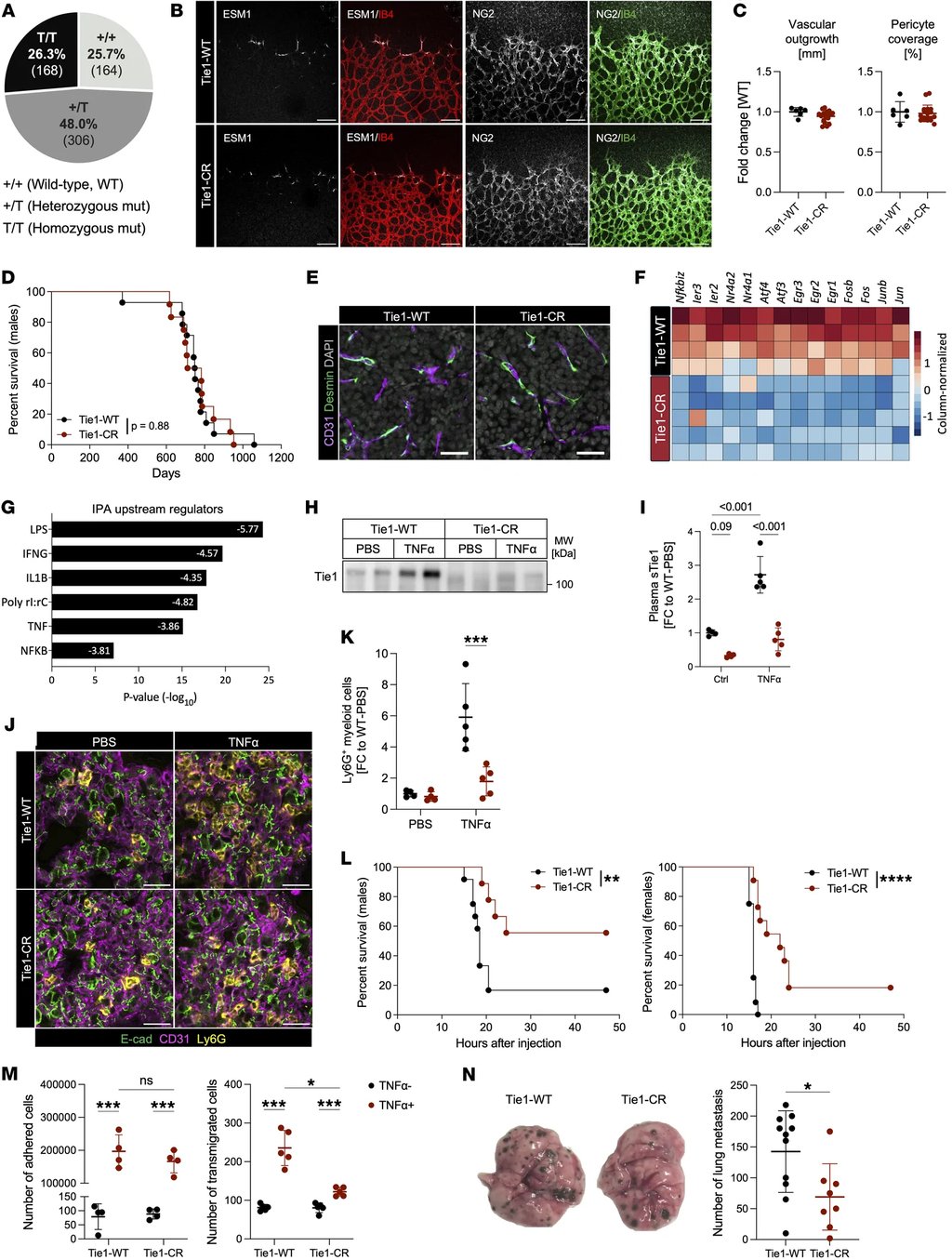
Given an inflammatory signal or a bacterial toxin, the altered mice behaved differently. Far fewer immune cells accumulated in their lungs, and both male and female altered mice survived longer after the toxin than unaltered ones did. In cell assays, immune cells and tumor cells crossed the altered vessel lining less readily, and the mice developed fewer lung tumors after melanoma cells were injected into the bloodstream.
Sources

Medical Disclaimer: This content is provided for general informational and educational purposes only. It is not medical advice and should not be used as a substitute for professional medical advice, diagnosis, or treatment. Always consult a qualified healthcare professional regarding any medical condition, concern, symptom, or treatment decision.