A Fish's Side Fins Need a Genetic Switch Its Midline Fins Can Do Without
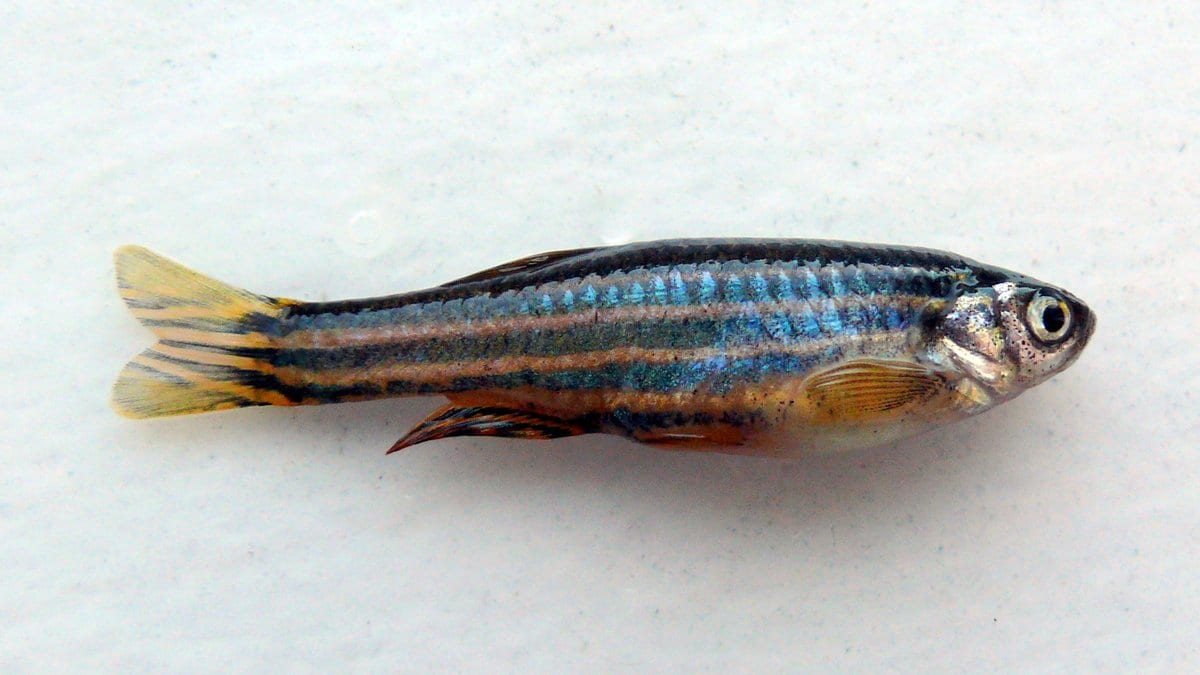
Researchers at Monash University deleted two enhancers, or DNA switches, that turn on the gene lmx1bb in zebrafish, and report that the fish's paired fins failed to develop a distinct top and bottom while the single fins along its back and underside formed normally.
Paired fins and the limbs that descend from them are asymmetric from top to bottom; the fins along a fish's midline are symmetric and have no such axis. The paper appeared Nov. 10, 2026, in PLOS Biology, and it asks whether the paired fins pattern that axis with a program borrowed from the midline fins or with one of their own.
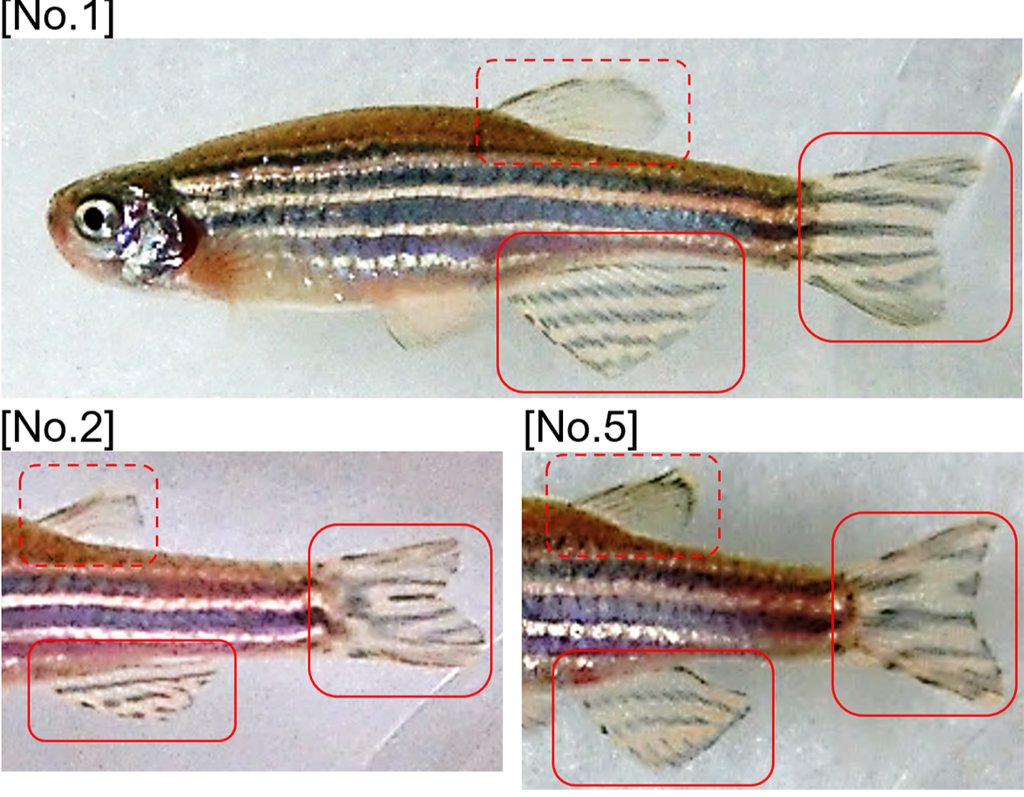
Rebecca E. Dale, Peter D. Currie and colleagues at Monash University's Australian Regenerative Medicine Institute used CRISPR-Cas9 to delete LARM1, LARM2 or both from the DNA upstream of lmx1bb, next to a fluorescent reporter of the gene's activity. Deleting LARM1, or both switches together, cut the reporter signal sharply in the developing pectoral and pelvic fins, and deleting LARM2 alone did not reduce it significantly. None of the deletions significantly changed the signal in the dorsal or anal fins.
Micro-CT scans of sub-adult fish showed that in all five fish missing both switches, the upper half of each pectoral fin ray carried the sawtooth outline that wild-type fish have only on the lower half. In the pelvic fins, the upper halves lost their outward curve. The dorsal and anal fins showed no difference in ray number or shape.
The authors also report LARM1 sequences in ray-finned and cartilaginous fishes and LARM2 sequences, previously proposed to be unique to lobe-finned fishes, in ray-finned fishes. They say the results argue against models in which paired fins simply took over a genetic program already running in the midline fins, and they suggest that gaining this module may have been an early step in the evolution of the paired fins' top-to-bottom axis.
The paper notes that a separate team, Hawkins and colleagues, has dissected the same enhancers in zebrafish, and says the two sets of results broadly agree.
Sources
- PLOS BiologyPeer-reviewed