Grasses Have Two Ways to Make Starch. Their Closest Non-Grass Relative Has One.
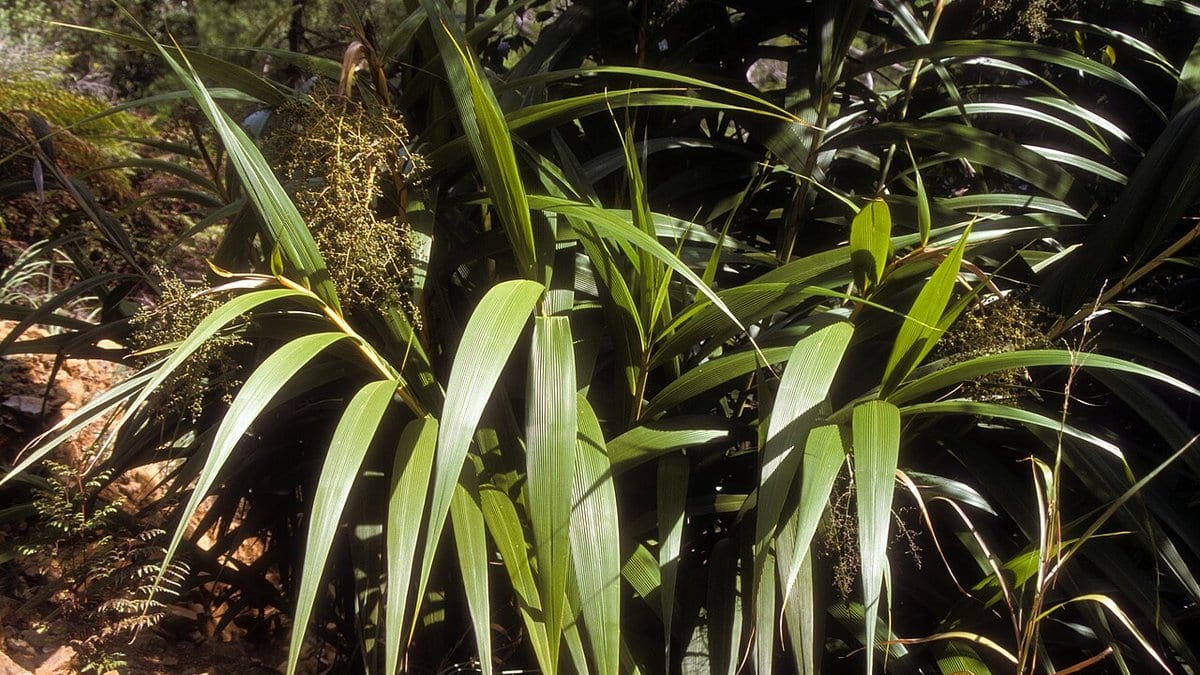
Grasses carry two separate chemical routes for making starch, and their closest non-grass relatives carry only one, according to a University of Wisconsin–Madison release describing a paper published Aug. 20 in Science.
The study places that second route at the common ancestor of all grasses, about 100 million years ago, and says it allows grasses to "produce double the amount of energy" that Joinvillea and other non-grass plants do. It calls the extra route a metabolic "bypass."
The work was led by Hiroshi Maeda, a professor of botany at UW–Madison, with James Leebens-Mack of the University of Georgia and collaborators elsewhere. The team sequenced the genome of Joinvillea ascendens, a slow-growing, long-leafed plant of wet forests in the South Pacific islands, along with three related species, then compared thousands of genes in those genomes against grass genomes. The paper is listed on the release as "Genomes of Poaceae sisters reveal key metabolic innovations preceding the evolution of grasses."
Lignin, the compound that gives plant tissue its structural stiffness, came out the other way. Both grasses and Joinvillea have two routes for making it, so the duplication predates grasses. "It turned out, this unique feature of grasses, capable of synthesizing lignin by two routes, evolved even before grasses existed," Maeda explained. He also said the team found "two mutations in their DNA that are critical and sufficient to create this new bypass pathway," and that similar mutations could be introduced into other plants.
Maeda states the link to the group's spread as a likelihood rather than a demonstration. "That likely gave a competitive advantage to grasses to grow in open habitat, where a lot of plants would love to grow because of all the sun," he said.
Obtaining the plants was slow. Only two of more than 100 Joinvillea seeds from the National Tropical Botanical Garden in Hawaii germinated at first, and those took another two years to grow large enough to harvest for sequencing.
Sources
- www.science.orgPeer-reviewed