Two Atomic Clocks Were Checked Against Each Other, and They Agreed
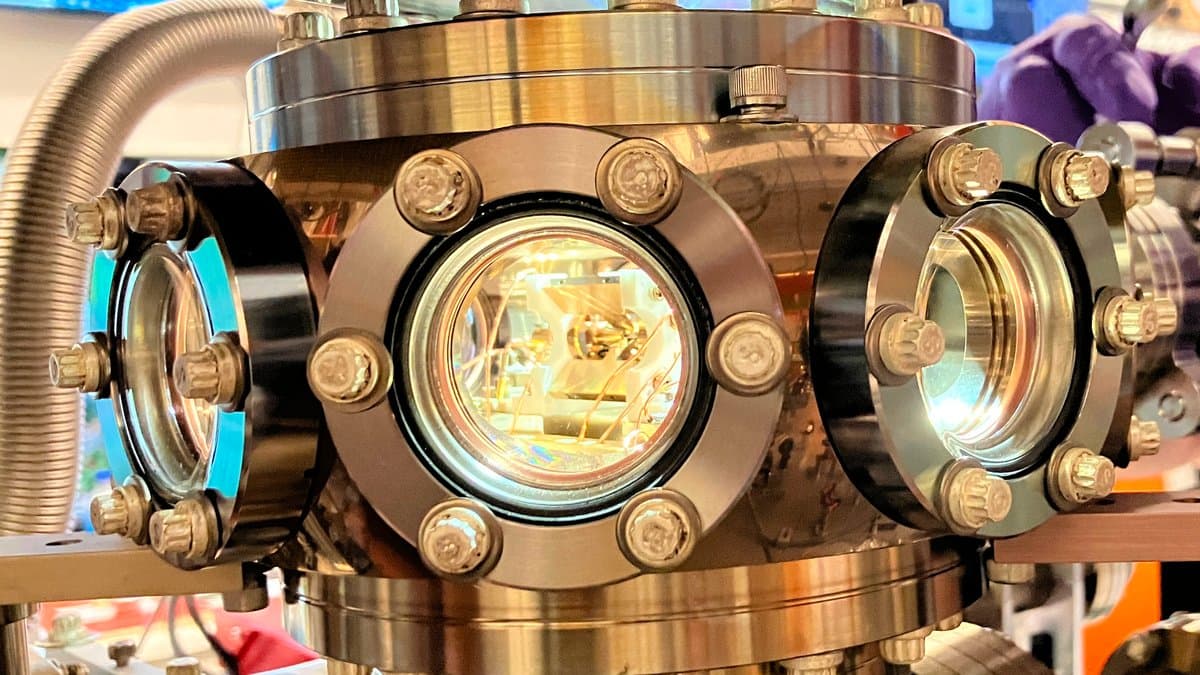
Two optical clocks built around single lutetium-176 ions have been compared directly against each other, and they agree down to the 19th digit, a group at the National University of Singapore reported on September 23 in Nature.
That works out to roughly one part in 10 billion billion, which is also the level to which each clock's own sources of error had been evaluated. The paper calls a comparison of one clock against an independent copy of itself at that precision an outstanding challenge, and it matters now because the international community is working toward a redefinition of the second around optical standards rather than the microwave ones in use today.
K. J. Arnold, M. D. Barrett and colleagues at the university's Centre for Quantum Technologies put the measured difference between the two at −0.1 × 10⁻¹⁹, with a statistical uncertainty of 5.7 and a systematic uncertainty of 1.0 in the same units. That is the weighted mean of 11 runs totaling 200 hours. The ions sit in two vacuum chambers and are probed by one shared laser. The team compared them by correlation spectroscopy, which cancels the laser's noise, so the number describes the atoms, not the laser.
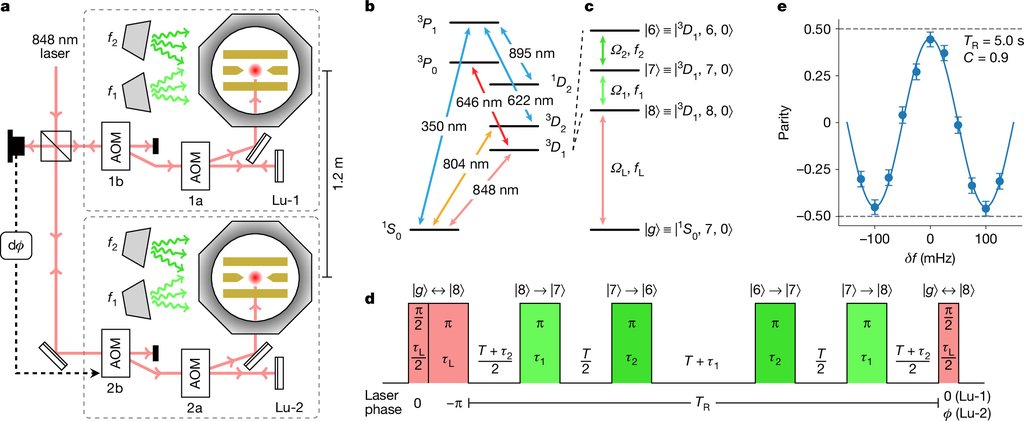
The authors put each reference's evaluated uncertainty at a fourfold improvement on the lowest previously reported, and credit the lutetium ion itself: the transition they use is less sensitive to surrounding heat radiation and magnetic fields than those in any other established clock system, and the ion is heavy enough that motion shifts it less. Both clocks run at room temperature.
The paper names what it expects that accuracy to be good for: international timekeeping, and measuring height differences of a few millimeters from the rate at which a clock ticks. It also lists tests of fundamental physics, among them searches for dark matter and for drifts in the constants of nature.
Sources
- NaturePeer-reviewed