Two Brains Fall Into Step When Strangers Draw Together, a Small Study Finds
Two people drawing together show more closely matched brain activity than when they draw alone, and that coupling moves in opposite directions over six sessions depending on whether the pair are the same age, a team at ETH Zurich reports in PLOS Biology. The paper was published Aug. 20, and its authors describe the work as "exploratory."
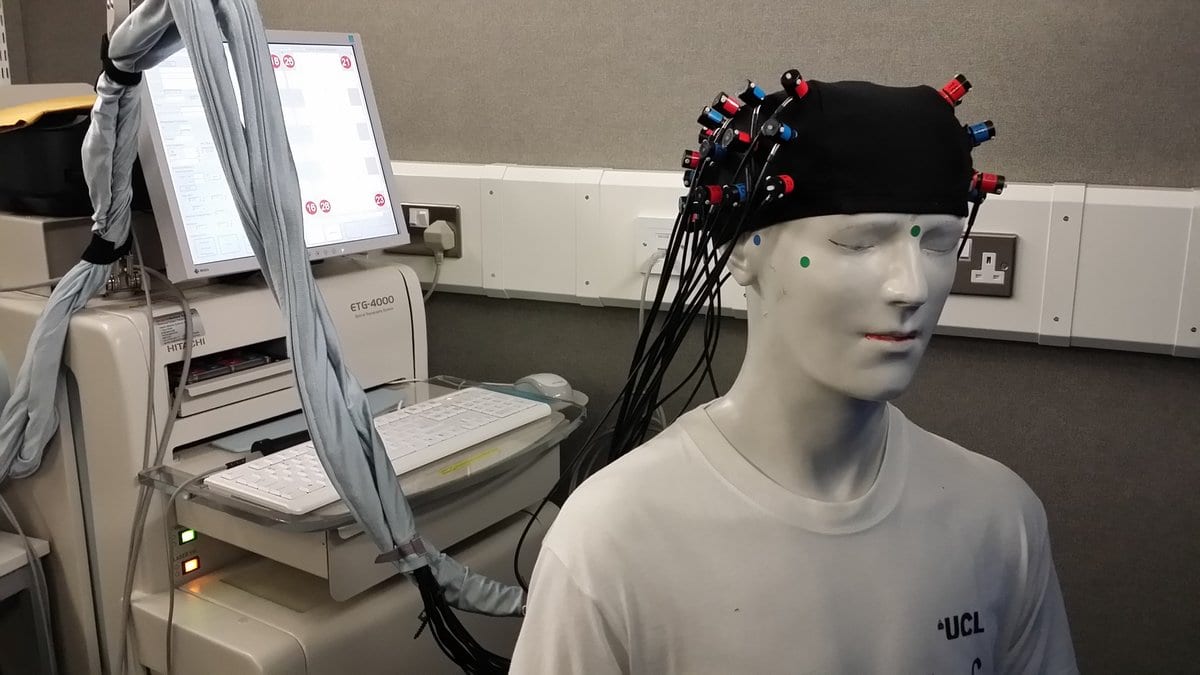
The study followed 31 intergenerational pairs, each an older adult with a younger adult, and 30 same-generation pairs of two younger adults, through a six-session creative drawing program. At every session, according to the paper, the pairs completed self-report measures, drew together and alone, and had activity in the outer layer of the brain recorded with functional near-infrared spectroscopy, a headset method that tracks blood oxygenation through the scalp.
In both groups, the paper reports, interpersonal neural synchrony, meaning how closely the two partners' brain signals rose and fell together, was greater while they drew together than while they drew alone. Across the six sessions, synchrony in the intergenerational pairs decreased while synchrony in the same-generation pairs increased.
Two region pairings tracked what participants said about themselves. Synchrony between the right inferior frontal cortex and the right temporoparietal junction was predictive of loneliness levels, the paper reports, and synchrony between the partners' right inferior frontal cortex was predictive of feelings of social closeness. Both are associations measured across 61 pairs in a single program, not a test of whether drawing changes either.
The authors write that the physiological consequences of repeated intergenerational encounters "remain unknown," and that their result "reinforces the multi-faceted nature of INS dynamics as social connections are forged," using the paper's abbreviation for interpersonal neural synchrony.
Ryssa Moffat and Emily S. Cross of the Social Brain Sciences Lab at ETH Zurich wrote the paper with Guillaume Dumas of the University of Montreal and Mila, the Quebec Artificial Intelligence Institute. PLOS Biology published it as a Short Report; the paper says the study was preregistered and that its data and code are posted on the Open Science Framework.
Sources
- journals.plos.orgPeer-reviewed