A Hidden Sheet of Brain Cells Tracks What People Are Unsure About
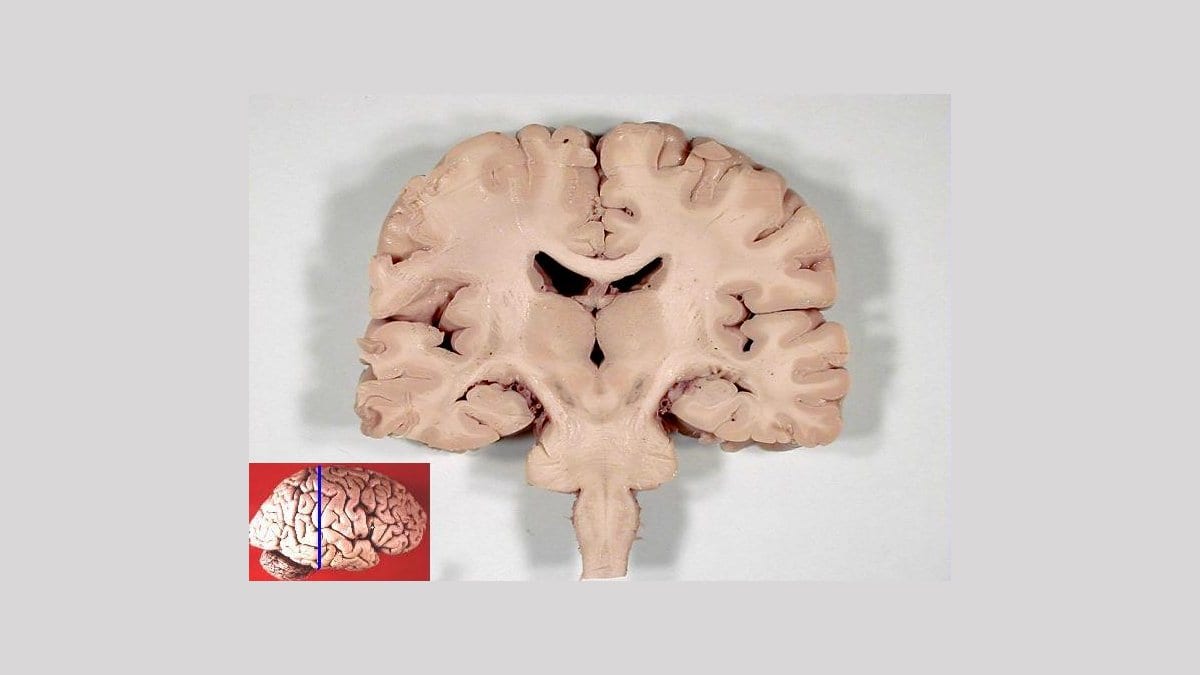
Researchers at Yale University have recorded individual nerve cells in the human claustrum, a thin sheet of cells buried beneath the cortex, and found that their firing followed how uncertain a person was and how far an outcome missed what was expected.
The recordings were published Oct. 6, 2026, in Nature Neuroscience, open access. The authors write that the claustrum is wired to nearly the whole of the brain's outer layer, that published accounts of its job have ranged from a central role in conscious awareness to an evolutionary leftover, and that direct evidence tying it to higher-level thinking has been missing in people.
Seven patients with drug-resistant epilepsy took part. Each already had electrodes placed deep in the brain to locate their seizures. The electrodes carried microwires fine enough to pick up signals from single cells. The patients played a computer game, steering a spaceship through a gap in an oncoming asteroid belt, with the safe gap moving between positions without warning. The asteroids came too fast to dodge on sight, so players had to place the ship in advance from what they had learned.
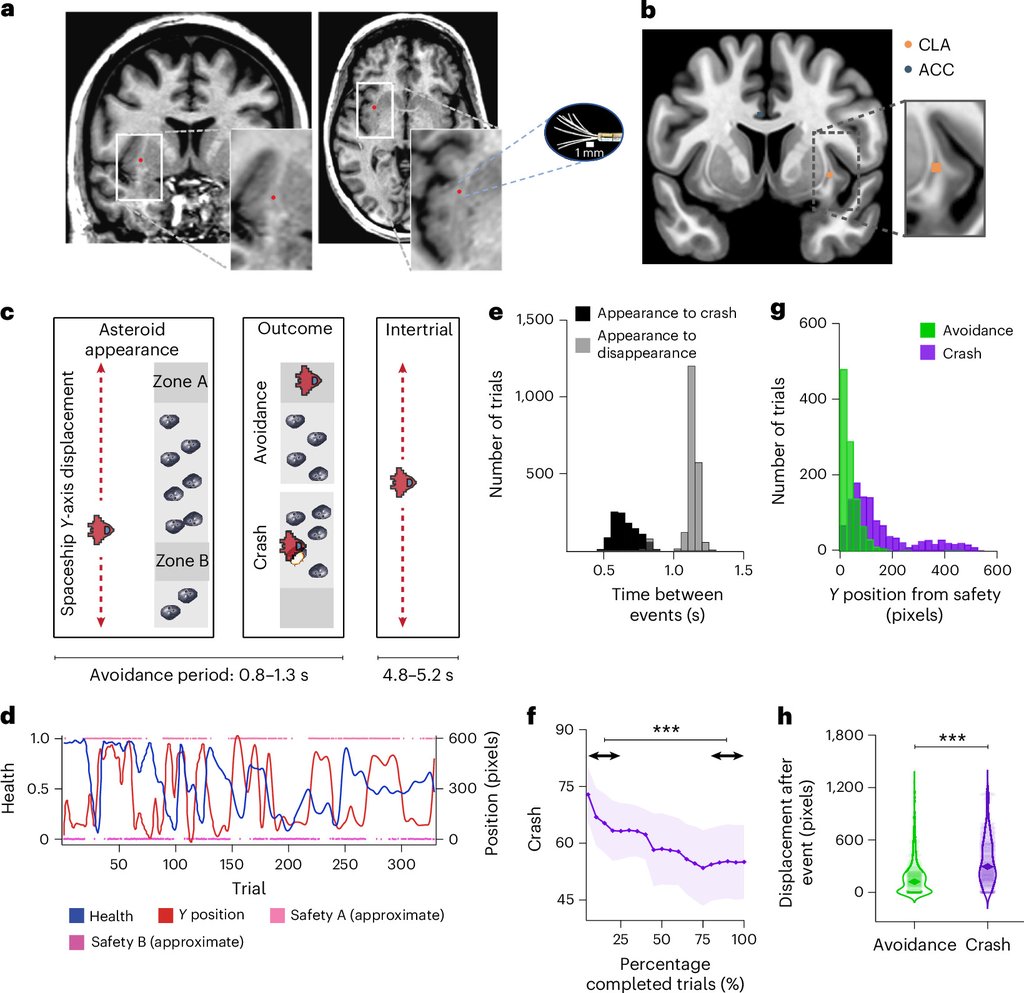
The team recorded 110 claustrum neurons and reported that 71% of them changed their firing during the game. Of the full set, 28.2% fired differently on the trials a statistical model scored as most uncertain, and 22.7% on the trials where the outcome was least expected. Neither quantity was measured directly: both were estimated by fitting the model to each player's choices. The two groups of cells largely overlapped, and the authors say their analyses do not establish whether a given cell tracks one, the other or both.
Two comparison regions behaved differently. A similar share of anterior cingulate cortex neurons responded. That frontal region was the only one carrying uncertainty signals during the pauses between trials, while in the claustrum those signals appeared as players were dodging. In the amygdala, 30% of neurons responded to the game at all, and almost none tracked either quantity.
Players did improve. The crash rate fell from 66% in the first quarter of trials to 54.9% in the last.
Sources
- Nature NeurosciencePeer-reviewed