A Skill Fades in Mice as Immune Cells Eat the Brain's Insulation
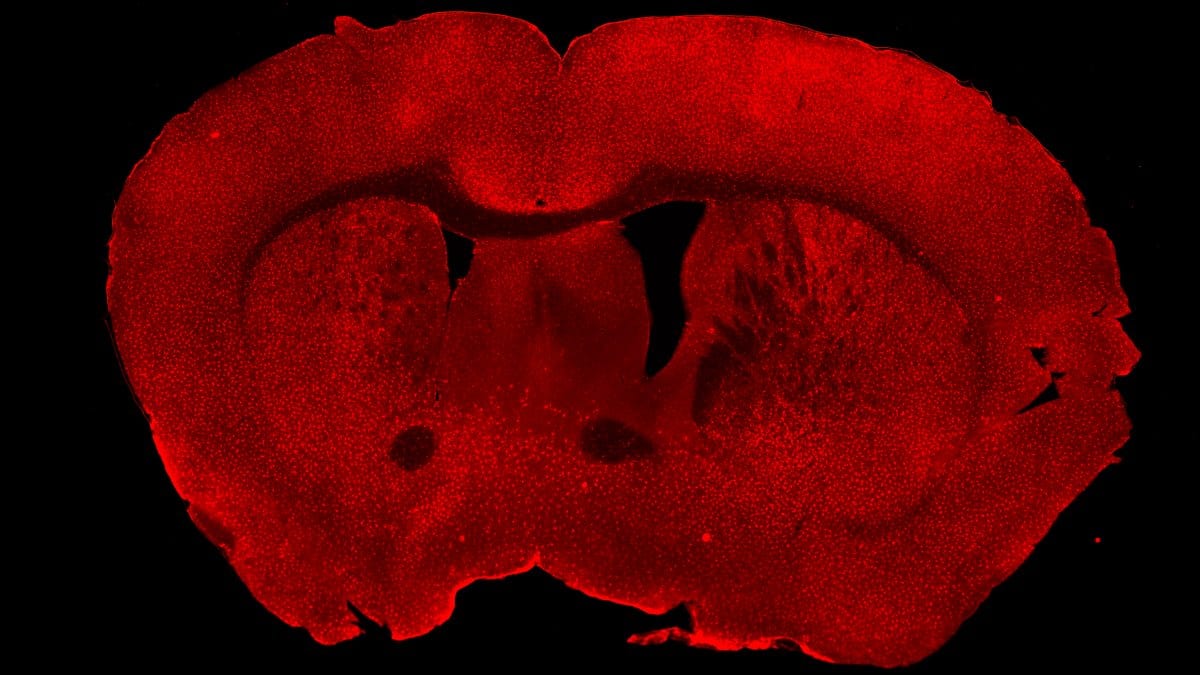
Zhechun Hu, Yujian Luo and colleagues at Zhejiang University in Hangzhou, China, report that the brain's own immune cells eat away the insulation around nerve fibers that carry a newly learned movement. In their mice, the loss of that insulation tracked how fast the skill faded.
Learning a movement adds myelin, the fatty sheath wrapped around nerve fibers, along the circuits that carry it, and that extra myelin is part of what makes a skill stick. What later takes it off had not been worked out. The authors write that motor memories decay over time and that "the underlying mechanisms remain largely unexplored."
Their paper appeared Nov. 17, 2026, in Nature Neuroscience, with Yan Gu and Lang Wang as corresponding authors. The chain it describes starts with the neurons that hold the memory. As those neurons become less active, the cells that make myelin lower their output of CD47, which the paper calls a "don't eat me" signal. With less of that signal, microglia, the brain's resident immune cells, engulf the sheaths, and the myelin tied to that memory is lost.
The authors report that removing CD47 from the myelin-making cells linked to a motor memory increased microglial engulfment of the sheaths and sped up the memory's decay, and that raising CD47 instead did the opposite.
According to the paper, microglia also engulf synapses, the junctions between neurons, and they do the two jobs independently of one another.
The authors keep the wider claim conditional, writing that because various types of memory require myelination, "this mechanism may contribute to the decay of other memory types."
Sources
- Nature NeurosciencePeer-reviewed