Brain Tissue Study Links Depression to Stalled Production of New Neurons
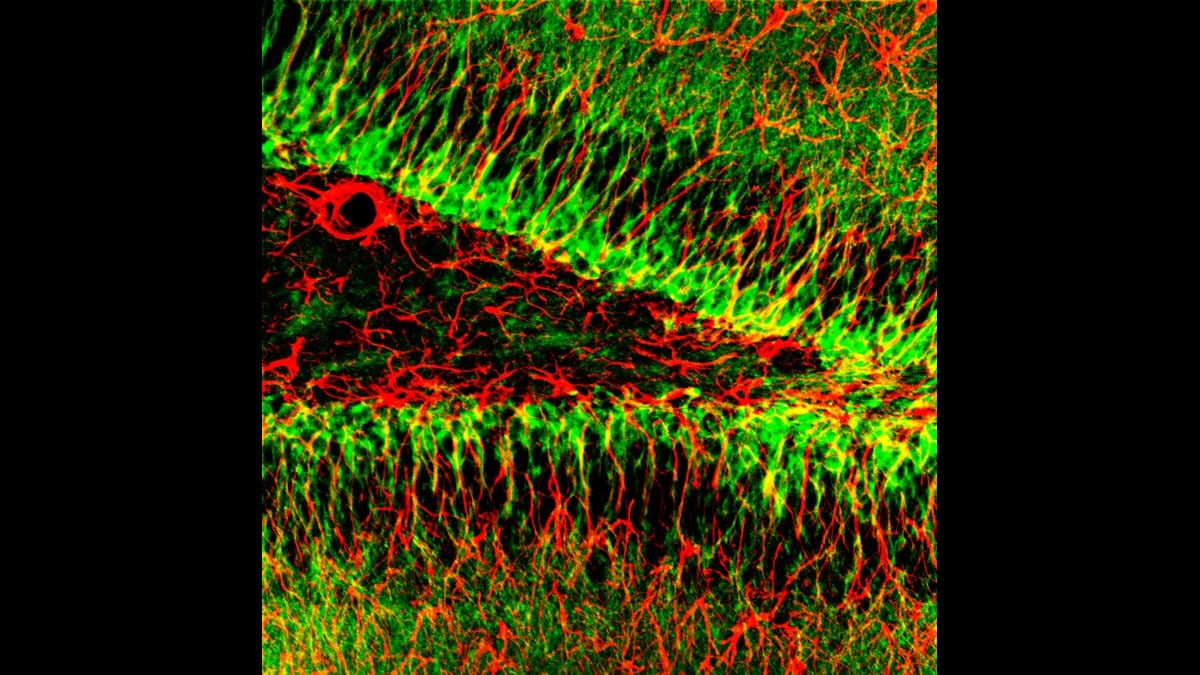
The adult human hippocampus produces new neurons through a chain of cell states, and that chain appears to stall partway in people who had major depression, according to a study of donated brain tissue published Aug. 21 in Nature Medicine.
The team profiled 495,037 individual brain-cell nuclei from 30 hippocampi — 11 from people who had been diagnosed with major depressive disorder and 19 from people with no psychiatric diagnosis — after quality-control filtering cut an initial set of 14 and 24 samples. None of the donors had used psychiatric medication in the three months before death, except benzodiazepines, and toxicology at death was negative for psychotropic drugs, the paper reports.
To read the tissue, the 24 authors combined single-nucleus RNA sequencing with ATAC sequencing, which measures which stretches of DNA are open for use, plus spatial transcriptomics and measurements of protein levels by region.
They report identifying a neurogenic lineage — the sequence of cell states that yields new neurons — in the adult human hippocampal subgranular zone, and, in the abstract's words, "provide evidence for a stalled neurogenic process in MDD, associated with transcriptional regulation, stress-related reprogramming and interferon signaling across developmental stages." That is a difference measured between two groups of brains collected after death; the design compares donors, and does not test whether a stalled process contributes to depression or follows from it.
The paper also describes disrupted transcription factor networks in excitatory and inhibitory neurons, and reports cellular stress, excitatory-inhibitory imbalance, impaired synaptic plasticity, reduced metabolic capacity and immune activation. Whether adult neurogenesis matters in humans at all is an open question in the field, and the abstract says its "relevance in humans and role in MDD remain unclear." The authors write that their findings "suggest potential therapeutic targets"; no treatment was tested.
Brain tissue came from the New York State Psychiatric Institute, the National Institute of Mental Health's Human Brain Collection Core and the Institute of Forensic Medicine at Ss. Cyril and Methodius University of Skopje, North Macedonia, with written consent from donors' next of kin.
Sources
- www.nature.comPeer-reviewed

Medical Disclaimer: This content is provided for general informational and educational purposes only. It is not medical advice and should not be used as a substitute for professional medical advice, diagnosis, or treatment. Always consult a qualified healthcare professional regarding any medical condition, concern, symptom, or treatment decision.