A Tobacco Relative Can Now Build a Chemotherapy Drug From Scratch
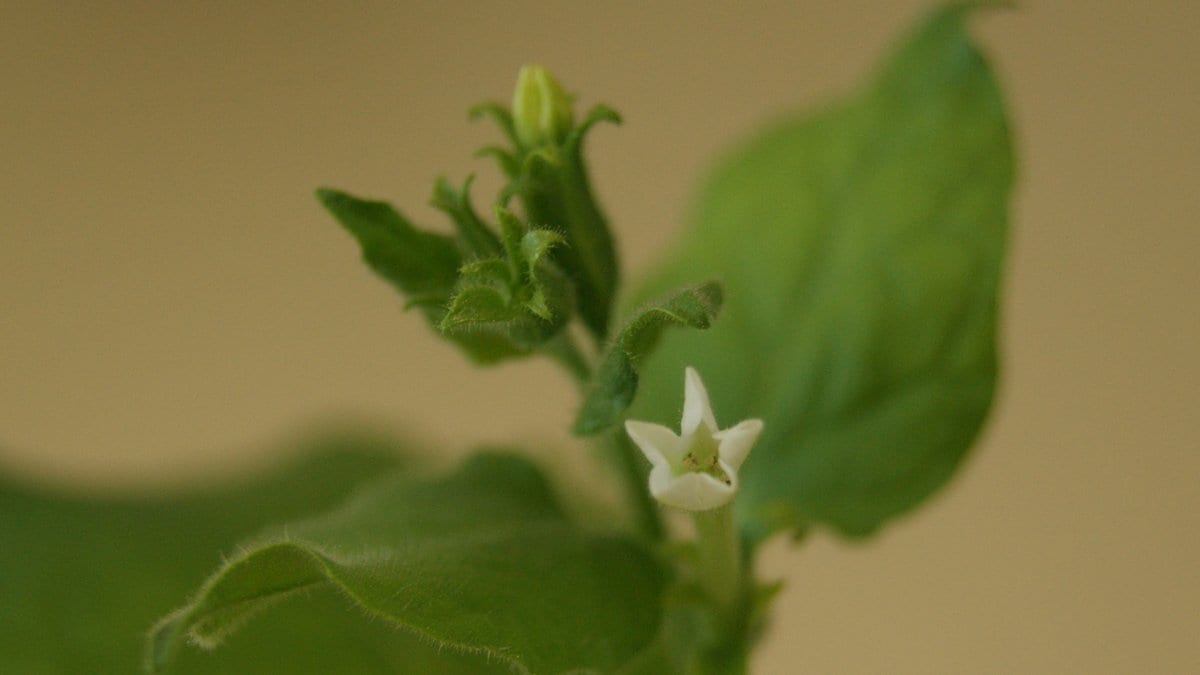
Researchers at the University of Copenhagen and the National and Kapodistrian University of Athens report that they have rebuilt the complete chain of chemical steps that produces paclitaxel, the chemotherapy drug also known as Taxol, in a relative of the tobacco plant — and that engineering that chain raised how much of the drug the plant built up by more than 500-fold.
The paper was published Nov. 23, 2026, in Nature Chemical Biology. The authors write that paclitaxel's complicated structure and its scarcity in nature make the drug costly and inefficient to produce, and that several partial and competing accounts of how a plant assembles it had been proposed without the full route ever being validated. Their engineered plants reached 61.05 micrograms of paclitaxel per gram of dry weight, a level the authors call comparable to that in the bark of yew trees (Taxus).
The group reports working out the sequence by isolating intermediate compounds from the pathway and determining their structures by nuclear magnetic resonance, a structure-reading method, which allowed them to refine the order in which the steps occur. Some of those steps also turned out to be separated into different compartments of the plant cell, so part-built molecules have to be moved from one compartment to the next, and the engineering that followed was guided by that finding.
Feiyan Liang, Zhen Fan, Sotirios C. Kampranis at the University of Copenhagen and their colleagues describe the result as a chemically validated pathway and a proof of concept for producing the drug in plants.
The paper's competing-interests statement records that four of the authors, Kampranis among them, are co-inventors on two patent applications covering two of the enzymes used in the work.
Sources
- Nature Chemical BiologyPeer-reviewed