Adding a Drug to Chemotherapy Gave Lymphoma Patients Longer Without the Disease Worsening, Companies Say
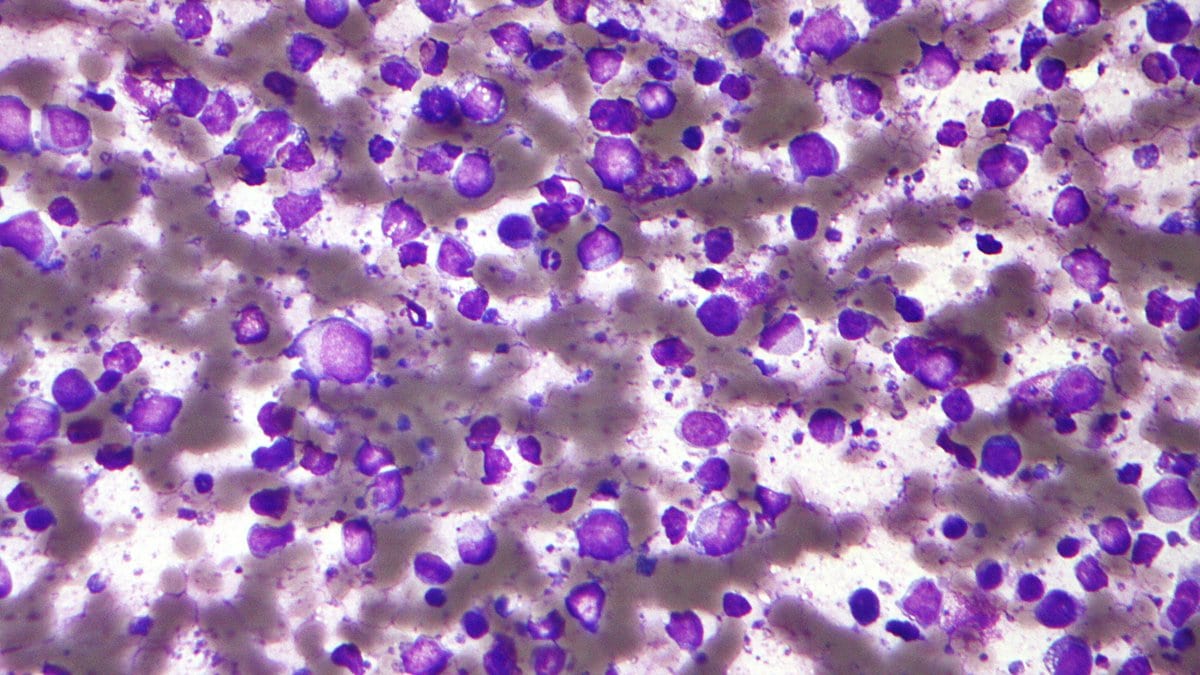
AbbVie and Genmab said on Oct. 5, 2026, that adding their drug epcoritamab to standard chemotherapy cut the risk of a common lymphoma getting worse, or of death, by 51% compared with the chemotherapy alone. The figure is the companies' own topline result from the phase 3 EPCORE DLBCL-2 trial, which has not been published, presented or reviewed outside the two firms.
Diffuse large B-cell lymphoma is the most common type of non-Hodgkin lymphoma, with about 25,000 new U.S. cases a year, according to the two companies' announcement. First treatment has been R-CHOP, a combination of chemotherapy drugs and an antibody that the announcement calls the standard of care. The trial tested whether adding epcoritamab to that regimen does better.
EPCORE DLBCL-2 enrolled newly diagnosed patients with an International Prognostic Index score of 2 to 5, a standard measure of how risky the disease looks at diagnosis. The trial randomly assigned them to R-CHOP alone or to R-CHOP plus epcoritamab, given as an injection under the skin for a fixed period. That figure covers the whole group. The companies report the same reduction among the higher-risk patients in it, the trial's main measure.
AbbVie and Genmab call EPCORE DLBCL-2 the first phase 3 study in which a bispecific antibody combination lengthened the time newly diagnosed patients live without the disease progressing. Epcoritamab is a bispecific antibody: it grips a protein on the patient's immune T cells and one on the cancerous B cells at the same time, bringing the two into contact.
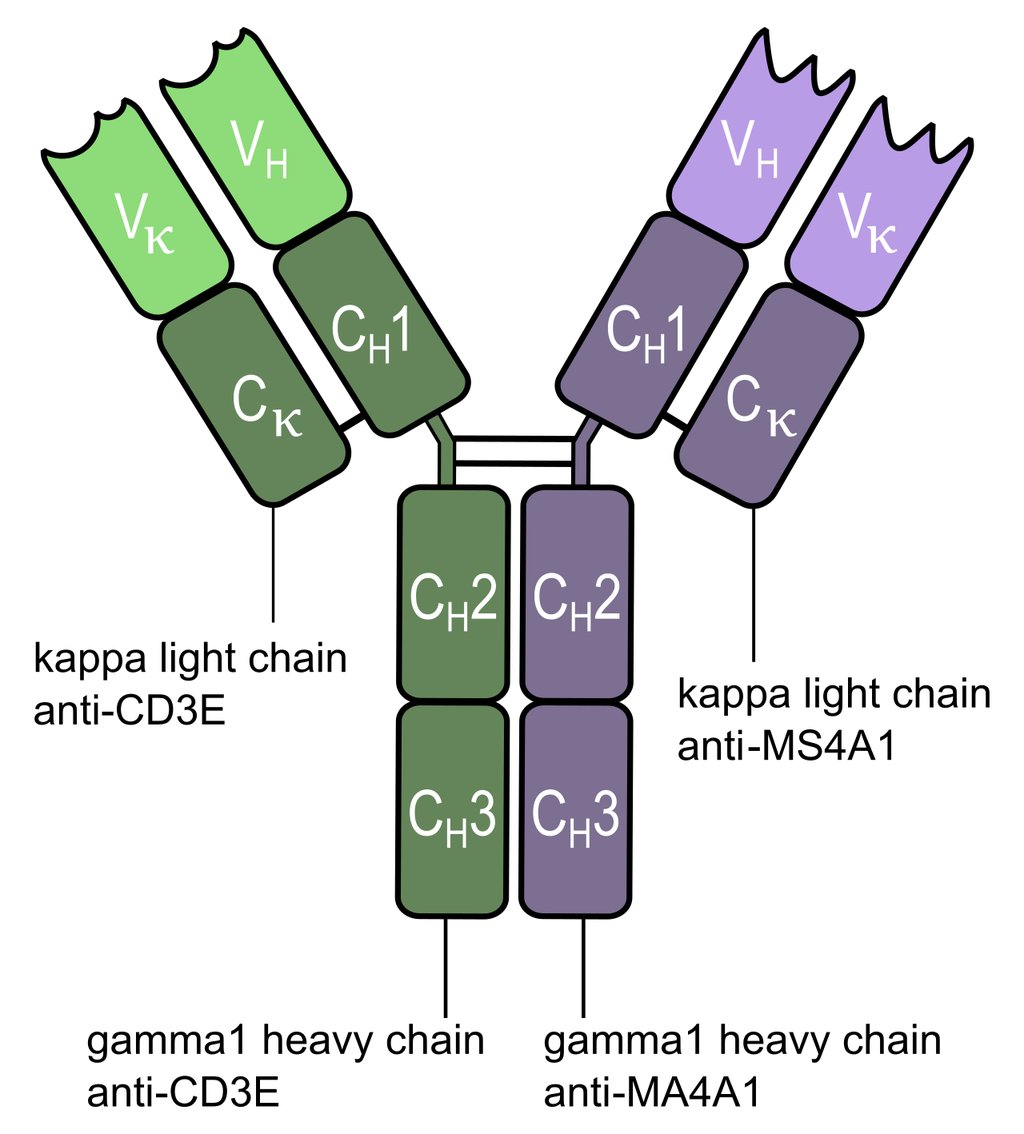
Epcoritamab is already approved on its own for certain lymphomas that have come back or stopped responding, in more than 65 countries, sold as EPKINLY in the U.S. and Japan and TEPKINLY in the EU. No regulator has approved the combination with R-CHOP. The companies say they will approach regulators about next steps and submit the data for presentation at a future medical meeting.
The announcement gives no safety results from the trial; the safety information it reprints for the approved drug lists cytokine release syndrome, an immune overreaction that can be serious, among epcoritamab's risks.