A Fossil in a Norwegian Sheep Field Kept Its Shape for 560 Million Years
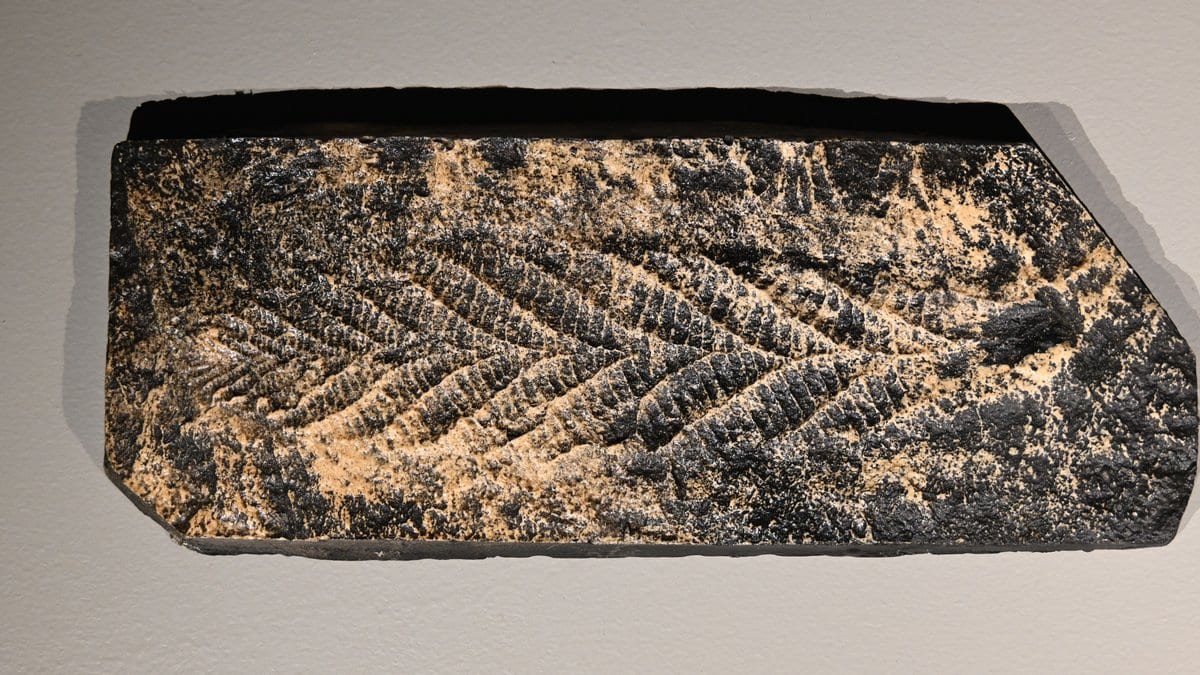
A fossil of Charnia, a frond-like organism that lived about 560 million years ago, has been found preserved in three dimensions in a sheep field in Finnmark, Arctic Norway. A team led by the University of Cambridge reports the find in the journal Palaeontology and says it is the first confirmed Charnia fossil in Scandinavia.
In its announcement, the university said Charnia had no mouth, no organs and no visible way of moving, and is thought to be one of the earliest animals. Most fossils from the Ediacaran Period, when complex forms of life first appeared on Earth, come from a handful of locations, and the new site suggests the earliest animals may have been far more widely spread than was previously known.
Ediacaran fossils are usually found as flat impressions. This one kept its shape. The organism was swept into an underwater avalanche and buried quickly; sediment filled its body. The preservation revealed subtle ridges along each branch, which the paper calls keels, a feature not detected in flatter specimens. The authors attribute the three-dimensional preservation to a short transport path and to burial in a clay-rich deposit.
"When you see the same species preserved in a different way, you start noticing properties you hadn't seen before," said lead author Yorick Veenma of Cambridge's Department of Earth Sciences.
The area had previously yielded only indirect traces of Ediacaran life, such as anchoring structures left where organisms attached themselves to the seafloor; fossils of the organisms themselves had never been found there. The Charnia came to light after rocks fell from a cliff and split open.
The team also reported other fossils preserved in the same rocks. "There may be a whole undiscovered community of these very early organisms preserved up there," said co-author Neil Davies, also of Cambridge's Department of Earth Sciences.
Sources
- PalaeontologyPeer-reviewed
- www.cam.ac.uk