A Rare Gut Cancer Gets a Second Drug for When the First Stops Working
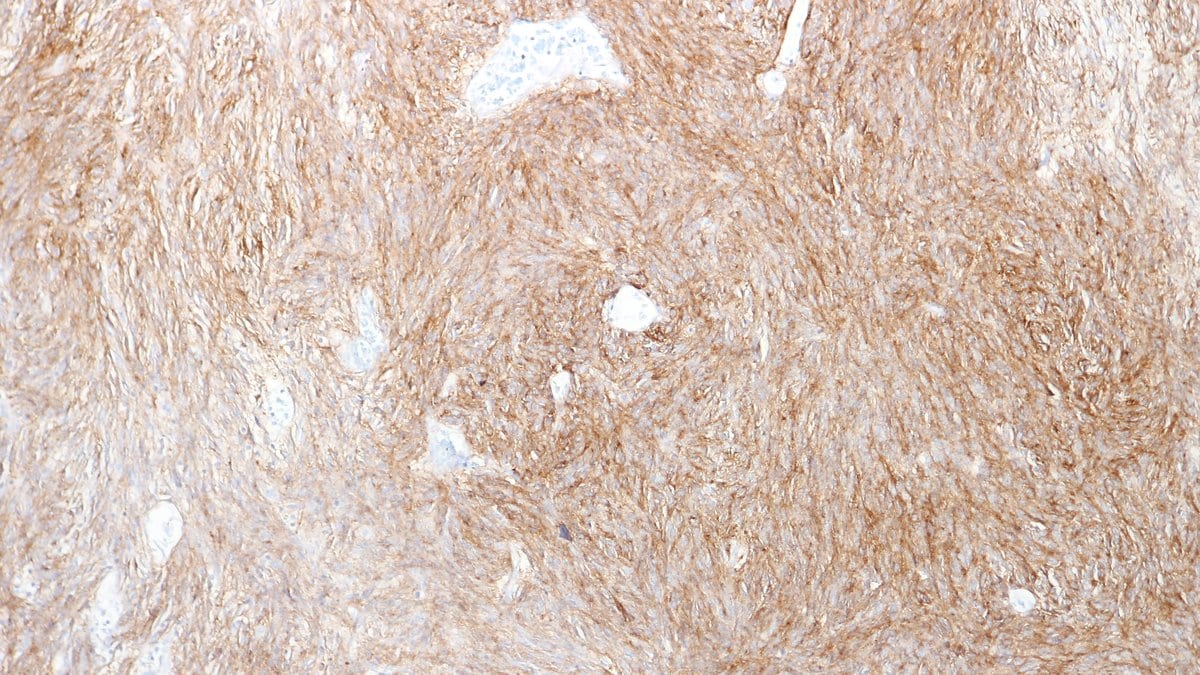
The Food and Drug Administration approved bezuclastinib, sold as Ekitna by Cogent Biosciences, on Nov. 24, 2026, for use alongside the older drug sunitinib in adults with advanced gastrointestinal stromal tumors who have already been treated with imatinib. The tumors are a rare cancer that grows in the wall of the digestive tract.
The agency's approval notice rests the decision on PEAK, an open-label trial that randomly assigned 413 patients whose tumors had grown despite imatinib, or who could not tolerate it, to the two drugs together or to sunitinib alone. The FDA reported a median progression-free survival, meaning the time before a tumor started growing again, of 16.5 months on the combination against 9.2 months on sunitinib alone. Tumors shrank in more patients on the combination as well, the agency said, and survival data were not mature when that analysis was done. The label carries a boxed warning, the agency's strongest, for liver injury, and a warning about harm to a fetus.
Subgroup results from the same trial, presented at the Connective Tissue Oncology Society meeting in Seoul on Nov. 18–21, 2026, and reported by CancerNetwork, say more about where that benefit sat. Among patients whose tumors carried a mutation in a stretch of the KIT gene called exon 9, median progression-free survival was 25.1 months with the combination against 15.7 months with sunitinib alone. CancerNetwork reports that neither that gap nor the gap in response rates was statistically significant in a subgroup that small, so chance is not ruled out as the explanation.
The same report covers the 128 patients who switched to the combination after their cancer grew on sunitinib alone. Their median progression-free survival was 7.4 months on the pair against 5.7 months on sunitinib beforehand — a comparison made within the same patients rather than between randomly assigned groups.
The FDA granted the application priority review, and had earlier given the combination a breakthrough therapy designation and bezuclastinib an orphan drug designation.
Sources

Medical Disclaimer: This content is provided for general informational and educational purposes only. It is not medical advice and should not be used as a substitute for professional medical advice, diagnosis, or treatment. Always consult a qualified healthcare professional regarding any medical condition, concern, symptom, or treatment decision.