Circling Meltwater Can Keep Warm Ocean Water out of a Greenland Fjord
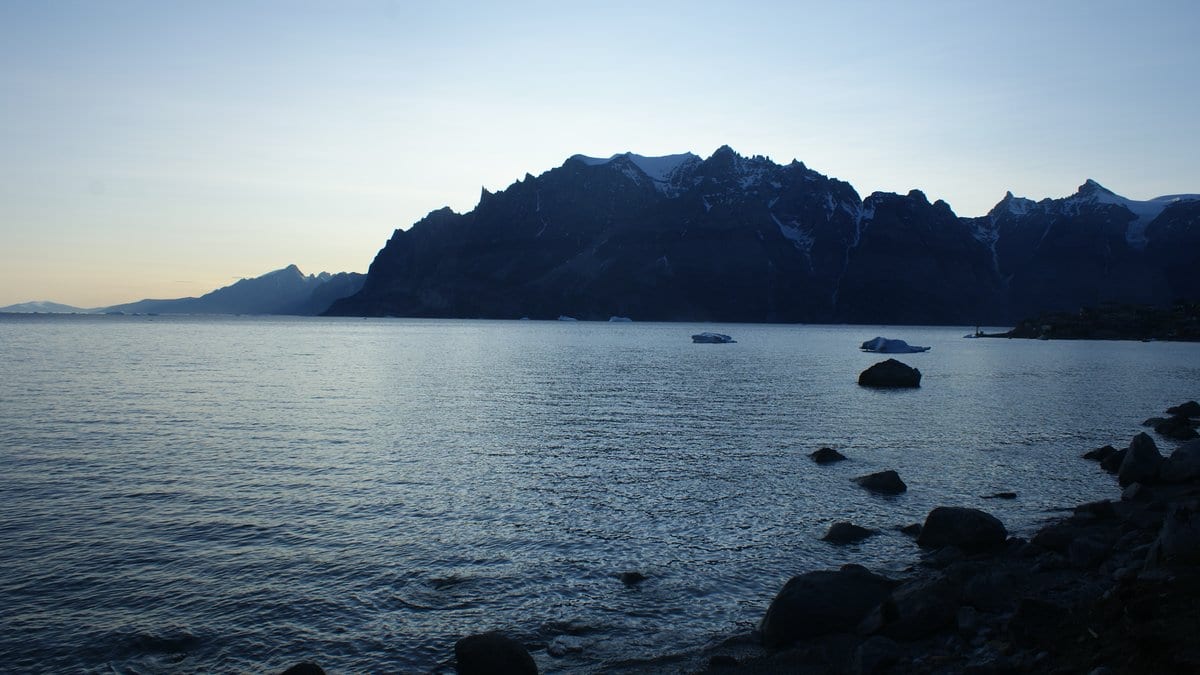
Jie Huang, of Shanghai Jiao Tong University and the Woods Hole Oceanographic Institution, and colleagues report that glacial meltwater turning in a slow circle inside a deep seafloor trough off West Greenland keeps warm Atlantic water from reaching the glacial fjord behind it. The paper was published Nov. 25, 2026, in Nature Geoscience.
Water exchange between the ocean and Greenland's glacial fjords influences how fast the island's ice melts, the paper states, and the processes controlling that exchange are not fully understood — particularly the part played by the deep troughs running from the continental slope to the fjords.
The team worked from high-resolution shipboard measurements, an ocean reanalysis and output from a numerical model with a grid about one-sixtieth of a degree across, covering several deep troughs in West Greenland. In the inner Uummannaq trough they found a recurring anticyclonic circulation of glacial meltwater, turning clockwise, that cuts the fjord off from Atlantic water flowing in below the surface and limits how much ocean heat gets through. Discharge during the melt season drives the circulation, and wind alters its strength.
The adjacent Jakobshavn trough works the other way, the authors report: exchange there is more efficient, and meltwater is not retained.
Recirculating freshwater coincided with less replenishment of nutrients from deeper water, which the authors say points to wider effects on a fjord's chemistry and biology. Similar recirculation appears next to some East Greenland fjords where ice loss has been comparatively smaller.
The authors describe their results as a framework for understanding regional differences in Greenland's melting, freshwater export and nutrient delivery, and they call for climate models to represent these processes better. The shipboard measurements came from a 2021 survey aboard the U.S. Coast Guard icebreaker Healy.
Sources
- Nature GeosciencePeer-reviewed