Scientists Edited Every Copy of a Gene in Human Embryos and Say It Cannot Be Used in Reproduction
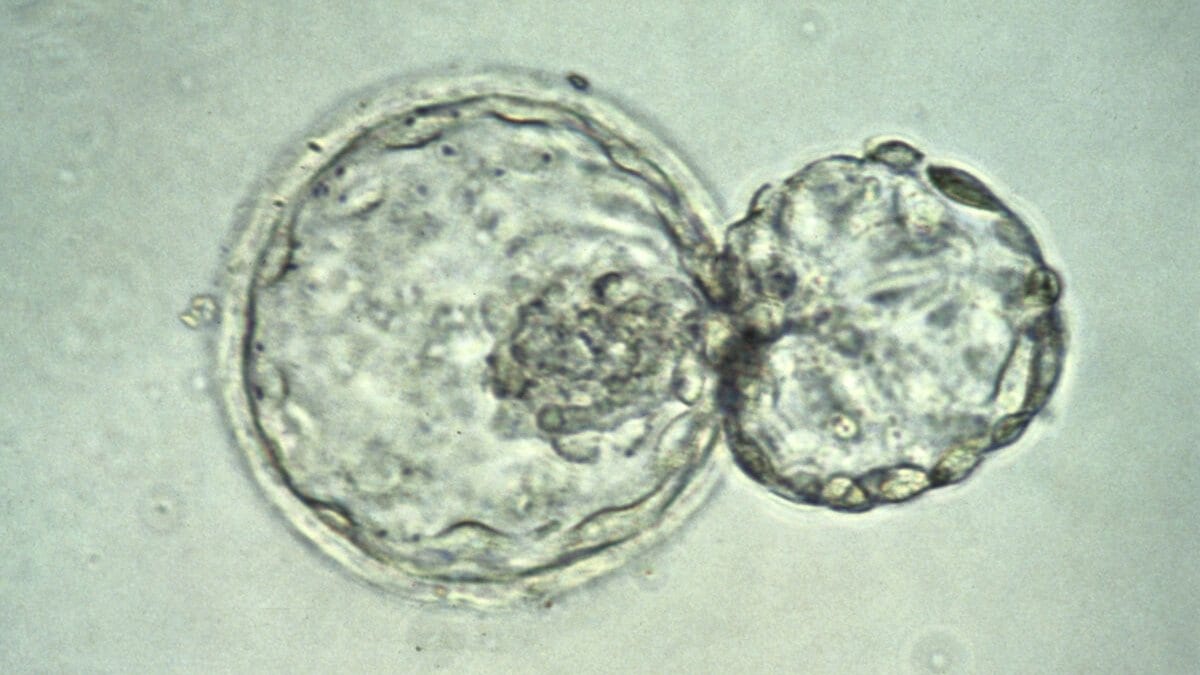
A gene-editing tool that changes a single letter of DNA without cutting through the double helix altered every copy of the cholesterol gene PCSK9 in human embryos, a study published in Nature on September 9, 2026, reports. Its authors say the edits the same tool made at unintended sites currently preclude clinical use in reproduction.
The experiments were done in embryos grown in the laboratory, and the work was designed to measure how early human embryos repair the small DNA lesions a base editor leaves. Stepan Jerabek of Columbia University and the Czech Academy of Sciences in Prague, senior author Dieter Egli of Columbia, and colleagues report the results in Nature. Cas9, the cutting enzyme behind most gene editing, breaks both strands of the DNA. In human embryos those breaks are toxic to the genome, the paper says, frequently leaving the wrong number of chromosomes and large deletions.
Delivered as a protein at fertilization, the adenine base editor ABE8e-V106W edited every copy of PCSK9, and the embryos still reached the blastocyst stage, about five days after fertilization. The team derived stem cell lines carrying the edit on both copies of the gene. No insertions or deletions were detected, the paper reports, although rare chromosome breakage at the target site and chromosomal abnormalities occurred.
Editing at sites beside the target and at unrelated sites elsewhere in the genome was mosaic, present in some cells of an embryo and not in others. When the editor was supplied as mRNA rather than as protein, embryos frequently stopped developing, which the authors attribute to the enzyme acting without its guide.
Unlike the breaks Cas9 makes, the lesions a base editor leaves are repaired efficiently, the authors conclude, while undesirable consequences for the genome and for development can still occur.
Nature published a second base-editing study in human embryos, by Bower and colleagues, the same day. In an accompanying News and Views article, Sherif Khodeer and Vincent Pasque of KU Leuven write that the two papers sharpen researchers' view of early human development while reactivating debate over heritable DNA editing.
Sources
- NaturePeer-reviewed