Turning on a Rare Type of Brain Cell Sends Mice to Sleep
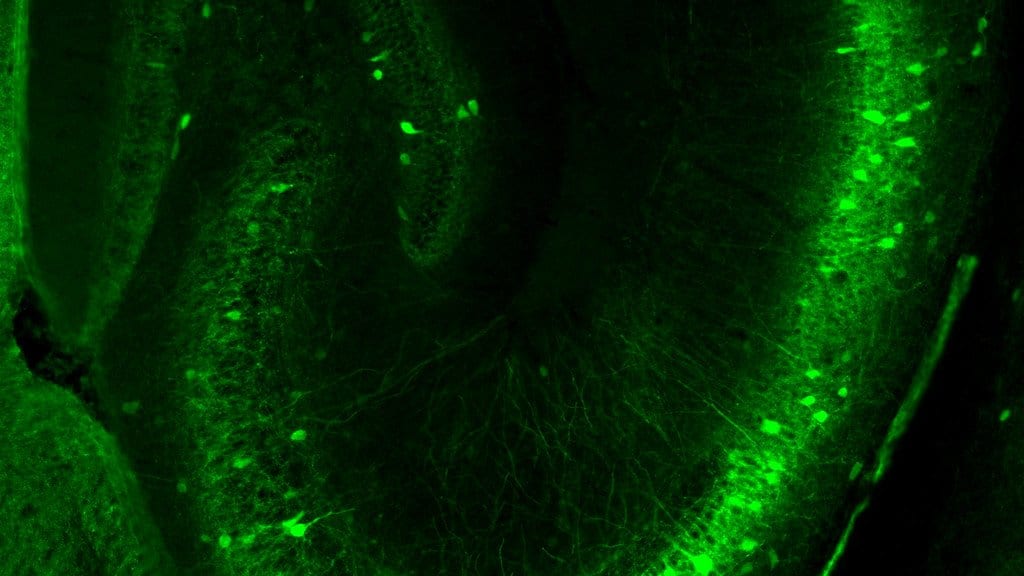
Switching on a rare type of nerve cell in the outer layer of the mouse brain was enough to put the animals to sleep, a research team reports in Nature.
Sleep is usually traced to structures below the cortex, the brain's outer sheet. The paper, published Sept. 9, 2026, points to the cortex as well: the authors write that cortical circuits "have a key role in sleep regulation, alongside established subcortical mechanisms."
The cells make up fewer than 1% of the inhibitory neurons in the cortex, the cells that quiet their neighbors. They are named for two proteins they carry, somatostatin and chondrolectin. Unlike most inhibitory neurons, which act close to home, they run fibers millimeters across the brain and reach nearly all cortical areas at once. Recordings show them active during quiet rest and slow-wave sleep and mostly silent when a mouse is alert.
To test what the cells do, the team placed an engineered receptor in them at 22 sites across the cortex and switched it on with a low dose of a drug. The work was led by Jacob M. Ratliff and senior author Renata Batista-Brito of the Albert Einstein College of Medicine in New York. Over the next two hours the 14 treated mice fell asleep sooner, spent more time in slow-wave and REM sleep, moved around less and stayed in the nest more. Mice without the receptor showed no change after the same drug.
Activating the cells was enough to bring on sleep. That is not the same as showing they drive sleep normally: in the same experiments, the cells' activity did not predict when a bout of slow-wave sleep would start or how long it would last.
The drug also increased slow-wave sleep when it was given during the dark hours, when mice are normally awake.
Sources
- NaturePeer-reviewed