Why Aging Stars Briefly Dim Instead of Brightening
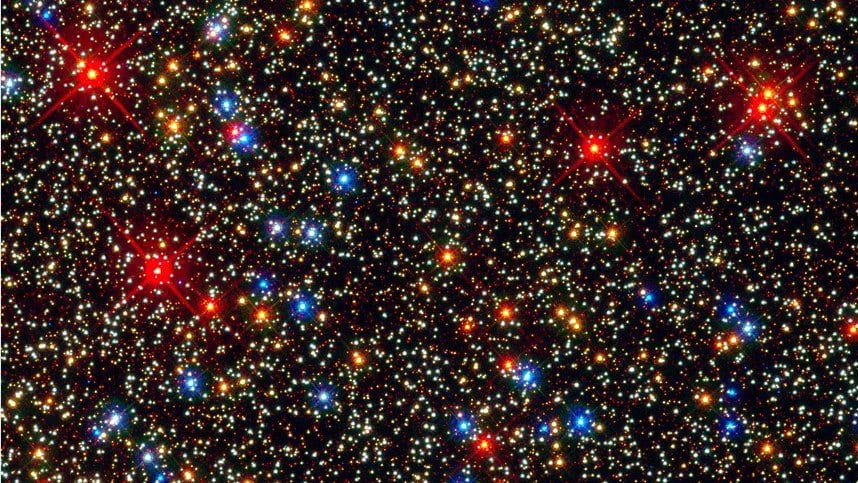
Saskia Hekker of the Heidelberg Institute for Theoretical Studies and Heidelberg University has put forward an explanation for what starts the luminosity bump, the short stretch in which an aging star dims instead of continuing to brighten. Her paper appeared in The Astrophysical Journal Letters on Sept. 9.
Hekker's Letter says the bump turns up in both observations and stellar evolution models, but that models built with the standard physics put it at a higher brightness than the observed one, and that working out its physics is what it will take to explain the gap. The paper says the end point of the bump is well understood and calls its onset "still an enigma."
Hekker traces the start of the bump to a boundary deep inside the star where the composition changes sharply. As that boundary moves inward, the difference in specific entropy across it shrinks. Specific entropy is a measure of disorder per unit of mass. She attributes the decrease to a falling ratio of temperature to pressure at smaller radii. Once the difference reaches a critical value, it is low enough to lower the specific entropy of the convective envelope, the churning outer layer that carries the star's heat outward. That drop, the paper says, is a key signature of the bump.
Low-mass stars that have used up the hydrogen in their cores climb what astronomers call the red-giant branch, growing brighter and cooler as they go. The bump is a temporary reversal of that climb.
Sources
- doi.orgPeer-reviewed