Skip to content
See the World Through ScienceA project of ALLATRA
Measured by Central Pacific Hurricane Center (CPHC) 1 source

Tropical Storm Pena Forms Southeast of Hawaii, No Threat to Land
Natural Disasters

Republish this story

Our work is licensed under Creative Commons BY-NC 4.0. You may republish this piece for free — with credit to ALLATRA Media and a link to the original, unedited beyond length trims, and not for commercial use.

Read the full license

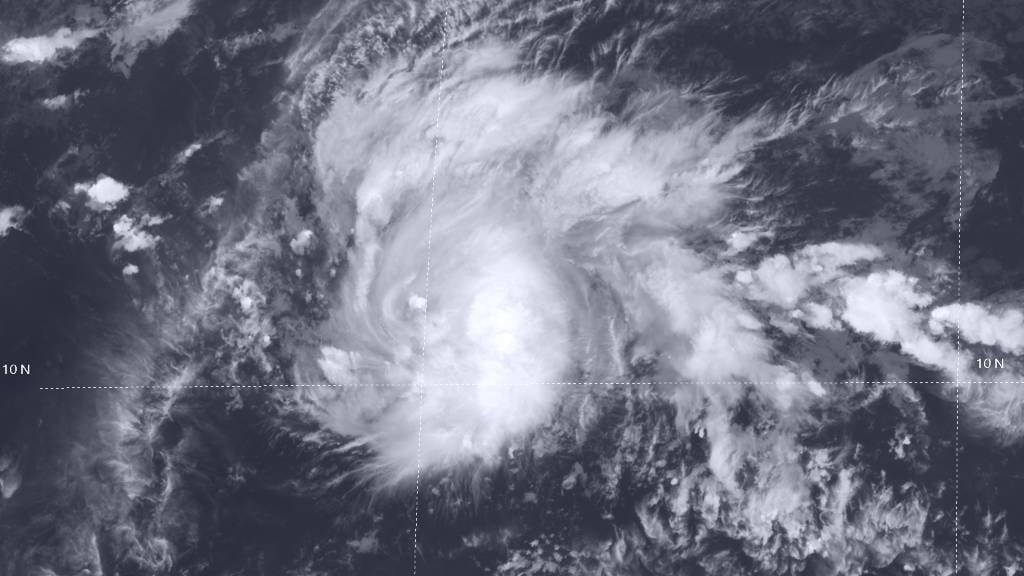
Satellite infrared image of Tropical Storm Pena's cloud mass over the open Pacific Ocean southeast of Hawaii
Tropical Storm Pena southeast of Hawaii in a Joint Typhoon Warning Center satellite image, Nov. 6, 2026"2026 JTWC 04C IR satellite imagery" by Joint Typhoon Warning Center, via Wikimedia Commons, Public domain

Tropical Storm Pena formed over the open Pacific Ocean on Friday, Nov. 6, 2026, with maximum sustained winds of 45 mph, the U.S. National Weather Service's Central Pacific Hurricane Center (CPHC) said in the storm's first advisory. At 11 a.m. HST (2100 UTC), Pena's center was about 650 miles southeast of South Point, Hawaii, over open water. No coastal watches or warnings were in effect, and the advisory listed no hazards affecting land.

Pena was moving west at 12 mph, a motion CPHC said was expected to continue over the next several days. The storm's minimum central pressure was estimated at 1002 millibars.

CPHC said gradual strengthening was likely over the next day or so, followed by little additional change in intensity through early next week.

Sources

Spot an error?

Spot an error?

Report an error

Spotted a mistake on this page? Tell us what's wrong and our editors will take a look.

What kind of problem?

Only if you'd like us to be able to follow up. We won't use it for anything else.

We correct mistakes openly. Select any text to flag it. Fixes are logged under our Corrections Policy.

Report an error

Reporting on

Tropical Storm Pena Forms Southeast of Hawaii, No Threat to Land

What kind of problem?

Only if you'd like us to be able to follow up. We won't use it for anything else.

We read every report. Corrections are logged publicly.