Etna's Eruption Is Over, and It Reopened a Fracture INGV Had Already Mapped
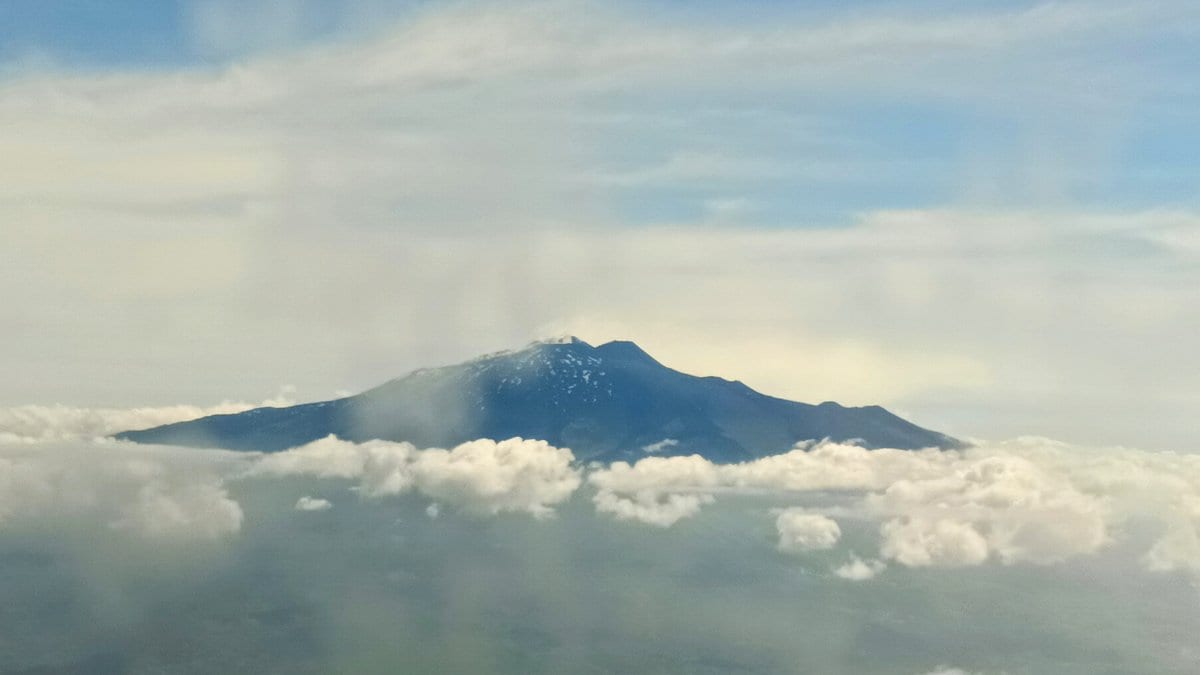
Mount Etna's eruptive episode of July 30 to Aug. 2 has ended, Italy's Istituto Nazionale di Geofisica e Vulcanologia said in an account published Aug. 3. Personnel from its Osservatorio Etneo carried out a field inspection on Aug. 2 that, in the institute's words, confirmed the exhaustion of the lava effusion and the conclusion of the entire eruptive episode.
The chronicle, written by Salvatore Giammanco, a senior researcher at INGV's Etna observatory, was published on the institute's outreach site rather than through its operational bulletin stream. It is a retrospective account of the whole episode.
The passage that goes beyond chronology concerns the ground itself. The fractures and lava emission points that activated on July 30, INGV writes, lie in the same area affected by the lava flows of late June and early July: the upper north-eastern flank of the Voragine crater, between 2,700 and 3,200 meters. "Questa ricorrenza non è casuale," the account states. This recurrence is not coincidental.
The reason INGV gives is that the weakness was already there, and already documented. Drone surveys flown by its volcanologists in preceding months had mapped, in that same area, a fracture system in progressive expansion, accompanied by small collapses and gravitational movement of the ground. When magma pushed up on July 30, it did not have to break new rock. It followed a seam the observatory had photographed while the volcano was quiet.
Magma exploiting an existing structural weakness is ordinary behavior on Etna's upper flanks, and INGV does not present it as a discovery. What is less ordinary is the sequence. The mapping came first, from routine survey flights over a volcano that was doing nothing in particular, and the fissures then opened inside the area those flights had already flagged.
One caution about the ending. It rests on INGV's own field inspection and monitoring, which is the authority on Etna but is also a single source: the Smithsonian Global Volcanism Program's weekly report covering July 30 to Aug. 5 had not been published at the time of writing, and English-language trackers reporting the end are reading INGV's own summit cameras. This is a provisional observatory report, not a peer-reviewed analysis.
Nothing in the episode threatened inhabited ground; the fissures and the lava fronts stayed high on the mountain. The fracture system that fed it is still there, and, by INGV's account, still expanding.