Every Glacier River Sampled in Svalbard Carried Methane
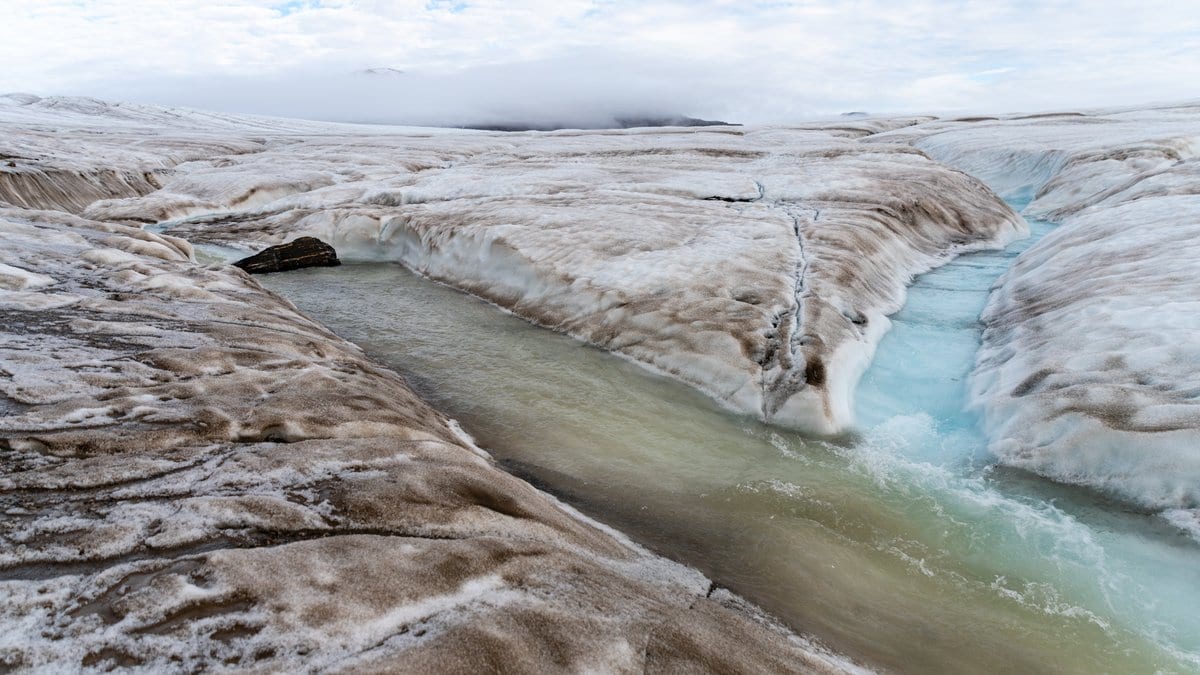
Rivers flowing from all 19 valley glaciers sampled in central Svalbard carried dissolved methane at levels high enough for the gas to escape into the air, peaking at 425 times the amount the water would hold if it were in balance with the atmosphere. Gabrielle E. Kleber of UiT the Arctic University of Norway, Andrew J. Hodson of the University Centre in Svalbard and colleagues reported the survey Sept. 8 in Nature Communications.
The survey set out to test whether high methane levels are widespread in glacial runoff and to find what controls them. The team says two things do: the rock beneath the ice, and whether the glacier's bed is thawed rather than frozen to it. The same mechanism should hold anywhere glaciers sit on carbon-rich rock, they write, and faster melting may increase the amount of methane released.
Formed in rock under heat and pressure, the methane is largely thermogenic rather than the product of microbes living under the ice. Carbon isotopes in 148 river samples pointed that way, and so did the ethane and propane found alongside it. Ground-penetrating radar on a selection of the glaciers then showed that the strongest methane readings came from glaciers with large thawed patches at the bed lying over shale and other carbon-rich rock. Where the bed was thawed but the rock beneath was crystalline basement, the outflow carried little methane.
Scaled to the whole archipelago, the authors estimate glacier rivers across Svalbard carry between about 182 and 368 metric tons of methane a year, the spread reflecting two calculation methods and two years of modeled runoff. They call those figures likely conservative, since the sampling missed the pulse of gas flushed out at the start of the melt season.
The paper sets that beside earlier estimates for groundwater emerging in front of Svalbard's glaciers, put at up to 2,310 metric tons of methane a year, roughly an order of magnitude more. It calls those downstream seeps the larger target for future work.
Sources
- doi.orgPeer-reviewed