Sulfur Dioxide Keeps Brightening Clouds Long After It Leaves the Smokestack
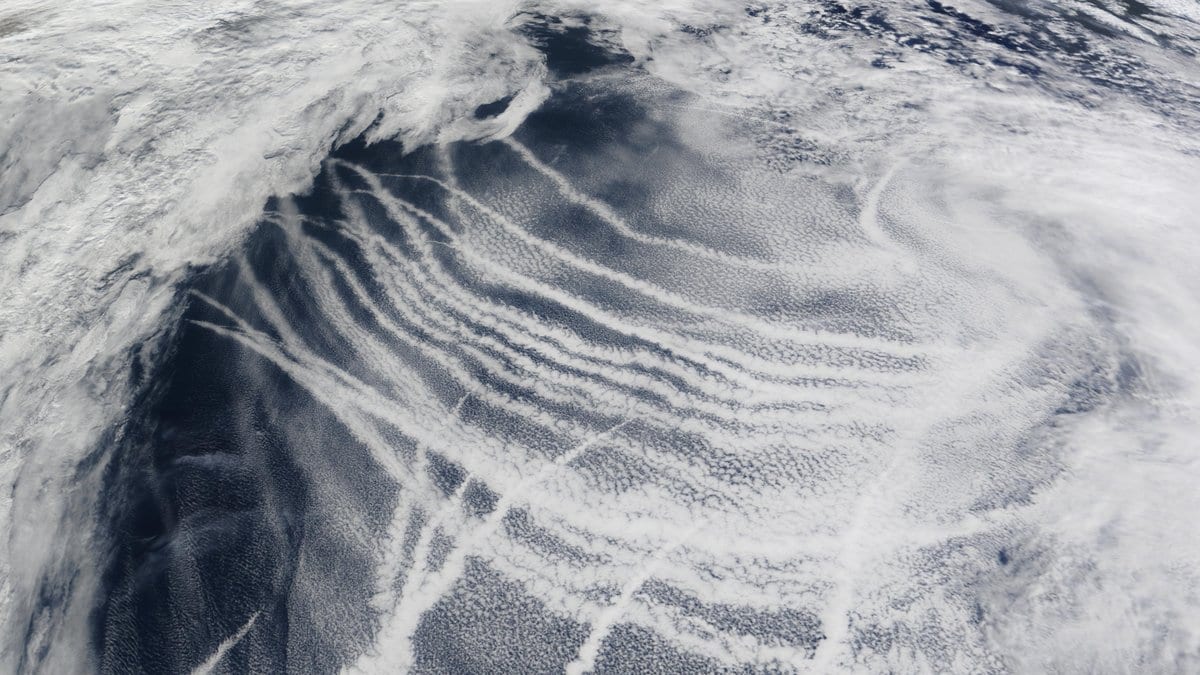
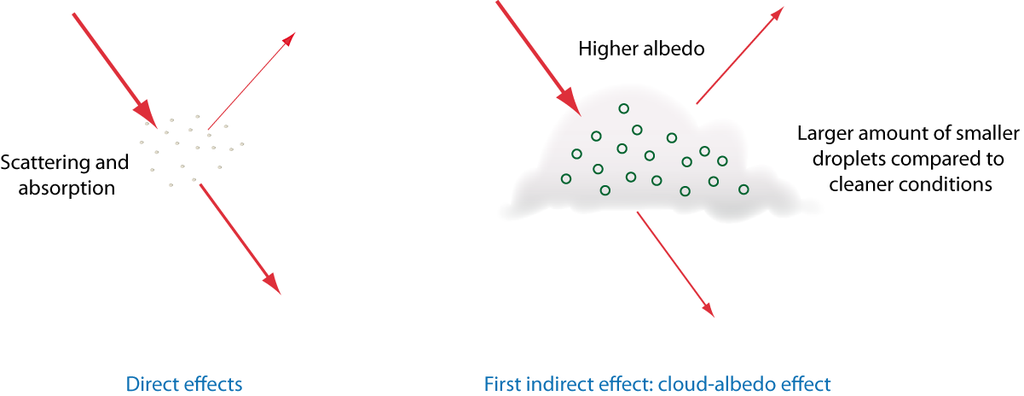
Sulfur dioxide from volcanoes and power plants keeps turning into fresh particles long after it leaves the source, and those particles keep the cloud above the plume bright for longer. Matthew W. Christensen of Pacific Northwest National Laboratory and colleagues report that this chemistry raises cloud albedo, the share of sunlight a cloud reflects, by 29% against simulations that leave it out. Their study was published Nov. 27, 2026, in Nature Geoscience.
The authors' reason for looking is a standing gap in climate science. Airborne particles make clouds more reflective, which offsets some greenhouse warming, and how much they do so is a major uncertainty in the planet's energy balance. Oxidation of sulfur dioxide gas is one of the ways new particles get made, and the paper says little has been known about what becomes of them or how they affect cloud lifetime.
The team tracked clouds inside the plumes of four remote volcanic islands and two industrial power plants, using satellite observations and atmospheric models. The sites include Kīlauea in Hawaii and Mt. Michael on Saunders Island, in the South Atlantic. The plumes draw bright streaks in the cloud, called pollution tracks. Cloud changes from a global climate model agreed, within uncertainty, with those measured from several hundred tracks logged by hand in satellite images and thousands more derived from the models.
Inside those tracks, sulfur dioxide gas converting into particles raised both the number of particles able to seed cloud droplets and the number of droplets themselves, and kept the brightening going farther downwind. Separate calculations that follow individual particles support that result and suggest the new particles grow mainly by sticking to one another, until they are big enough to seed a droplet.
The authors also take a step past the measurement — as human sulfur dioxide emissions fall, they write, clouds influenced by the gas will grow dimmer, "possibly accelerating global warming."
The work was funded in part by the US Department of Energy and the European Research Council. The hand-logged track positions and model inputs are posted on Zenodo.
Sources
- Nature GeosciencePeer-reviewed