North Sea Test Finds the Dose at Which Ocean Carbon Removal Disturbs Plankton
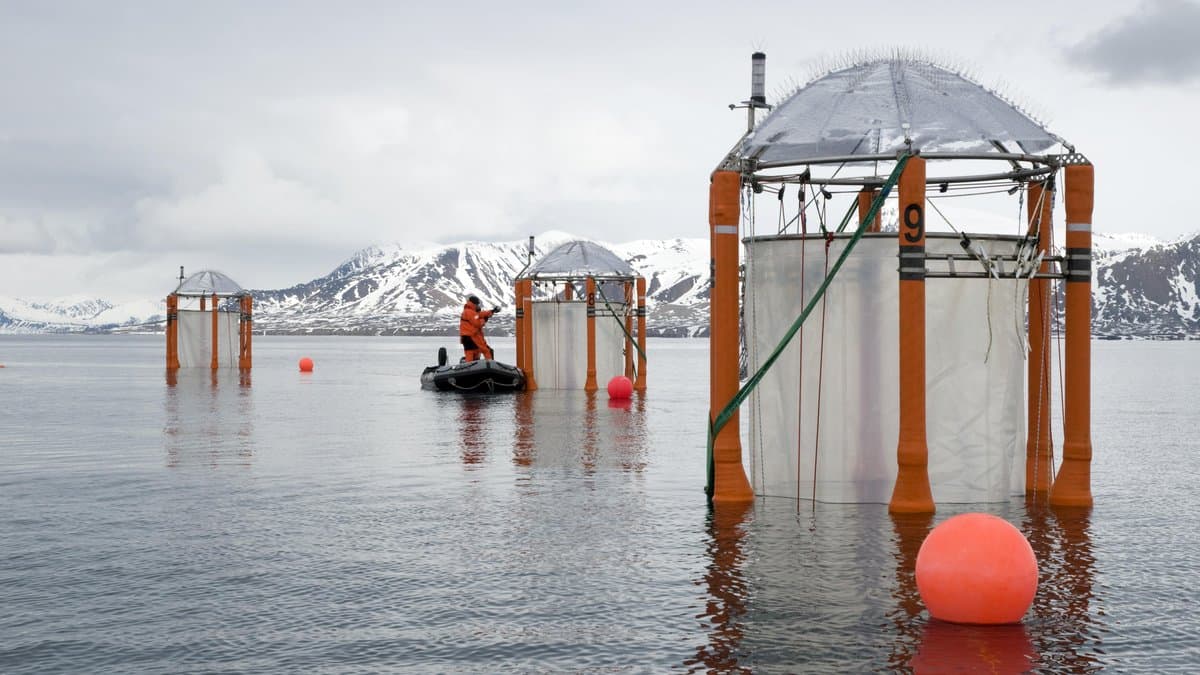
A 39-day experiment in the German North Sea has measured how much alkaline material seawater can take before a spring plankton bloom runs late. Juliane Tammen of GEOMAR Helmholtz Centre for Ocean Research Kiel and colleagues report that blooms developed much as usual at additions up to about 700 micromoles per kilogram, and began roughly six to nine days later at about 900 and above.
The method, ocean alkalinity enhancement, adds alkaline material to seawater to shift its chemistry so the sea takes up more carbon dioxide from the air. It is one of several proposed ways of removing the gas from the atmosphere. Writing in Communications Earth & Environment, the team notes the experiment was meant to inform boundaries for ecologically safe deployment.
The team worked in 12 floating enclosures of about six cubic meters off Helgoland in spring 2023, dosing them with calcium chloride and sodium hydroxide across a range of strengths. The seawater was not pre-loaded with carbon dioxide first, a route the researchers describe as cheaper and less energy-hungry than the one earlier plankton experiments used. In half the enclosures the dose was mixed straight through; in the rest it sat in the top layer for 48 hours first, imitating a discharge into slow-moving water.
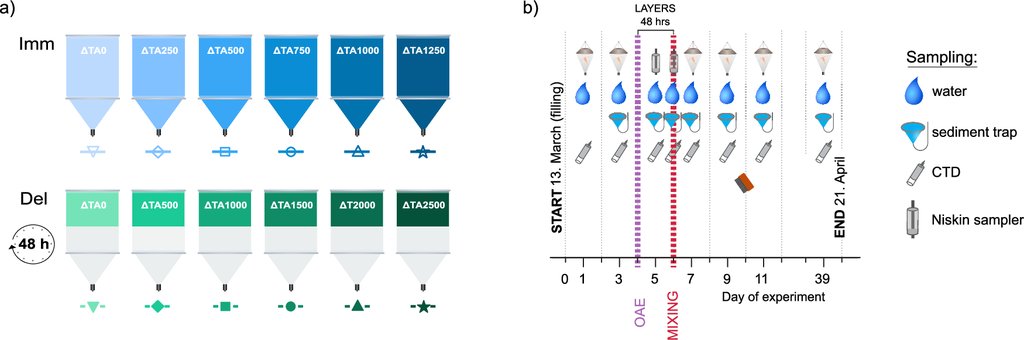
The team found that above the threshold, phosphorus held in the plankton's own particles fell significantly under both mixing scenarios, while carbon and nitrogen dropped only where the dose had sat in the surface layer first. Communities given the surface dose recovered once mixing brought the alkalinity below the threshold but responded more broadly than the evenly mixed ones at the same final alkalinity.
Tammen and colleagues call the threshold response encouraging, and say low to moderate additions may be ecologically tolerable in nutrient-rich spring water dominated by diatoms, algae with glassy shells. The safe range may be narrower wherever alkaline water is slow to disperse.
The data are openly posted in the PANGAEA repository. Germany's federal research ministry funded the work, with further support from Ocean Alk-Align, a project backed by Carbon to Sea and the Thistledown Foundation.
Sources
- nature.comPeer-reviewed