The 2023 Atlantic Ocean Heat Spell Could Have Been Much Worse, a Model Experiment Finds
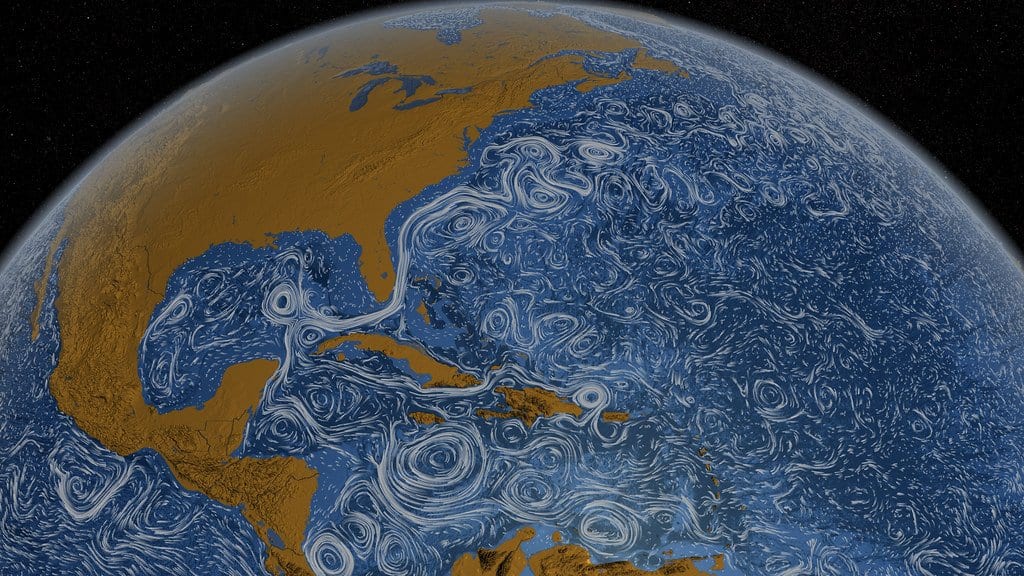
A University of Bern team has rerun the 2023 North Atlantic marine heatwave, a spell of abnormally warm ocean water, inside a climate model to see how much worse it could plausibly have been. The model produced versions of the event lasting up to 579 days, against the 240 days measured in the real ocean; the work was published Oct. 19, 2026.
The paper asks whether substantially more severe outcomes were physically plausible under present-day conditions like those of that year, and which processes could produce them. Those are model figures, not a forecast or a record of anything that occurred. It is published in Nature Communications.
In those runs, the strongest event peaked at 4.5 °C above the long-term average for the region, compared with the observed 2.9 °C. Cumulative intensity, which combines how warm the water was with how long it stayed warm, came out at 717 °C·days in the model against 224 °C·days in the real ocean. The authors describe the observed event as unprecedented in intensity and duration.
Catherine H. Gregory, Thomas L. Frölicher and colleagues at the University of Bern and Météo-France applied a method called ensemble boosting to a coupled Earth system model. It generates many alternative evolutions of one event, all of them physically consistent with the same present-day starting conditions. Their analysis of the longest and most intense events in the set points to contrasting roles for a persistent high-pressure system over Europe and the North Atlantic, less heat escaping from the sea surface to the air, more sunlight reaching the water, and heat moving around within the upper ocean.
The team also sets the present-day results against future warming, reporting that events comparable to the real 2023 heatwave become increasingly common as global warming progresses.
The paper is open access under a Creative Commons license, and the journal has posted the transparent peer review file with it; the version online is the accepted manuscript, with a final edited version to follow.
Sources
- Nature CommunicationsPeer-reviewed