Robot Sub Finds a Surprising Crowd of Sea Life at a Greenland Glacier's Edge
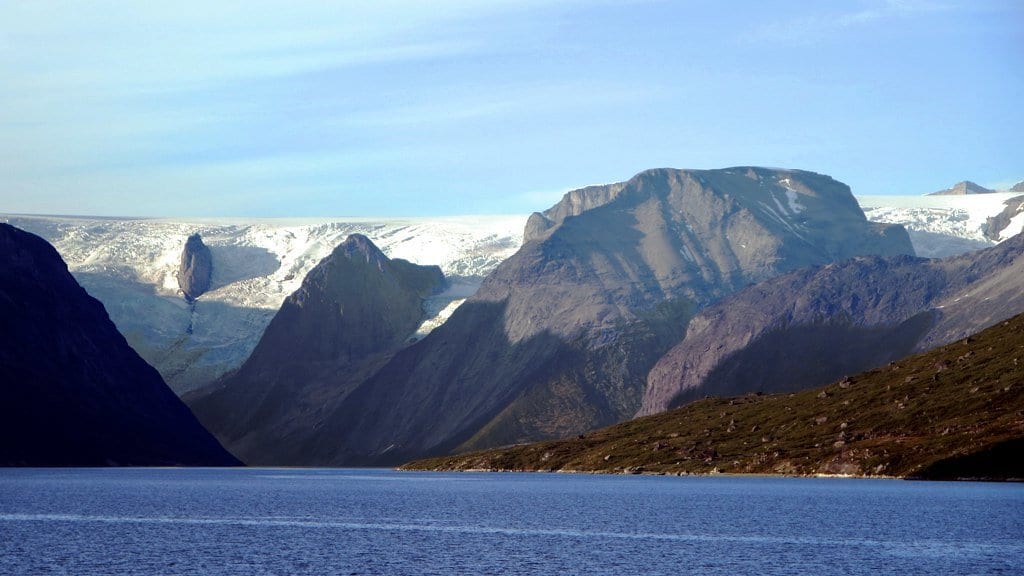
A remotely operated underwater vehicle sent to the submerged front of a South Greenland glacier recorded large numbers of zooplankton, fish and other organisms that appear to respond to material shed by the ice itself rather than to the deep, nutrient-rich water the glacier draws upward. Fleur Rooijakkers of Aarhus University and five co-authors published the observations Aug. 28 in Communications Earth & Environment.
The team worked at Naajat Sermiat, a South Greenland glacier that ends in the sea rather than on land. The vehicle recorded the shape of the glacier's underwater face and the discharge of meltwater and suspended material where the ice meets the water. The authors report large quantities of animals at that boundary on both visits, in May and August.
The organisms were "seemingly responding directly to glacier matter rather than to the entrained deeper nutrient-rich waters, as previously assumed," the authors write. They call the level of biological activity "unexpectedly high," a comparison against what they expected to find rather than against a measured baseline.
Aerial measurements captured the structure of the sediment-clouded plumes within meters of the glacier front, and boat-based observations tracked how those plumes changed as they moved down the fjord, according to the paper.
Direct observation of this boundary is scarce. Obtaining it is "both technically challenging and potentially dangerous," the authors write. That difficulty, they say, has left the physical and biological processes there largely undocumented. The work covers a single glacier, observed on two visits.
Accelerated melting and glacier retreat could alter food webs, carbon flux and nutrient cycles, the authors write.
Sources
- www.nature.comPeer-reviewed