In Southern Madagascar, Satellites Miss the Standard Hunger Scores but Track What Families Eat
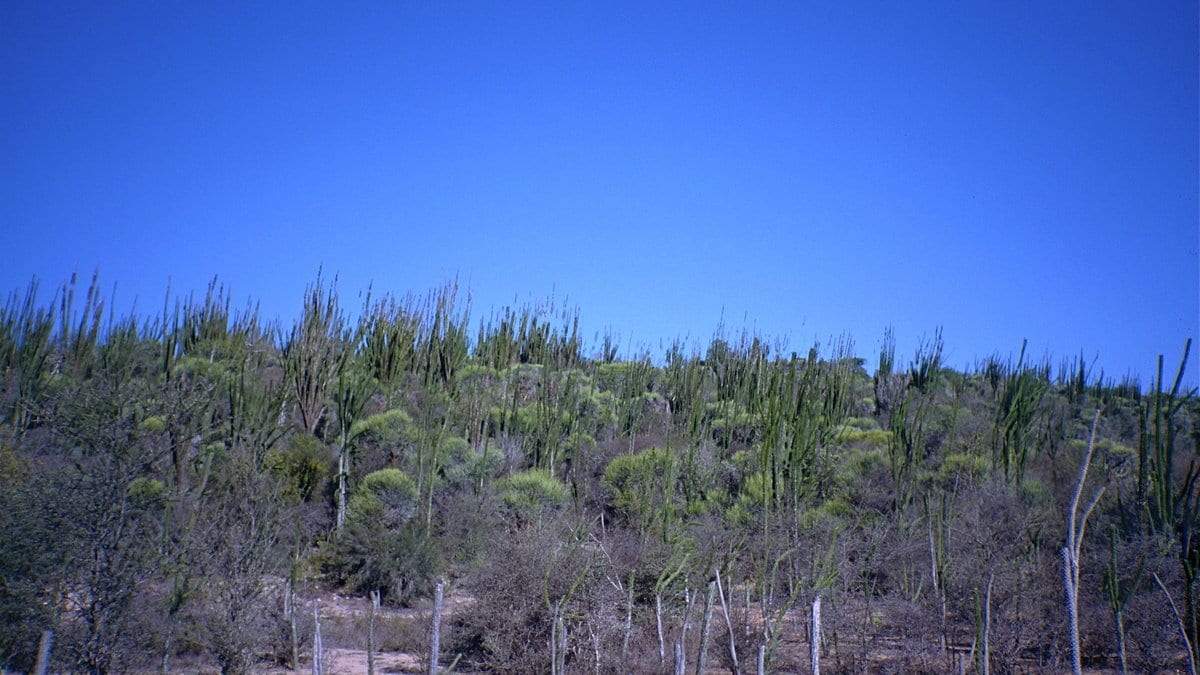
Satellite measurements of vegetation greenness did not reliably predict four standard food security indices in southern Madagascar, but they did follow the switch households make to less-preferred fallback foods when food runs short, Harvard University researchers report in Communications Earth & Environment.
Food security monitoring leans on satellite vegetation data, and the authors assessed it against a record of what households had actually eaten, not against another satellite product. They write that recurrent droughts and food shortages in southern Madagascar underscore the need for real-time food security monitoring.
Alexandria N. Berry and Peter J. Huybers, both of Harvard University's Department of Earth and Planetary Sciences, led the work with colleagues at Cornell University and the University of California, Irvine. They tested the satellite signal against a survey that has run monthly since 2018 and covers 602 households in southern Madagascar; 547 of them met its response-rate threshold and entered the study. The authors report that greenness reached statistical significance in at most three of the six communes surveyed for any of the four indices, and in none at all for the reduced Coping Strategies Index.
Greenness was instead significantly associated with the leading pattern of dietary change, which the authors describe as a substitution — staple or aid-supported foods giving way to the lower-preference fallback foods eaten during food stress. It explained 32–58% of that pattern's variability, and 38–70% once seasonality was included. The next-strongest patterns of dietary change showed no such relationship.
Other vegetation indices, time-lagged versions of the greenness signal, and alternative statistical treatments did not improve performance. On that basis the authors argue that greenness captures primary dietary shifts, and they support building it into more detailed food security monitoring systems.
The MIRA program provided access to household survey data, and the work was supported by the United States Agency for International Development through funding to Catholic Relief Services. The paper was published Nov. 20, 2026, in an early peer-reviewed version that the journal says will be replaced automatically by the final version of record.
Sources
- Communications Earth & EnvironmentPeer-reviewed