Northern India's Winter Smog Could Be Forecast a Season in Advance
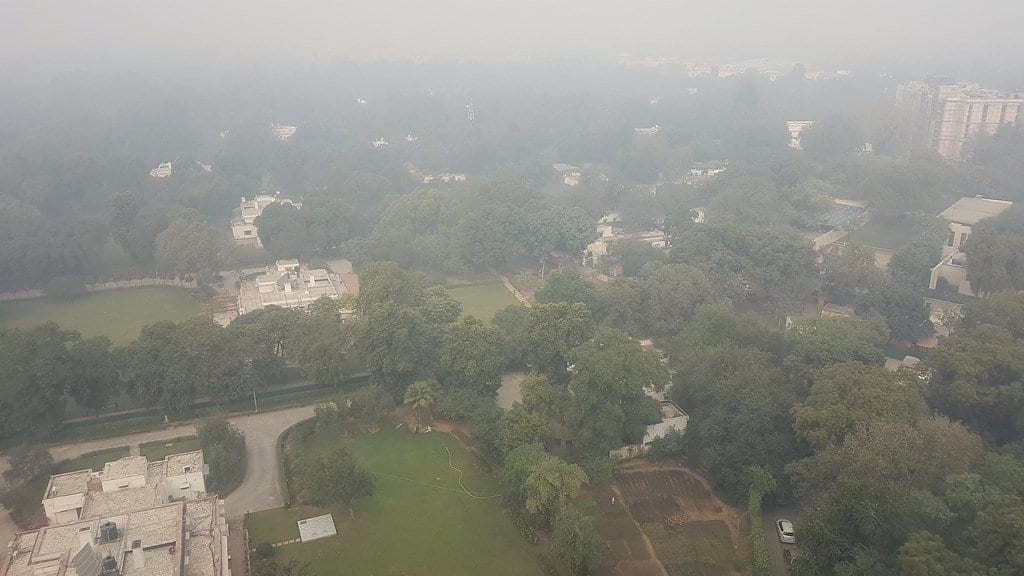
About 70% of the year-to-year difference in how severe northern India's winter air pollution becomes is governed by storms that arrive from the Mediterranean, a team led by Yuanyu Xie of Princeton University reported in Science Advances on Sept. 9. Ocean temperatures measured in the previous autumn carry enough of that signal to estimate the severity of a coming smog season months before it begins.
The authors write that knowing a winter's severity in advance could support mitigation planning before the pollution arrives rather than during it. No such forecast is currently issued; the study outlines the potential and tests it against past winters.
The analysis drew on more than a decade of quality-controlled measurements from the Indian government's own PM2.5 monitoring network, according to the study. PM2.5 refers to fine airborne particles small enough to reach deep into the lungs. The storms, which atmospheric scientists call western disturbances, clear that pollution in two ways: they ventilate stagnant air and their rain washes particles out. How often they come depends on the position and strength of the subtropical jet, a fast ribbon of high-altitude wind, which the team traced to sea surface temperature patterns across the North Atlantic and tropical Indian Ocean during the preceding autumn.
Using only those autumn ocean temperatures, the team predicted storm rainfall and pollution severity one season ahead, then compared the result against what the monitors had recorded. The predictions returned R-squared values of 0.52 to 0.69, meaning they accounted for roughly half to two-thirds of the variation between winters.
The paper is open access. Its authors include Xie and Denise L. Mauzerall, both at Princeton's Center for Policy Research on Energy and Environment, with colleagues at the University of Reading and Tsinghua University. The listed funders are the National Natural Science Foundation of China and a NERC Independent Research Fellowship.
Sources
- doi.orgPeer-reviewed