Cold Snaps Are Getting Worse in China's Rice Fields, Even as the Climate Warms
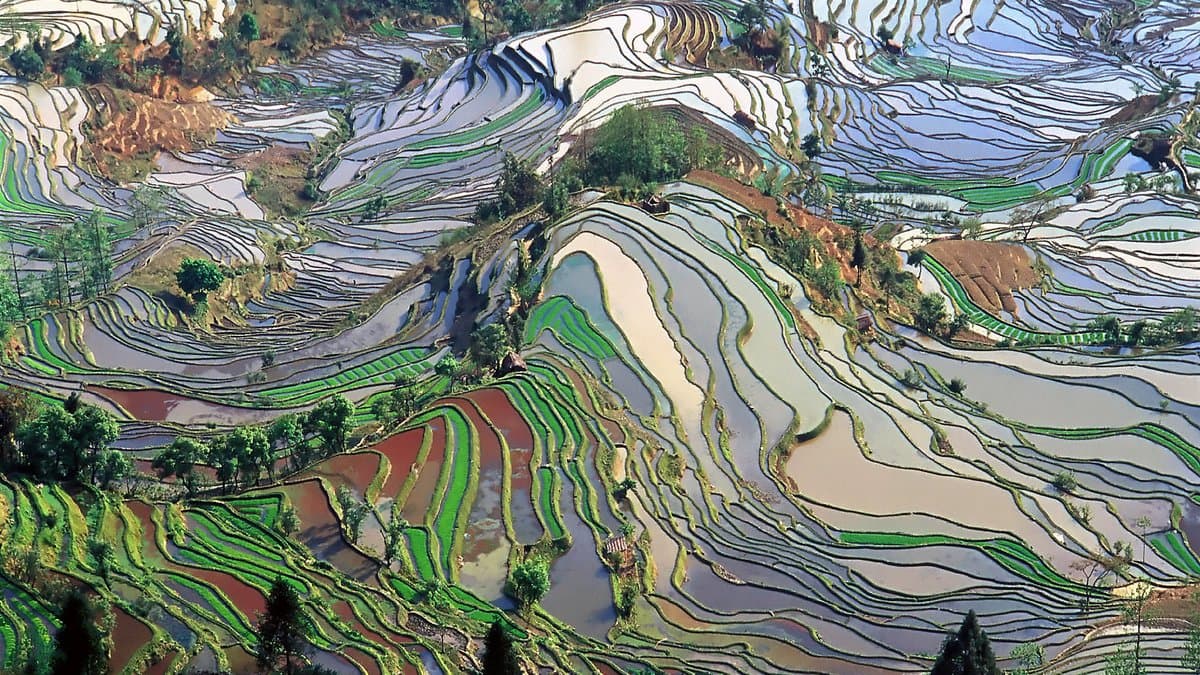
Extreme cold days in China's rice-growing regions roughly doubled in frequency over the past two decades, and the cold cut the national rice yield by about 5%, according to a study published Sept. 28.
Writing in Communications Earth & Environment, Jin Fu of Hohai University, Feng Zhou of Peking University and colleagues say their measurements are meant as a benchmark for judging cold risk in rice-growing regions elsewhere. They argue that cold extremes should be built into crop adaptation planning alongside heat. Warming is usually expected to make cold damage a shrinking problem. In this record it did not shrink.
The team worked from a national observation set of 4,193 extreme cold days logged at 218 monitoring sites between 1991 and 2012, matched against yields at those sites. They report that cold days over that period reduced national rice yields by 5.0 ± 0.3%, and that the coldest days grew colder while the milder ones did not.
Timing mattered more than the total amount of cold. The authors attribute more than half of the national loss to cold early in the season, between transplanting and stem elongation, a window they describe as frequently overlooked. In the Northeast, cold around heading and flowering did most of the damage. The dominant route to lost yield in both cases was a drop in grain number.
The team then used the measured sensitivity to correct projections from a set of global climate models. Under the highest-emissions scenario they project a further 3.0 ± 0.9% national yield loss by the end of the century, at least three times what the same models give uncorrected. Lower-emissions scenarios come out smaller.
The paper also notes that rice is more sensitive to cold than wheat or maize, and that single cold events have cut regional harvests by far more than the national figure.
Sources
- Communications Earth & EnvironmentPeer-reviewed