Radar Satellites Watch Emperor Penguin Colonies Through the Antarctic Winter Night
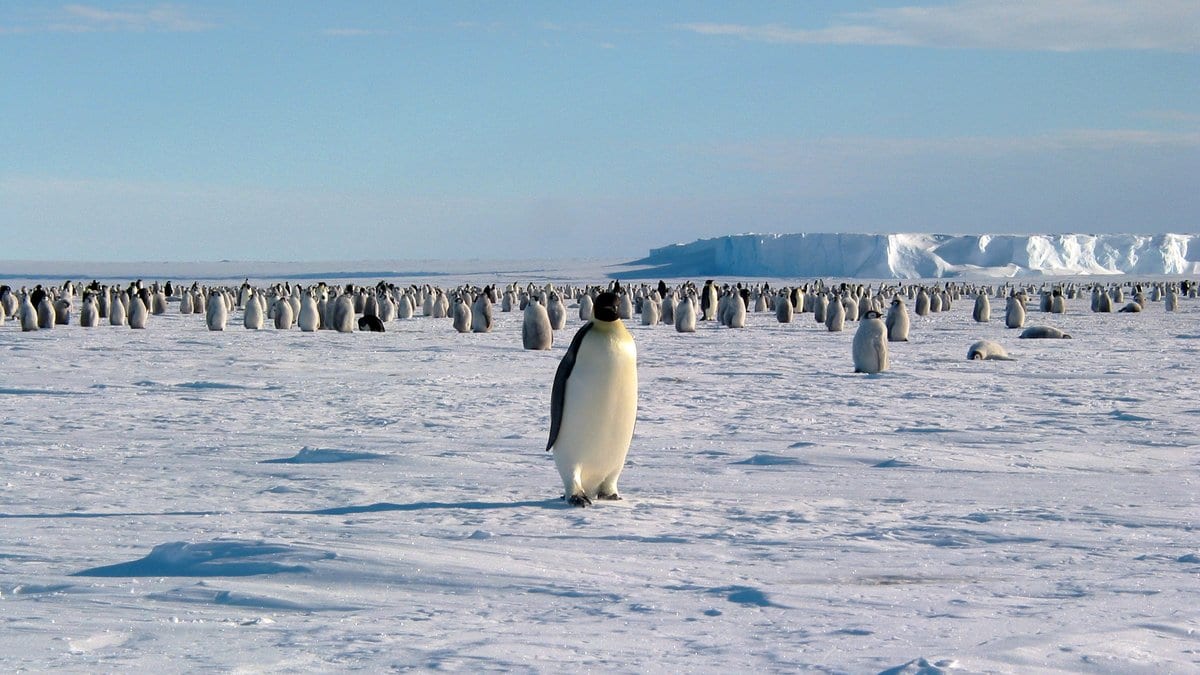
Radar satellites can locate emperor penguin colonies during the Antarctic winter, when there is no sunlight for optical satellites, researchers write in a study published Sept. 2 in Communications Earth & Environment.
The team, led by Grant J. Macdonald of Durham University with co-authors at the British Antarctic Survey, the University of Canterbury and Woods Hole Oceanographic Institution, used Sentinel-1, the European Copernicus radar satellite, which images in darkness and through clouds. On the fast ice, the frozen sea attached to the shore where the birds breed, the colonies showed up as bright patches against a darker background at the satellite's 10-meter resolution. Combining those winter images with summer optical pictures from Landsat 8, Landsat 9 and Sentinel-2, the team tracked the colonies at Atka Bay, Coulman Island and Cape Washington year-round from 2017 to 2024, often at intervals shorter than a week.
All three colonies moved in winter, though less than in summer, and by amounts that differed between years and sites. Cape Washington was the steadiest: its colony stayed within 0.5 kilometers of its earliest winter location between April and August. The Atka Bay colony shifted to a neighboring bay in late May 2022, more than 1.5 kilometers by July, and split into two groups in 2024. The team also recorded groups several kilometers apart moving away from the ice edge at the same time, with no visible change in ice conditions.
Springtime counts cited by the authors put the adult populations at 9,657 at Atka Bay, 19,822 at Coulman Island and 12,178 at Cape Washington. The study notes that emperor penguin populations are projected to decline this century as Antarctic sea ice changes; that projection is earlier work it cites, not a finding here.
Rough or old ice scatters radar as brightly as the birds do, which made the colony at Snow Hill impossible to locate in preliminary tests. Because s semi-automated detection method returned too many false positives, the tracking was done by hand. Sentinel-1 images the Antarctic routinely without being tasked, and its data are free.
Sources
- Communications Earth & EnvironmentPeer-reviewed