Europe's Yearly Health Check on the Ocean Is out, and It's Free to Read
The European Union's Copernicus Marine Service published the 10th edition of its annual open-access Ocean State Report Sept. 30, 2026, adding 18 new peer-reviewed chapters on the state of the global ocean and Europe's regional seas.
The service describes the report as a reference and an ocean monitoring dashboard for the scientific community, policymakers and others with decision-making responsibilities. It is assembled from satellite readings, measurements made at sea and model reconstructions of past conditions.
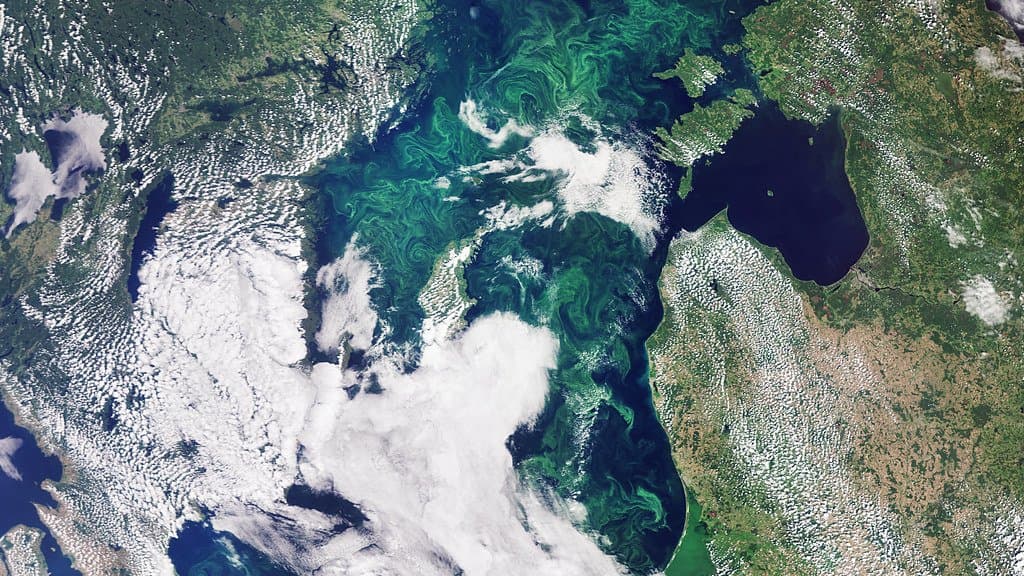
The volume is published in the journal State of the Planet. Its new chapters take in the polar oceans, small island developing states, the Barents Sea, the Baltic and the Mediterranean. One tracks decades of change in the timing of microscopic algae blooms; another sets up a way to track spells of unusually warm water, known as marine heatwaves, in the Mediterranean and Black seas.
Two chapters reconstruct single events. Laura Tuomi and colleagues report that the sea at Kemi, in Finland's Bothnian Bay, fell to 153 centimeters below its reference level on Nov. 21, 2024. That is a record low for the station. The researchers noted that the Copernicus Marine Baltic forecast system predicted the drop accurately three to four days out, while forecasts made earlier missed the record.
In another chapter, Blanca Fernández-Álvarez and colleagues report that the Mediterranean Sea had more marine heatwave days in 2024 than in any other year of the past two decades, and that the result holds under every detection method they tested. The team recommends that such studies should state which baseline they used, since this choice directly impacts how results are compared.
One chapter of the volume is older than the rest. The Starfish Barometer, an annual synthesis of global ocean developments, was published June 8, 2026, to coincide with World Ocean Day. Its authors say it brings together already available information rather than generating new data.