At COP31, UNFPA Links Heat and Floods to Pregnancy Loss as Climate Plans Lag
ANTALYA, Türkiye — A very hot week before birth and a flood during pregnancy are both linked to a higher risk of losing a baby, a COP31 side event heard on Nov. 12, 2026, where UNFPA, the U.N. sexual and reproductive health agency, previewed how national climate plans handle such risks.
Florence Bauer, UNFPA's regional director for Eastern Europe and Central Asia, opened with evidence from two 2024 studies. One, in Nature Medicine, covering 138,015 births in four African countries, linked an exceptionally hot week before birth to 34% higher odds of perinatal death, meaning a stillbirth or a death within a day of birth. In the six hottest months, the odds roughly doubled. The other, in Nature Communications, estimated that floods during pregnancy may cause about 107,888 pregnancy losses a year across 33 low- and middle-income countries. Bauer said the harm is not inevitable: "It is absolutely preventable provided that there is adequate foresight, planning and investment."
Zainab Yunusa, a UNFPA program analyst for climate and gender, outlined a study from Madagascar built on interviews and group discussions rather than a survey. After cyclones and floods, 68% of the people interviewed named the rising cost of transport, more than washed-out roads, as their most immediate barrier to care. Yunusa added that, in one mother's account, crossing a river by dugout canoe can cost eight times as much in a flood, leaving a woman to choose between the fare and food.
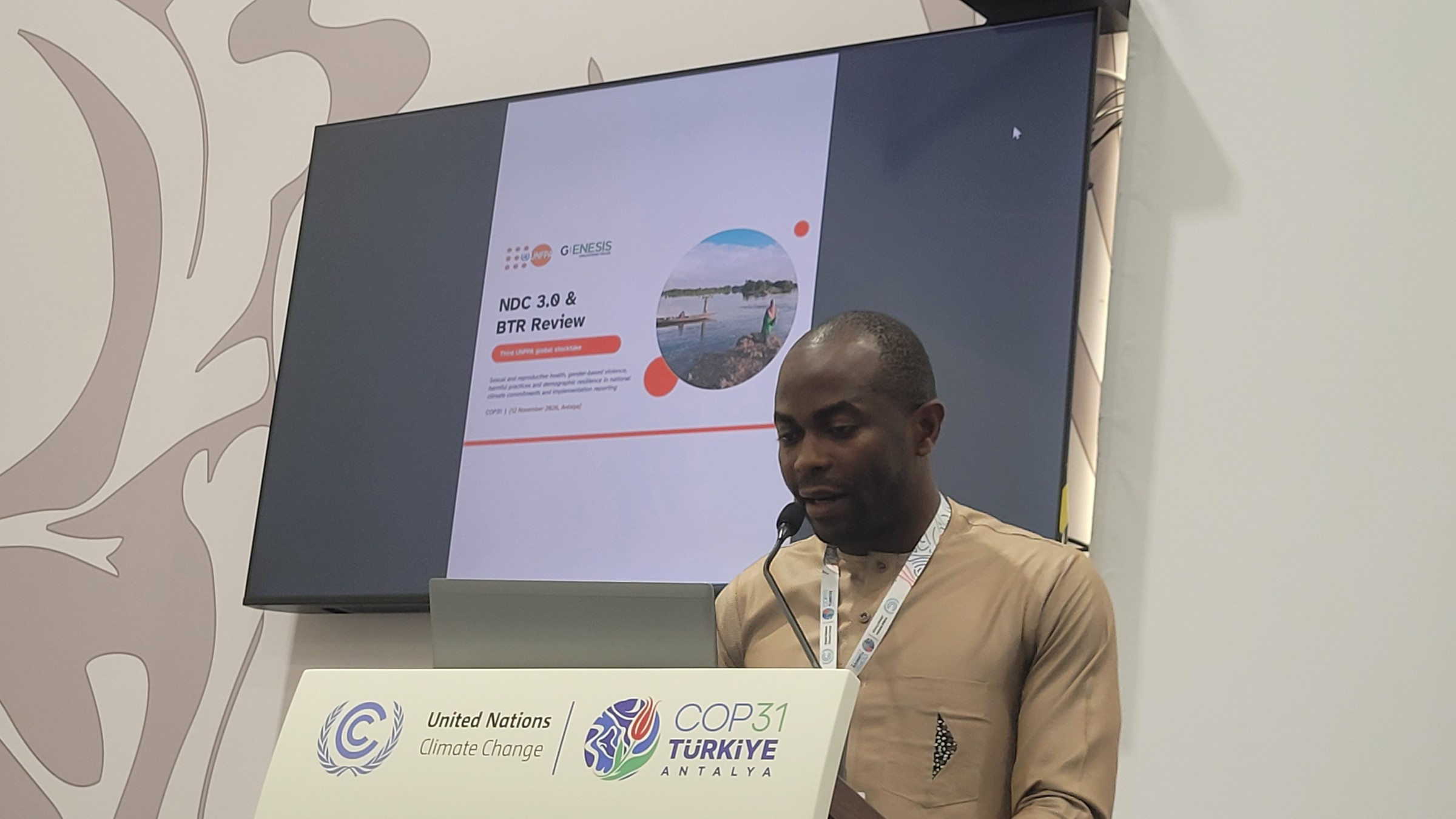
Chiagozie Udeh, a UNFPA program specialist for climate adaptation and innovation, presented preliminary findings from the agency's third global review of national climate plans. Of the 118 plans reviewed, 52 refer to sexual and reproductive health. Gender-based violence appears in 47, three times as many as in UNFPA's 2023 review. Harmful practices such as child marriage appear in 14, up from one country, Vietnam. Budgets and indicators lag far behind, Udeh noted. Scoring for the first time what countries report having done, UNFPA put the global implementation score at 23.3 out of 100. The agency expects the full report in the coming weeks or months.
At the same session, "Resilient Health for Mothers and Newborns," Ruth Cross Kwansing, Kiribati's minister of women, youth, sport and social affairs, described what that gap looks like on the ground. Each clinic on the country's outer islands is run by a single medical assistant who handles every health service, she said, and care for pregnant women relies on aid groups for supplies as basic as delivery kits.
Sources
 By Nika Kulpin and Andreja Jezernik