Two Decades of Warming Left a Desert Soil Crust Paler, and Its Surface Warmer
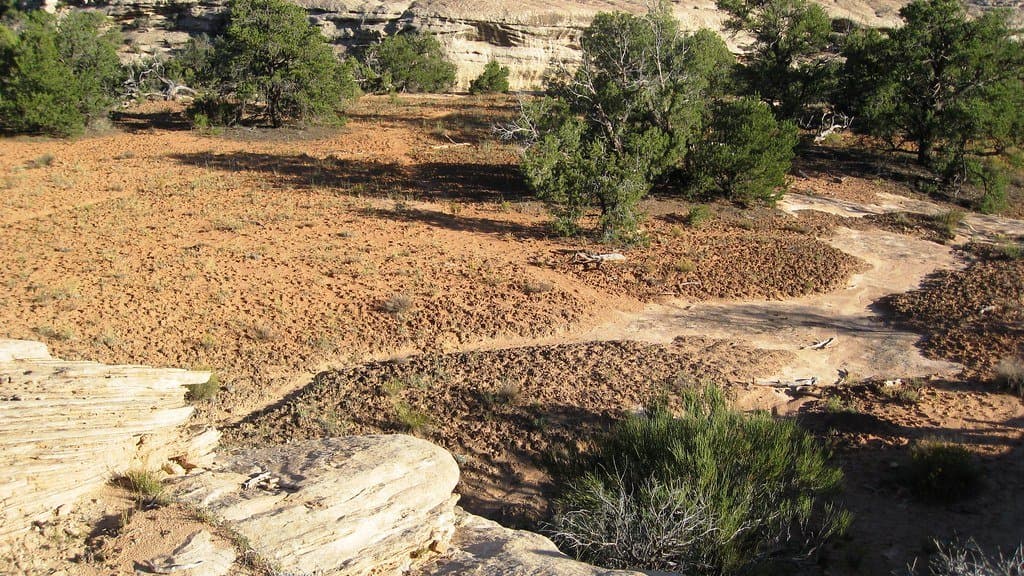
Heating a patch of desert soil for two decades made the living crust on its surface paler, drier and warmer, and the team that ran the experiment calls the result evidence of a feedback that adds to warming. William K. Smith of the University of Arizona, Sasha C. Reed of the U.S. Geological Survey and colleagues published the finding on September 12, 2026, in Communications Earth & Environment.
Biological soil crusts, living mats on bare soil, cover about 12% of the world's land surface, and their role in limiting climate change has been uncertain, the pap
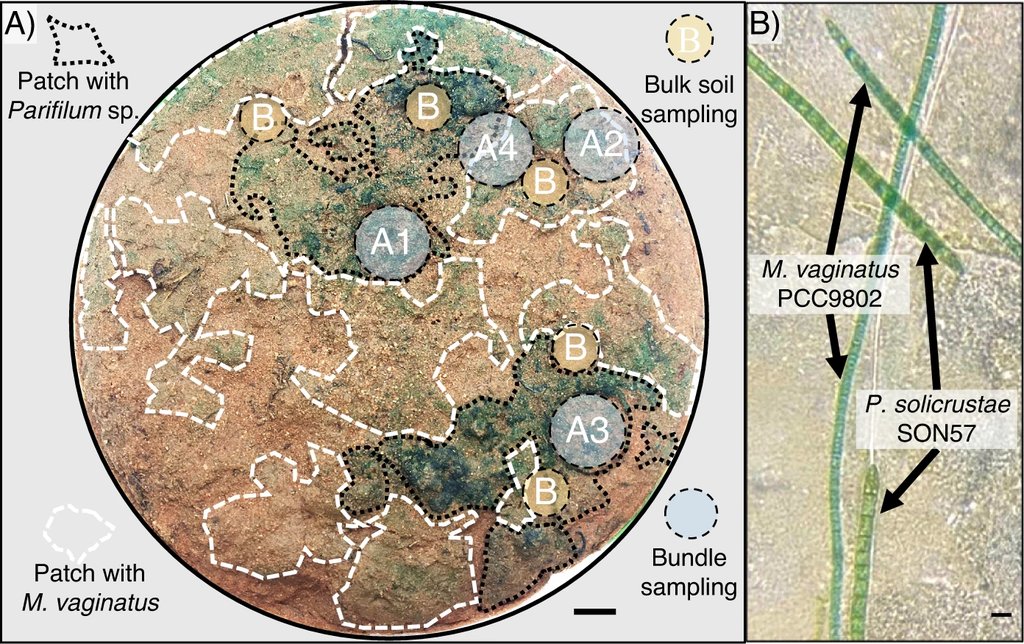
er says. The researchers set out to measure it by tracking a long-running climate experiment with instruments that read the surface from a distance.
Warming in the field and changes in monsoon rainfall shifted what the crust is made of. Mosses lost about 27% of their ground cover. Lightly pigmented cyanobacteria, microbes that colonize bare ground first, gained about 36%.
That shift registered at the surface as well. For every 10% gain in the relative cover of the pale cyanobacteria, surface temperature rose about 0.3 °C under clear skies in daytime. Photosynthetic potential fell, surface brightness rose and surface moisture dropped with the same shift.
The authors read the measurements as a loop: warming degrades what the crust does, the degraded crust offsets less of the warming, and the surface warms further. That loop is missing from the models used for climate projections, they write, so current projections might underestimate how fast drylands warm.
The paper is open access and lists funding from NASA and the U.S. Geological Survey. Springer Nature has posted the peer-reviewed accepted version ahead of the final edited text.
Sources
- Peer-reviewednature.com
