Brain Cells That Prefer Faces or Food Fire Harder for Pictures People Later Remember
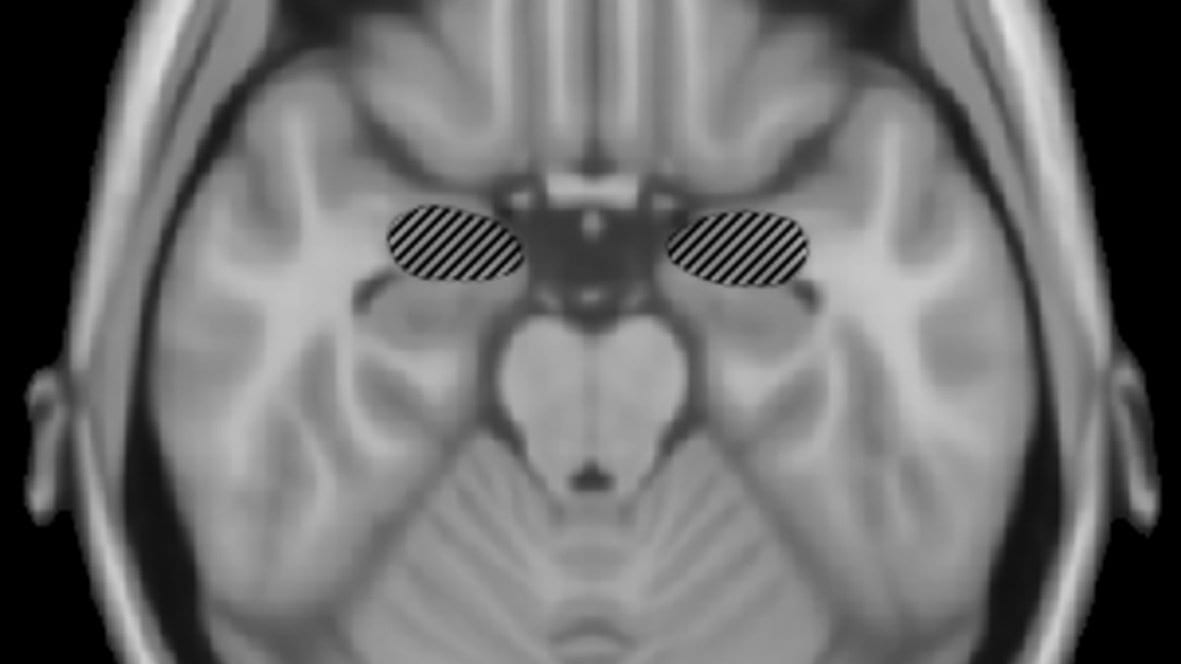
Neurons in the human amygdala that each prefer one category of image, known as category cells, fired more strongly while people viewed pictures they would later remember than pictures they would later forget. A team led by Jiayang Xiao and Ueli Rutishauser of Cedars-Sinai Medical Center in Los Angeles reported the result in Nature Neuroscience on Oct. 27, 2026.
The authors say the question behind the work is a practical one. The amygdala is already being considered as a site for electrical stimulation to strengthen memory, and without knowing the mechanism, it is unclear what such a treatment should target within the amygdala. Their answer is that what predicts whether a memory forms is the recruitment of cells carrying the content of what is being seen, rather than a general rise in activity.
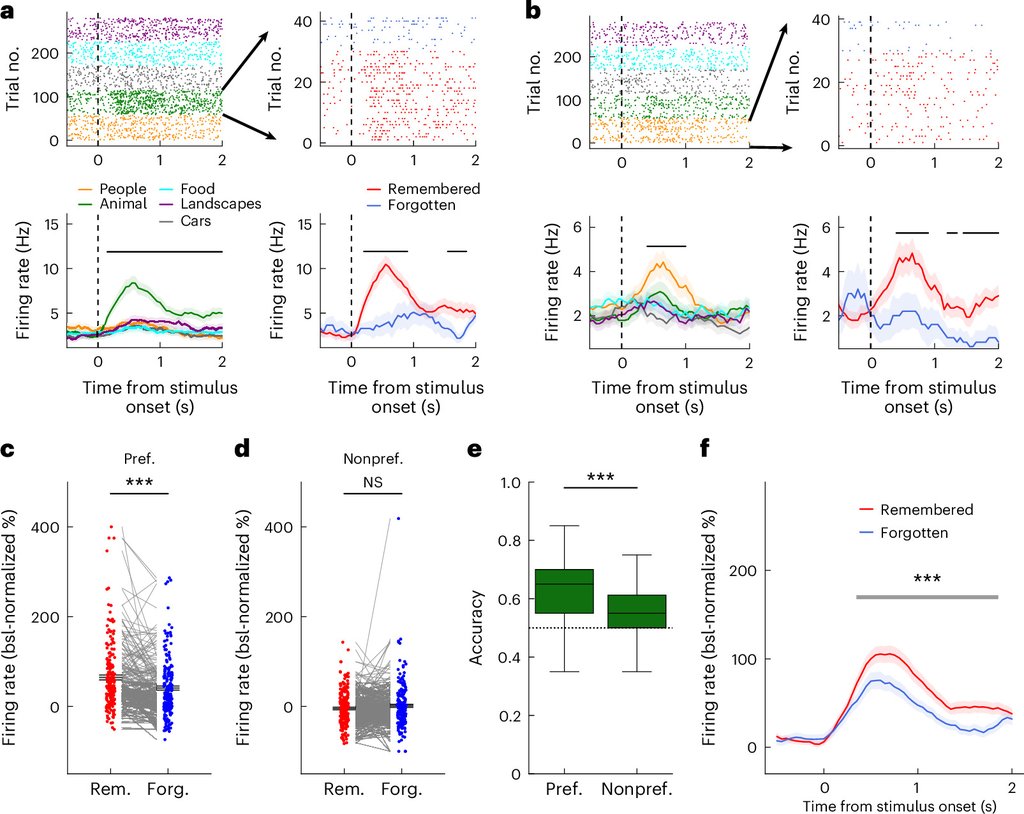
The paper reports recordings from single neurons in patients who had electrodes implanted to localize seizures as part of their treatment for drug-resistant epilepsy. Participants viewed pictures from five categories (people, food, animals, cars and landscapes) and later took a recognition test, saying whether each picture was new or old and how confident they were of the answer. The paper is open access.
The effect was confined to each cell's preferred category, so the same neuron showed nothing for pictures outside it. In the amygdala, it emerged earlier and was stronger than in the hippocampus, the structure most often linked to memory formation. The signal also predicted the episodic aspect of the memory: the recollection of a specific past event. Nor did it depend on how pleasant or arousing the picture was, in a region usually described as handling emotion.
Successful memory formation also came with tighter coordination between the firing of amygdala category cells and electrical activity in the hippocampus. The same pattern held in two separate groups of patients performing different memory tasks.
The authors suggest category cells in the right amygdala as a target for treating disorders that affect episodic memory, an idea the paper raises rather than tests.
Sources
- Nature NeurosciencePeer-reviewed

Medical Disclaimer: This content is provided for general informational and educational purposes only. It is not medical advice and should not be used as a substitute for professional medical advice, diagnosis, or treatment. Always consult a qualified healthcare professional regarding any medical condition, concern, symptom, or treatment decision.