As the Frozen Ground Thaws, Alaska's Rivers Are Carrying More Metal
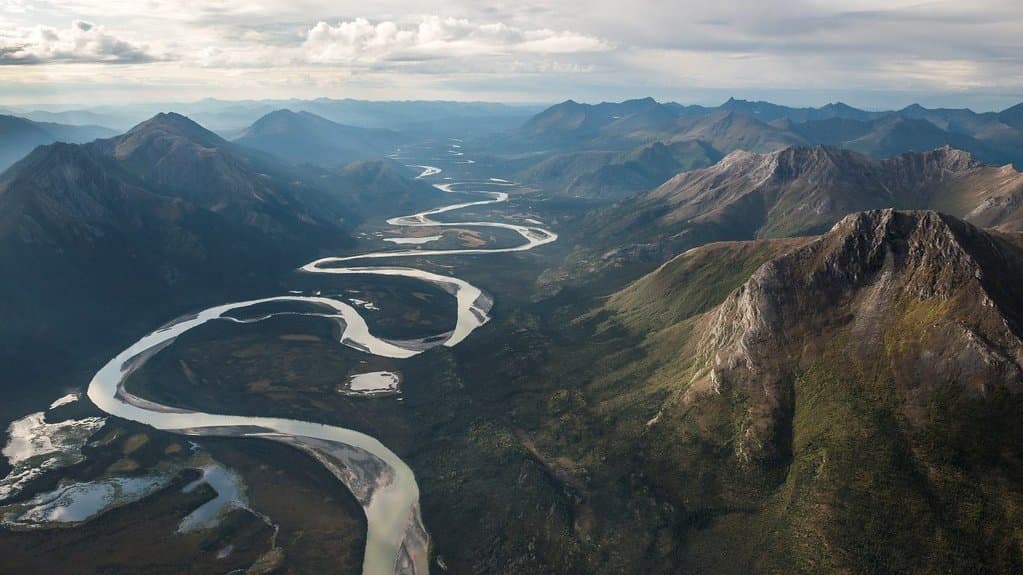
Thawing ground in northwest Arctic Alaska is releasing acid and dissolved metals into the rivers that drain it, and the chemical signal carries far downstream, according to a survey of six watersheds in the Brooks Range.
The process is known as acid rock drainage: acid and dissolved metal released as newly exposed rock weathers. Taylor G. Evinger and Brett A. Poulin of the University of California, Davis, with colleagues at the U.S. Geological Survey and the National Park Service, sampled river chemistry across those watersheds from 2022 to 2024 and published the results Sept. 24 in AGU Advances. The authors write that how this drainage spreads through river systems, and how it changes over time, have been poorly measured, and that their results carry implications for ecological and human health.
The chemistry is most extreme where the drainage enters. Seeps had a median pH of 3.2, and the metals measured in them summed to 451 milligrams per liter. Stretches of the main rivers above those inputs sat at pH 8.3.
The main rivers did not turn acidic. The authors report that the inputs raised mainstem concentrations of iron, aluminum, manganese, zinc, nickel, cadmium, rare earth elements and sulfate, and that mainstem pH stayed stable because the rivers had enough capacity to absorb the acid.
In the Salmon River, sulfate, zinc, nickel, cadmium and iron were up to 70 times higher at points more than 100 kilometers downstream of the acidic inputs, in both dissolved and particle-bound form. The paper calls that long-range transport.
Two of the watersheds changed abruptly. The authors report increases of up to 263% in sulfate and zinc concentrations between 2019 and 2020, which followed a record warm and snowy winter.
The National Science Foundation, the U.S. Geological Survey and the National Park Service funded the work. The paper is open access under a Creative Commons license.
Sources
- doi.orgPeer-reviewed
