How a Robot Dog Ran a Marathon Without Stopping to Recharge
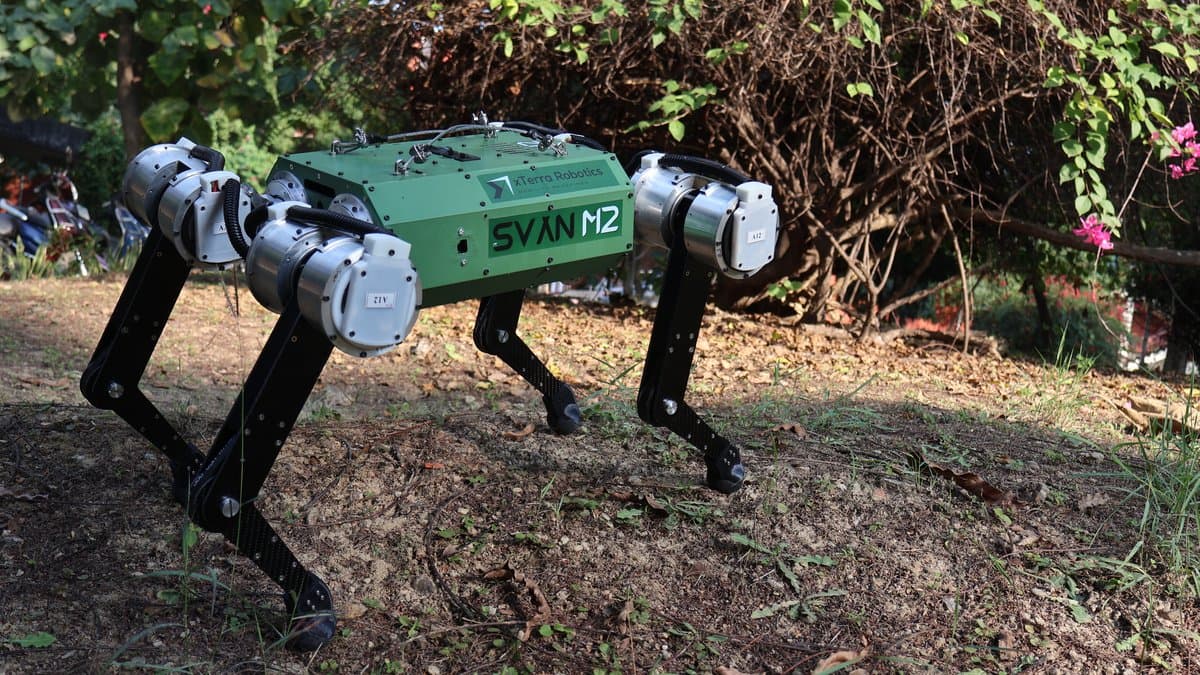
A team at KAIST has published the design and energy accounting behind RAIBO2, a four-legged robot that covered a full marathon on a single battery charge. The run itself dates from 2024 and was reported then; what Nature published on Sept. 23 is the engineering behind it.
The paper states that quadruped robots are built for work such as rescue operations in disaster zones and mountainous regions, and that how far one can travel between charges is what keeps them out of it. Legged machines, unlike wheeled ones, spend energy at their joints just holding the body up, and lose more every time a foot lands.
Choongin Lee and colleagues report a total cost of transport of 0.25 for RAIBO2, against a human benchmark of 0.37, and more than three times the travel range per battery charge of existing quadrupeds. Cost of transport is the energy spent to carry a given weight over a given distance, and lower is better. The comparison with other machines is drawn from published figures rather than from head-to-head runs, and the loss analysis covers a 1,447 Wh battery.
The paper credits a lighter mechanical build that passes force through the leg with less loss, motor circuitry rebuilt for lower electrical resistance, and a walking controller trained to waste less energy at each footfall. Earlier work on quadruped efficiency, it says, addressed such losses separately.
RAIBO2 finished the Sangju Gotgam Marathon course in 4 hours, 19 minutes and 52 seconds. Jemin Hwangbo, of KAIST's Robotics and Artificial Intelligence Laboratory in Daejeon, South Korea, is the paper's corresponding author.
Sources
- nature.comPeer-reviewed
