A Humanoid Learns to Walk and Carry by Watching People Instead of Robots
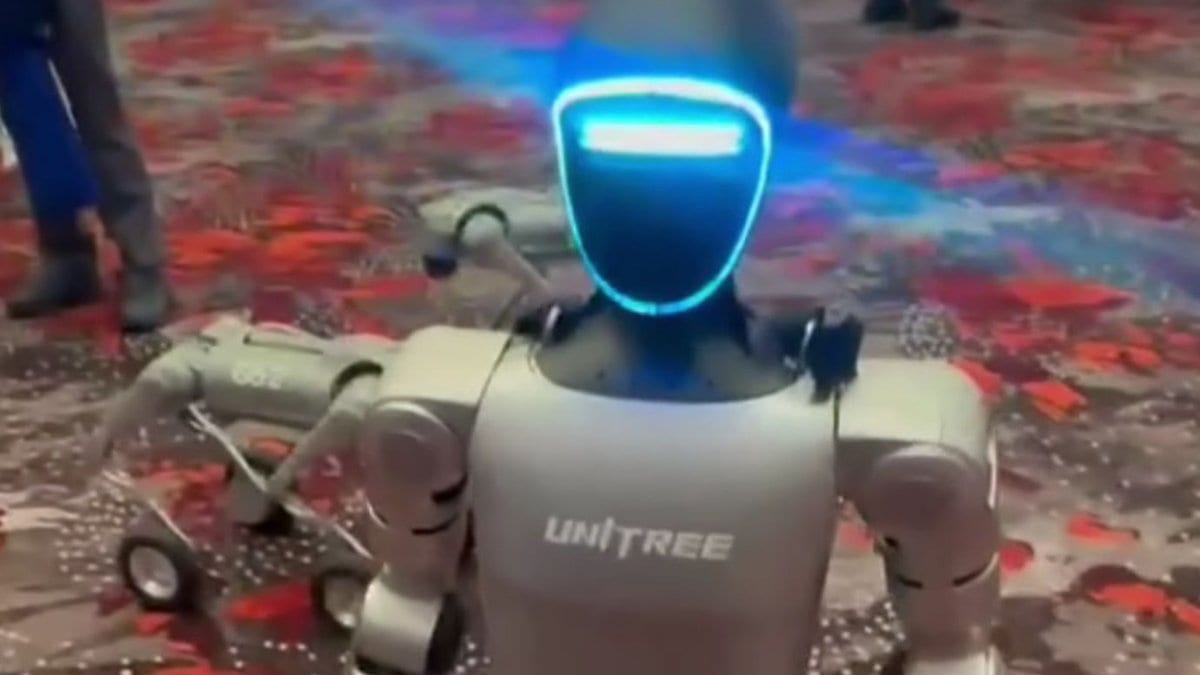
A team of 14 researchers posted a preprint on Oct. 8, 2026, which has not been through peer review. It describing Being-M0.7, a control model for humanoid robots trained mostly on recordings of people rather than of robots. The authors report that it scored best among the systems they compared it against on a simulated benchmark, and that on a real Unitree G1 it matched, rather than beat, the strongest of those systems.
The authors set the work against a shortage of training data. Humanoid robots that must walk and handle objects at the same time need examples of both, and recorded demonstrations of robots doing it are scarce. Human video and motion-capture recordings are plentiful, but most of that material carries either the video or the body movement and not both, and human movement does not translate directly into robot commands.
Being-M0.7 is a latent world-action model, meaning it learns to predict what a scene and a body will do next. The corpus is drawn from more than 10,000 hours of raw recordings of people, combining clips that carry only video, only motion, and both together. Training runs in three stages. A general stage learns from the human data; a middle stage adapts what it learned to a robot's own cameras and body; and in the last stage a separate action module combines the frozen model's visual predictions with live images and the robot's sense of its own joint positions.
On SIMPLE, the simulated benchmark the team used, the authors report the highest aggregate success rate among the baselines they compared against. On the physical Unitree G1, the result is different. On the same kind of walking-and-carrying tasks, Being-M0.7 matches the strongest baseline rather than beating it, and both sets of numbers are the team's own.
Sources
- arXivPreprint