A 3D-Printed Lens That Steers Radio Beams, Designed in Minutes

Researchers at the University of Siena and the 3D-printing company Inkbit have printed a plastic lens that steers a radio beam continuously across 35 degrees on either side of center, and they report designing it in minutes on a standard computer.
Their paper, published Sept. 26, 2026 in Communications Engineering, addresses the demand for compact beam steering. It sets out a design method for gradient-index lenses, which bend a signal using internal material whose electrical properties vary from point to point instead of a curved surface. Making one do a particular job means solving the problem backward: what internal distribution of material produces the wavefront you want.
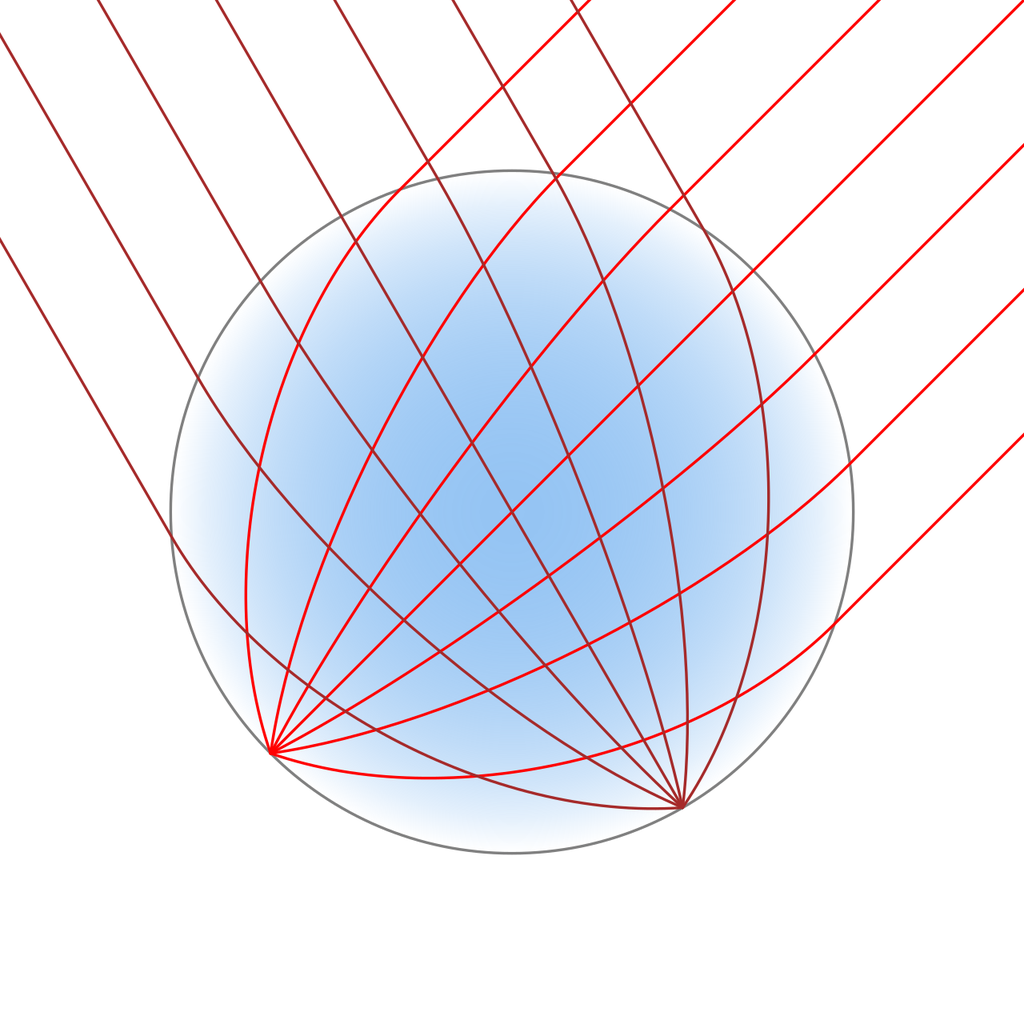
The framework works directly on the equations that describe how a signal travels through the lens, instead of optimizing a structure one small volume at a time, an approach the paper puts at thousands of full electromagnetic simulations. The lens itself was 3D-printed as a gyroid, a repeating three-dimensional lattice, with several feed points.
The one lens the team built and measured held that 35-degree scan across a fractional bandwidth of 33%, meaning the usable band covers about a third of its center frequency. The authors describe the scan loss as low and the beam fidelity as excellent, and present the result as a direct path from a wanted electromagnetic function to a device that can be manufactured.
Huawei funded the work through a joint laboratory it runs with the University of Siena, per the paper's funding statement. Ilir Gashi is the first author and Matteo Albani the senior author, both at Siena; two co-authors are at Inkbit, in Medford, Massachusetts.
Sources
- Communications EngineeringPeer-reviewed