AMD's New Server Chips Go on Sale, Built for Data Centers Full of AI Agents
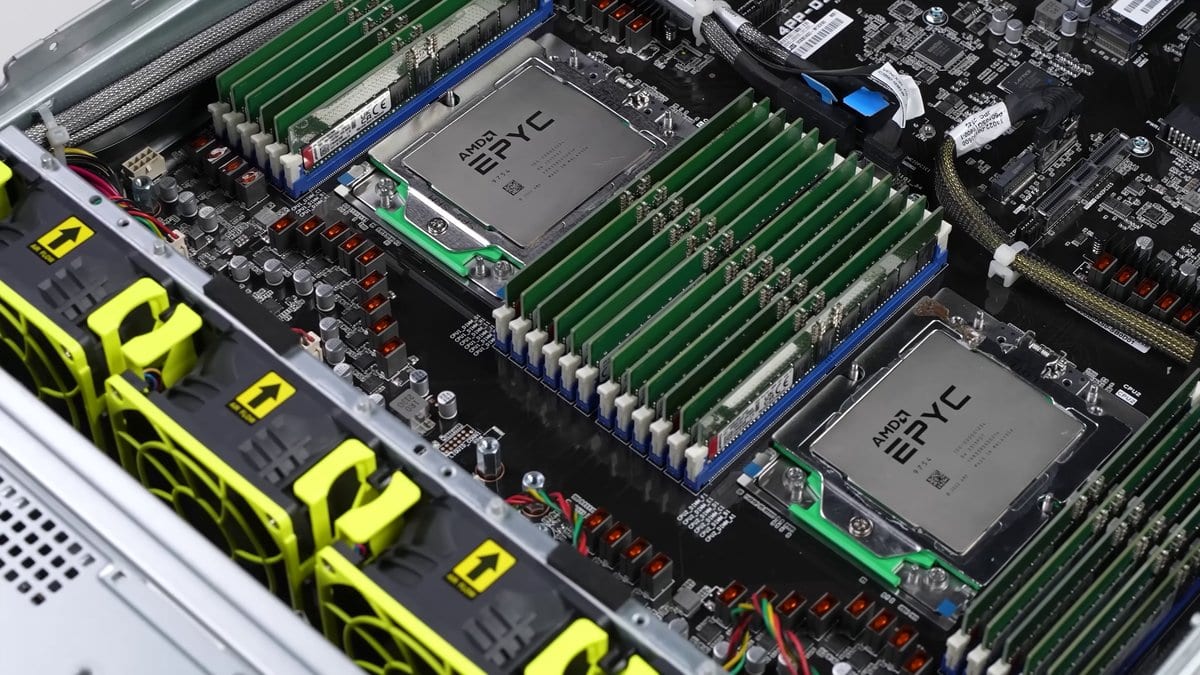
AMD said on Nov. 10, 2026, that its sixth generation of EPYC server processors is generally available and that systems built around them are shipping from server makers. The processors use the company's new Zen 6 architecture and a socket it calls SP7.
AMD says the line is aimed at data centers running large numbers of software agents, workflows that call a model, fetch data and run code alongside existing business applications. "AI is significantly expanding the role of the CPU across every layer of the data center," said Dan McNamara, AMD's senior vice president for compute and enterprise AI.
Only one performance number in the announcement is on public record. A two-socket system with the 512-core EPYC 9996 scored 5470 on SPECrate 2017_int_base, a result published at spec.org, the Standard Performance Evaluation Corporation's database. AMD lists that processor at $14,904 per thousand units.
Every comparison with a competitor's chip is AMD's own, and its footnotes separate the two kinds of comparison. The release says a 9996 system delivers up to 2.2 times the performance of an Intel Xeon 6980P system, based on scores published at spec.org, and up to 3.7 times that of a system using NVIDIA's Vera processor. The Vera and Arm AGI figures are AMD internal estimates from its own engineering projections, the footnote states.
AMD says one of its servers can host about 1.18 times as many agents in the same 35-kilowatt rack once its power limits are tightened, and its footnotes describe agent counts as estimates derived from CPU thread counts used as a proxy.
AMD says Meta is a lead customer validating the platforms, that Microsoft's Azure HDv2 instances are in preview, and that Oracle Cloud Infrastructure will use the processors in its Compute E7 instances. Cloud instances will be generally available soon, the release says, with no date given.
AMD also changes how it states power. It now reports Default CPU Power, the total drawn across a processor's compute and input/output dies, in place of the TDP figure it used before. The top part is rated at 600 watts.