A Laboratory That Runs Its Own DNA Experiments, With People Left Restocking Supplies
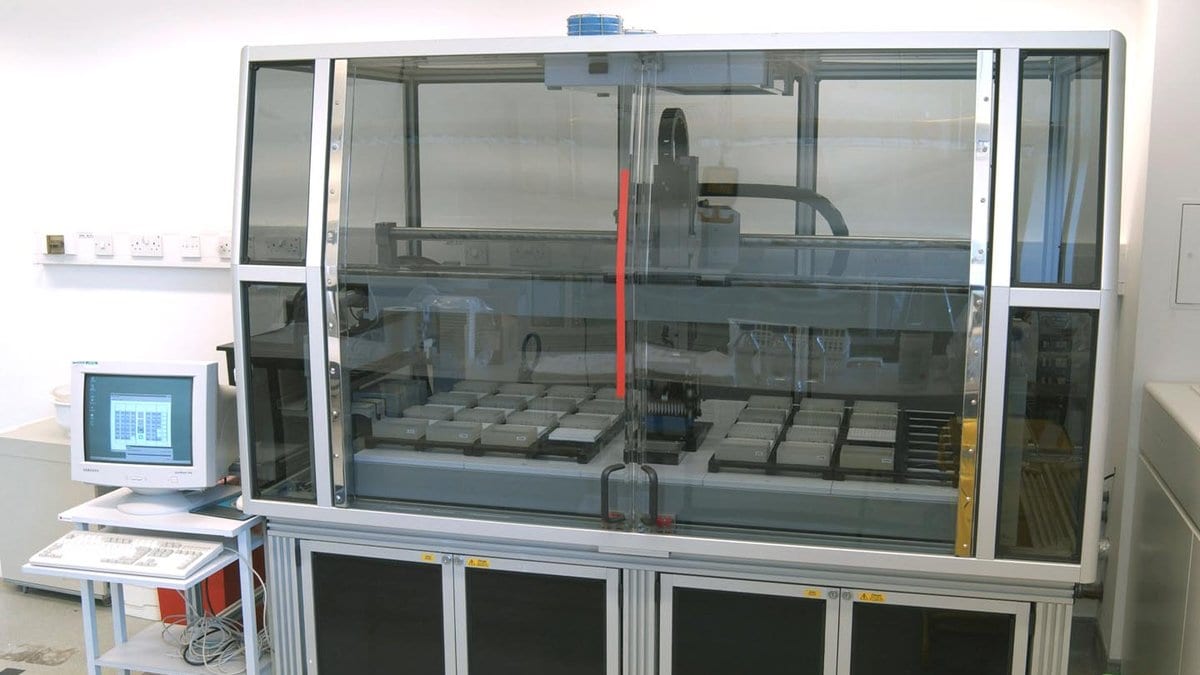
Mingyu Wu, Haibo Chen and colleagues at Shanghai Jiao Tong University reported Nov. 4, 2026, in Nature that they have built a laboratory that plans and carries out DNA experiments on its own, leaving people to refill reagents and restock labware. Their system, AutoDNA, directs over 20 types of instruments across more than 11,000 steps to make, copy, transcribe and read genetic material.
The authors write that autonomous experimental systems are emerging mostly in chemistry and materials science, where the work has one goal, a fixed routine and simple equipment. AutoDNA is built instead for experiments with several objectives at once across many kinds of instruments, and the group describes it as a blueprint toward science offered as a service.
In four applications, the group reported that AutoDNA matched the yields experts had reached by hand when building DNA with enzymes, and ran protocols concurrently with a 3.2-fold speed-up. It also completed a full cycle of writing digital data into DNA and reading it back, with the original content recovered exactly. In the fourth, the system found and confirmed a mutation that had already been detected in a clinical sample: KRAS G13D, a single change in one gene. All four are the group's own measurements of a system it built, and no independent evaluation has been published.
The code for AutoDNA is posted on GitHub, and the sequencing data from the synthesis and data-storage runs is posted at Zenodo. The work was funded in part by the National Natural Science Foundation of China and Shanghai municipal research programs.
Sources
- NaturePeer-reviewed