A New RNA Structure Model Comes With Its Training Data and Code
Researchers at the University of Science and Technology of China have released structRFM, an artificial-intelligence model for RNA that is trained on folded shape as well as sequence, and have published the training data, the trained model and the code with it.
What an RNA molecule does depends on how it folds. In a paper published Nov. 4, 2026, in Nature, Heqin Zhu, S. Kevin Zhou and their colleagues report that RNA language models have so far learned mostly from large collections of sequence, leaving that folding out, and that they built it in by feeding information about which bases stick to which into the fill-in-the-blank training these models use. The team says the open release is meant to support further work on RNA models that learn from both at once.
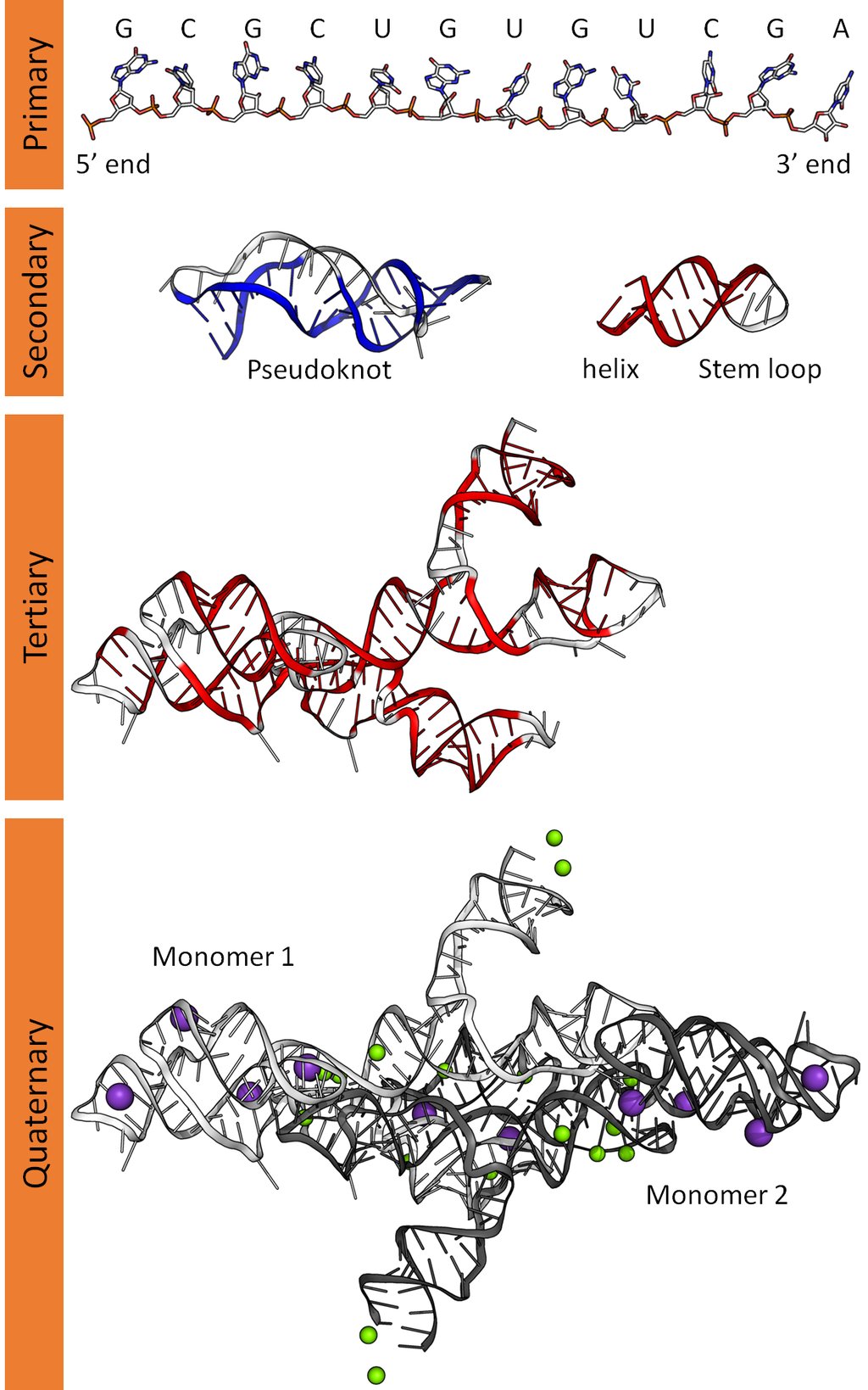
The training set holds 21 million RNA sequence-structure pairs. A second component, MUSES, pools secondary-structure predictions, meaning which bases pair with which, from several existing tools; the paper describes this pooling as a way to blunt the bias of any single predictor.
Every evaluation in the paper is the authors' own. They report that structRFM ranks highly at sorting RNAs into related families with no extra training, and that it sets what they call new benchmarks for secondary-structure prediction. A version adapted to three-dimensional shape, Zfold, performs comparably to AlphaFold3, a system for predicting the structures of biological molecules, across three test sets: CASP15-natural, CASP16 and RNA-Puzzles. That comparison is the team's own measurement, and no independent evaluation of it has been published.
The paper's data-availability statement puts the full training set on the Zenodo repository, and the pre-trained and fine-tuned model weights, the training and test sets and the source code on GitHub. The statement says no restrictions apply to the data.
The authors also report better results on tasks that predict what an RNA does, and say the model carries over to RNA families cataloged after it was trained and to long non-coding RNAs, which make no protein.
Sources
- NaturePeer-reviewed