Skip to content
See the World Through ScienceA project of ALLATRA
Source: Peer-reviewed1 source

Mirrors Could Tell a Laser Station Which Satellite It Is Tracking
Space

Republish this story

Our work is licensed under Creative Commons BY-NC 4.0. You may republish this piece for free — with credit to ALLATRA Media and a link to the original, unedited beyond length trims, and not for commercial use.

Read the full license

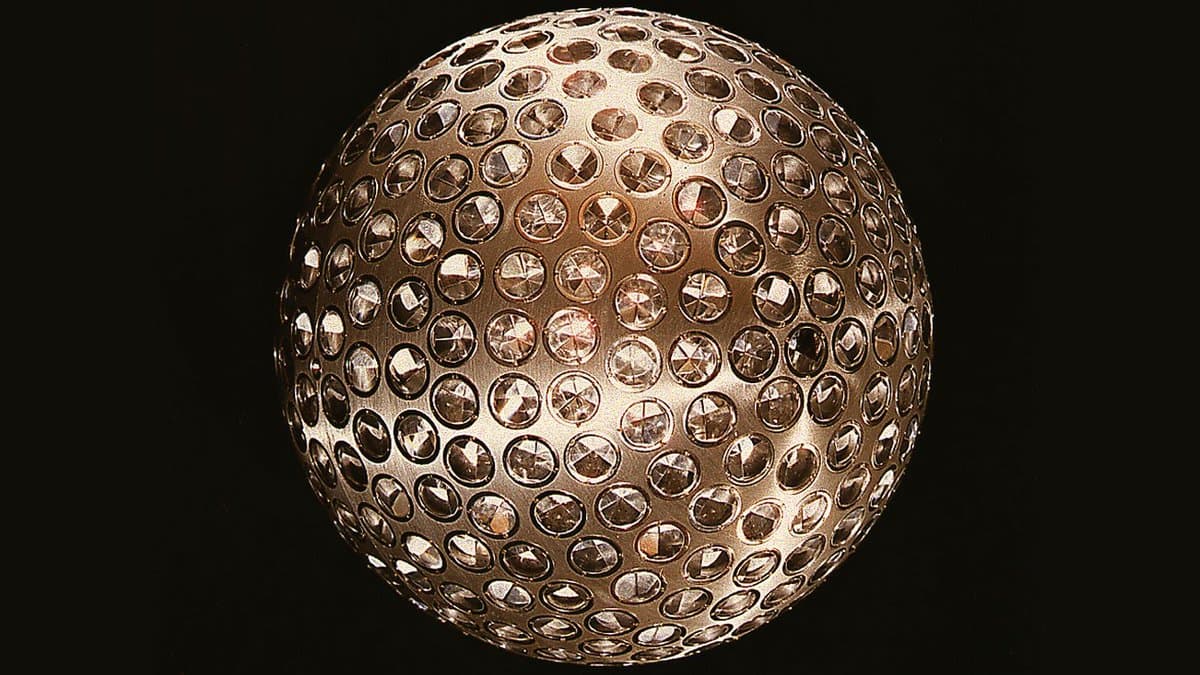
A metal sphere studded with hundreds of round corner cube reflectors, photographed against a black background.
The LAGEOS I geodetic satellite, a sphere covered in corner cube reflectors that send a laser pulse straight back toward the ground station that sent it (illustrative)."LAGEOS I Laser Geodynamics Satellite (NASA, Marshall, Archive, 1976)" by NASA's Marshall Space Flight Center, via nasa, BY-NC · CC-BY-NC-2.0

Researchers at two Chinese Academy of Sciences observatories have proposed a way for a single laser ranging station on the ground to read a satellite's identity and its orientation at the same time, with nothing aboard the spacecraft but an arrangement of passive mirrors. The work appeared Sept. 19, 2026 in the journal Communications Engineering.

The paper sets the problem in space traffic management: as satellites are built in batches and flown in dense groups, telling one from another, and knowing which way each is pointing, gets harder. Ground stations already time a laser pulse out to a satellite and back, and get the distance with high accuracy. This method would have one of those stations come away with two things a distance measurement on its own cannot give it.
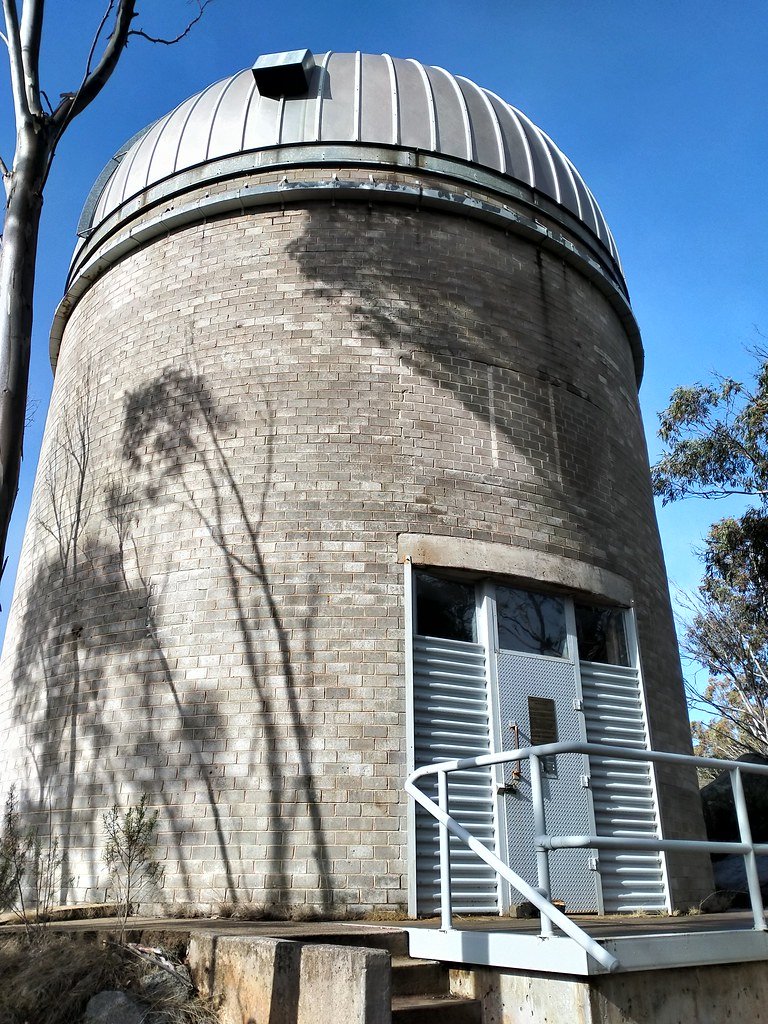
A round brick tower topped by a metal dome, the former Orroral lunar laser ranging building, seen from below against a blue sky.
The former lunar laser ranging building at Orroral, Australia. Lunar ranging works the same way as satellite ranging, off reflector arrays left on the Moon (illustrative). — "Former Orroral Lunar Laser Ranger" by SandwichCafe, via flickr, CC-BY-2.0

The idea is to make the mirrors do two jobs. Corner cube reflectors, prisms that send a beam straight back the way it came, are set out in an L, and that pattern is treated as both an identification code and a set of baselines, the fixed separations between the mirrors. Identity and orientation are then worked out from the differences between the ranges measured to each reflector. Kai Tang of the Shanghai Astronomical Observatory, Chen Song of the Purple Mountain Observatory and colleagues describe the scheme in Communications Engineering.

Theoretical analysis and numerical simulations validate the performance of the proposed L-shaped layout, the authors report, and field experiments further verify its feasibility.

Reflectors of this kind are passive and need no power of their own, which the paper credits with light weight and long life.

Sources

Spot an error?

Spot an error?

Report an error

Spotted a mistake on this page? Tell us what's wrong and our editors will take a look.

What kind of problem?

Only if you'd like us to be able to follow up. We won't use it for anything else.

We correct mistakes openly. Select any text to flag it. Fixes are logged under our Corrections Policy.

Report an error

Reporting on

Mirrors Could Tell a Laser Station Which Satellite It Is Tracking

What kind of problem?

Only if you'd like us to be able to follow up. We won't use it for anything else.

We read every report. Corrections are logged publicly.