Sweden's New Supercomputer Opens to Researchers Across Europe
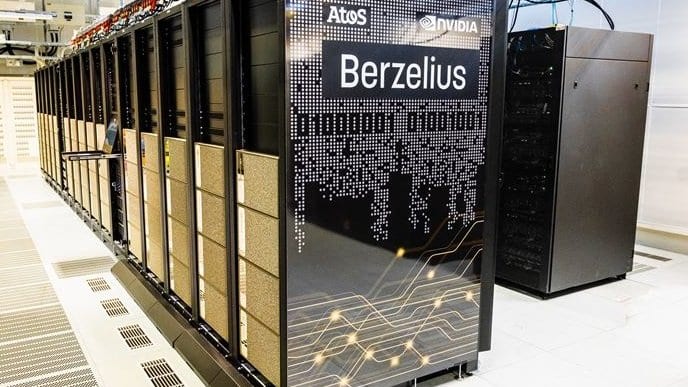
The EuroHPC Joint Undertaking and Sweden's national supercomputing organization, NAISS, formally opened a new supercomputer, Arrhenius, at Linköping University on Sept. 8. The machine is now available to users across Europe.
Researchers, companies and public-sector bodies anywhere in Europe can now apply for time on the machine through EuroHPC's regular access call, and through its benchmark and development modes. Some European users were already running work on it before the ceremony, under a separate EuroHPC call for AI in science. The JU describes the system as built for large simulations and compute-heavy AI work, and names climate modeling, materials science, life sciences and engineering as the fields it expects to serve.
Arrhenius appears 42nd on the June 2026 TOP500 list of the world's fastest computers, which is compiled outside EuroHPC. That entry lists it as an HPE system built on NVIDIA's Grace Hopper superchips and operated by EuroHPC and NAISS. The JU says the machine also sits 24th on the Green500, the companion list that ranks systems by performance per watt.
Arrhenius has an estimated total value of €68.5 million, according to the JU's announcement, and is co-funded by the Joint Undertaking through the EU's Digital Europe Programme and by the Swedish Research Council through NAISS. The contract to build it was signed with HPE in July 2025. The JU and NAISS share access to the machine in proportion to what each contributed.
The JU says it has procured 12 supercomputers across Europe to date. The new machine is named after Carl Axel Arrhenius, the Swedish chemist and geologist who discovered the mineral gadolinite.