Boston Dynamics Skipped the Pinky on Atlas' New Robot Hand
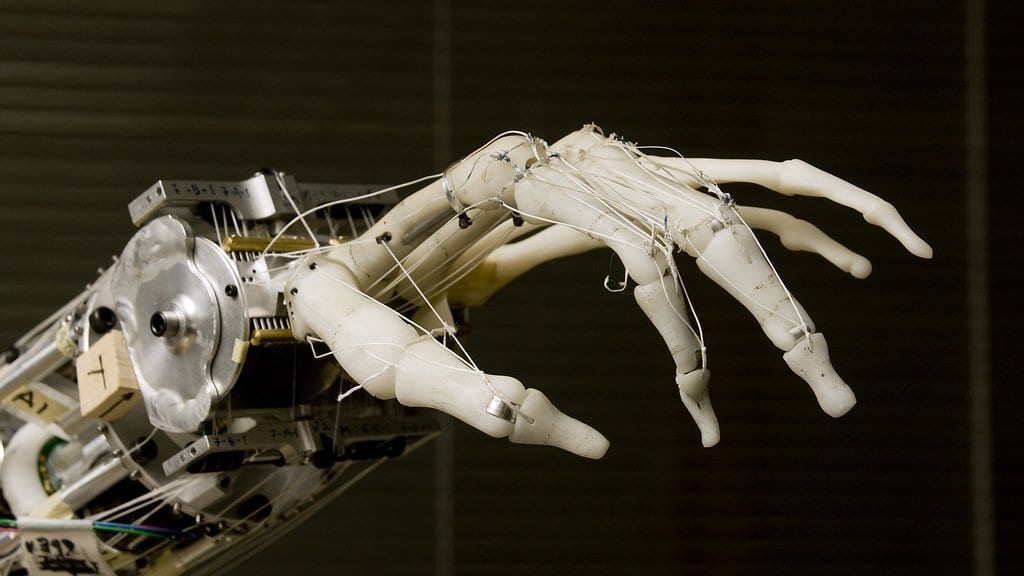
Boston Dynamics has published the design of a new hand for its Atlas humanoid robot: four fingers rather than five, and 13 degrees of freedom, or independently moving joints, up from the seven in the hand it replaces.
The company says the previous hands were built to pick up a wide variety of objects, and that this generation is built to move them around once held. It also says the hand was designed to be simulated accurately, so control policies can be trained in software before running on the robot.
In its own post, the company says four of the joints sit in an opposable thumb and three in each of the other fingers. The joints are driven directly by a single type of actuator, and the actuators are sealed, with no cables crossing a joint. Dense pressure sensors cover the fingertips and the palm. Boston Dynamics puts the hand at about the size of a large human hand and about as strong as the one it replaces, which it says can carry a loaded minifridge weighing more than 100 pounds. Those are the company's own figures, with no outside measurement.
Boston Dynamics says that is enough to turn an object over within the hand's own grip, recover a grasp that is slipping, and hold a tool while pressing its trigger. The examples it gives are drills, power torque drivers, grinders, nail guns and welding torches.
The post also accounts for the finger that is missing. The company says adding a pinky would not have been difficult, but an extra finger means three more actuators, with more cost, more volume and more that can break. It says its chief technology officer asked the team to tape a pinky to the next finger for a day and report what they could not do; the team then agreed to leave it off. In the video on the post, the old and new hands are called GR2 and GR3.