How Much of Spain's Record Flood Was the Weather Pattern, and How Much Was the Warming

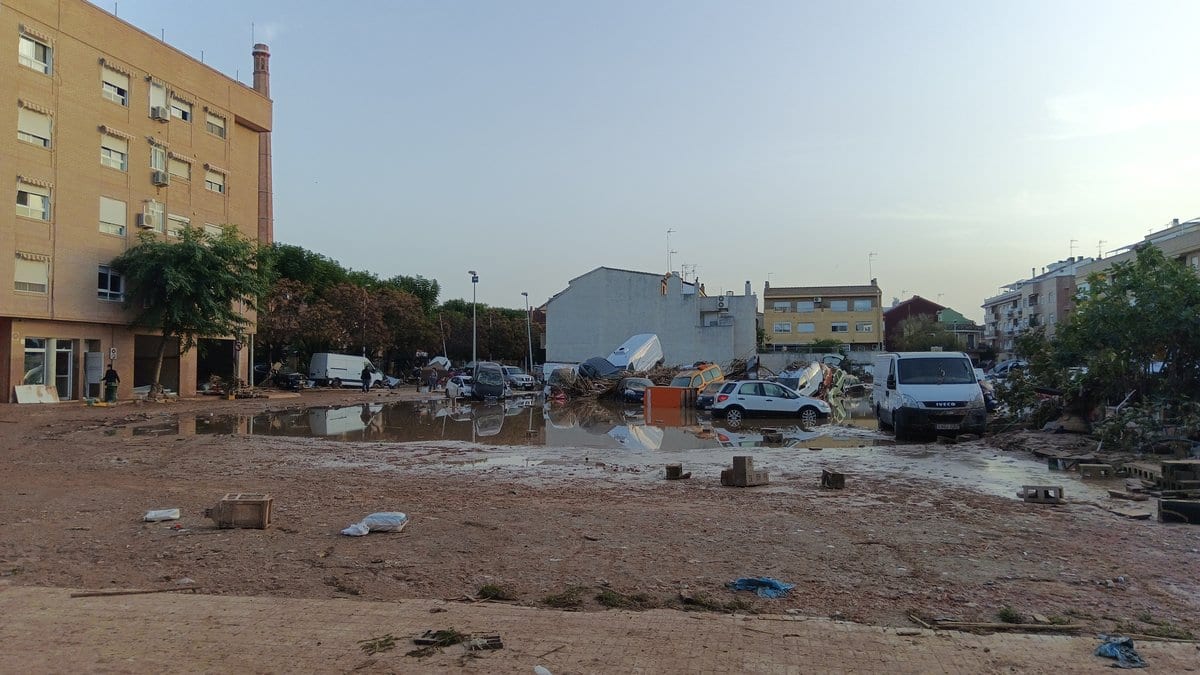
By the end of 29 October 2024, a rain gauge in the small town of Turís, inland from Valencia, had recorded something almost no one in Europe had seen: 771 millimetres of rain in twenty-four hours. Water tore through streets and underpasses across the region in one of the continent's deadliest floods in a hundred years.
The obvious question afterward was whether climate change was to blame, and rapid analyses answered it quickly: yes, a warmer atmosphere holds more moisture, and that made the rain heavier. But that answer leaves something out. Extreme weather is never only the background climate. It is also the particular arrangement of highs and lows and jets on the particular day, the roll of the atmospheric dice. Warming loads the dice. It does not choose the number.
A team led by Mengyuan Yao at the Chinese Academy of Sciences, working with colleagues at the University of Sheffield, set out to separate the two. Writing in Environmental Research Letters, published on 23 July 2026, they took an approach called circulation-conditioned attribution: rather than asking only how a warmer world shifts the odds of heavy rain in general, they conditioned their analysis on the actual weather pattern that produced the Valencia disaster, then asked how much of the rainfall that pattern alone could explain.
The pattern in question was a striking one. An exceptionally deep cut-off low sat aloft over the Iberian Peninsula, and beneath it a southeasterly jet dragged warm, moisture-laden air off the Mediterranean and slammed it against the terrain. Feeding a large ensemble of model runs and pairing them with high-resolution observations, the researchers pulled apart the two ingredients: the dynamics of that specific circulation, and the thermodynamic push of a warmer, wetter atmosphere.
Their split puts roughly a third of the peak daily rainfall down to the pre-trough dynamics, the sheer configuration of that day's weather. The remaining two-thirds trace to anthropogenic forcing and internal thermodynamic processes: the extra moisture a warmed climate makes available, wrung out by the storm. Neither piece alone made the flood. The circulation set the stage; the warming supplied much of the water.
It is worth being clear about what this study is and is not. It is a distinct piece of work from the earlier attribution research on the same flood, which used a different method to probe how storm dynamics themselves would change in a warmer world. This paper's contribution is the decomposition itself, the roughly one-third versus two-thirds accounting of a single event. That specific split is this team's own result, not yet independently reproduced by other groups, even though the broader conclusions it rests on, that warming intensified the rain, are corroborated across several independent analyses. Read it as one carefully argued estimate rather than a settled constant.
The practical message survives that caveat intact. If a meaningful share of a catastrophe like Valencia's comes from the shape of the weather pattern, then forecasting flood risk in the Mediterranean cannot lean on rising temperatures alone. It has to reckon with circulation, with where the lows park and where the jets aim, because those choices decide which places, on which days, the loaded dice come up worst.
Sources
- Environmental Research LettersPeer-reviewed