Break Plastic Into Smaller Pieces and Its Surface Gets More Reactive

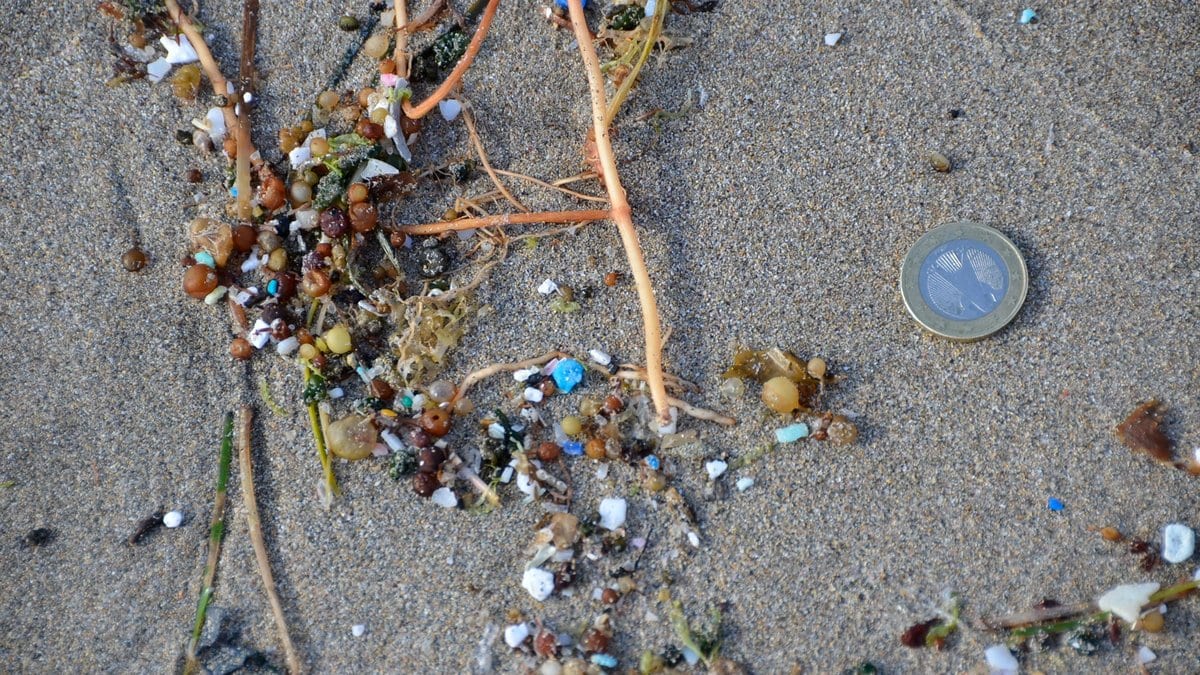
Order a microplastic from a catalog and a sphere arrives. It is smooth, round and the same material all the way around. It is also nothing like the thing it stands in for. Plastic in the world is not manufactured small. It gets there by being torn, scraped, cracked and worn, and it arrives with ragged edges and a chemistry the grinding itself has changed.
That mismatch is where Unnikrishnan Kannan, Saji George and colleagues at McGill University's Department of Food Science and Agricultural Chemistry started. Instead of buying particles, they made them. They broke down high-density polyethylene and PET mechanically, then sorted the debris into two sizes. One was ordinary microplastic, 100 to 350 micrometers across, starting at about the width of a hair. The other was under a micrometer, a thousandth of a millimeter, small enough to count as nanoplastic. Their study was published online Oct. 5, 2026, in Microplastics and Nanoplastics, with coauthors at the Manipal Institute of Applied Physics in India, the Canadian Light Source and Christ University in Bengaluru.
The smooth-bead complaint is the authors' own. In the paper's opening lines the authors write that toxicity studies have largely relied on primary particles with smooth surfaces, and that those model particles may not represent most of the plastic in food and the environment, which is the plastic people meet. That is their argument for grinding their own. What the study then measures is not a bead against a fragment. It is one size of ground fragment against another, out of the same ground material.
Fingerprinting the chemistry settled the first question: grinding did not turn one plastic into another, and each polymer kept its identity. What changed was the outside. The smaller pieces were rougher. They carried a different surface charge, held less of the ordered structure that bulk plastic has, and came out chemically patchier and more oxidized at the surface. Some of that mapping was done with X-ray microscopy at the Canadian Light Source, Canada's synchrotron.
The two plastics did not change in the same way. PET nanoplastics came out oxygen enriched, with more of the carbon-oxygen groups that mark an oxidized surface. HDPE nanoplastics stayed hydrocarbon rich. Their order was broken, their chemistry much as it was.
Then the reactive part. The team looked for free radicals with electron paramagnetic resonance, a method that detects unpaired electrons, and with chemical probes. Both said the same thing: the sub-micrometer fragments were the more active, with more radical-associated activity and more production of reactive oxygen, the unstable form that attacks other molecules. Those readings were taken on particles in solution rather than inside anything alive, and the authors tag them with the word for that: abiotic.
Two biological tests followed, and both are narrower than the phrase suggests. The smaller fragments ruptured more red blood cells. The blood came from cattle, supplied under McGill's animal use protocol, and no live animal experiment was run for the study. The fragments also raised oxidative stress inside Caco-2 cells, a human colon cancer line kept in culture. A burst membrane and raised internal stress are measures of damage and strain, not of whether a cell lived or died. Nothing in the work measures what a person is exposed to, or what it does to them.
One result pushes back on reading any of this straight across to a body. When the fragments were coated with bovine serum albumin, a protein from blood serum, the oxidation inside the cells fell. The authors take that as a sign that the surface a cell can actually reach is what drives the response. It also means a bench test on bare particles is not a prediction about particles in a protein-rich liquid, which is what blood and food both are.
The file online now is the accepted manuscript. Peer review finished on Sept. 17, 2026, and the publisher says this version will be replaced automatically by the final edited one, so details in it can still change. What the paper claims for itself sits in its title: implications for hazard potential. That is a claim about surfaces, and the authors do not stretch it into one about people. The usable thought is smaller than a scare and more awkward for the field: if the reactivity lives on the surface, the particle a laboratory picks up is already part of its answer.
Sources
- Microplastics and NanoplasticsPeer-reviewed