Why Cutting Fertiliser Didn't Clean up the Water: The Soil's Long Memory

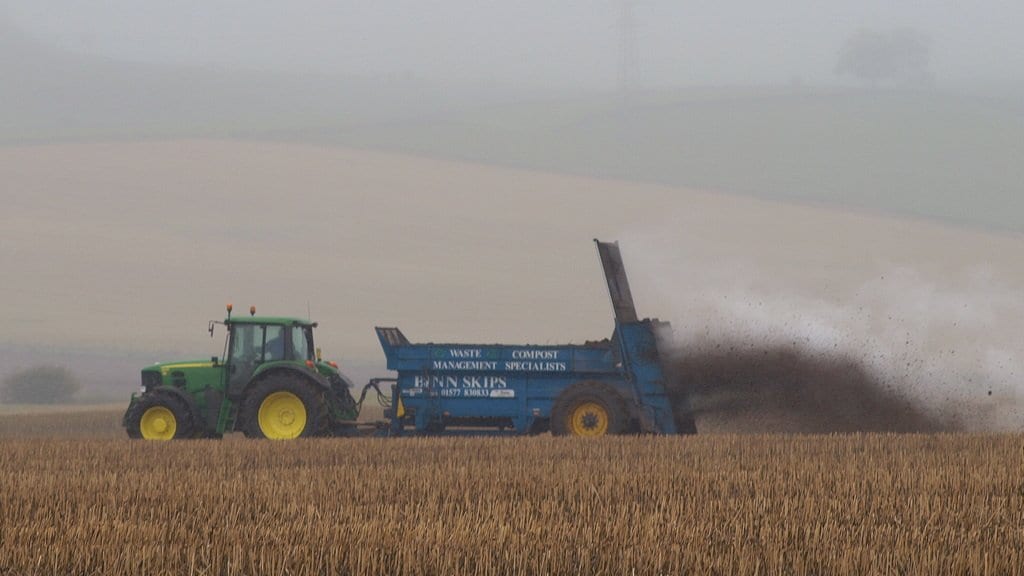
Cut the pollution at its source and the water should clean itself up. That is the logic behind decades of farm-runoff policy: reduce the fertiliser, and the nitrate that fouls groundwater should follow it down. A new study from an intensive Irish dairy farm shows why the water can refuse to cooperate: the soil itself has become the source.
Tracking a single dairy operation across 24 years, from 2001 to 2024, researchers led by Garima Lakhanpal of Ireland's Teagasc Environment Research Centre and the University of Waterloo found that after fertiliser inputs were reduced following 2010, groundwater nitrate concentrations did not keep falling. They plateaued: the recovery stalled even as the farm did the right thing. The study, in Environmental Research Letters, traces the stall to nitrogen the soil had been quietly banking for decades.
The nitrogen in the bank
Years of heavy fertiliser and manure had left an enormous store of nitrogen locked in the soil: between 3,000 and 6,600 kilograms per hectare across different parts of the farm, the depth-resolved soil sampling found. That reservoir does not sit inert. Soil microbes steadily convert stored organic nitrogen into the mineral, mobile forms that plants use and that rain washes down into the water table. The farm's grass kept growing on this internal supply (sustaining roughly 418 kilograms of nitrogen per hectare a year in production even as external inputs dropped), but the same buried reserve kept feeding nitrate into the groundwater below.
In other words, the farm turned off the tap and the leak continued, because the pipe was already full. The authors call these legacy effects: the accumulated consequences of past practice that constrain how fast the water can recover no matter what a farmer does today.
Why it matters beyond one farm
The finding is a caution for anyone expecting quick returns from tighter farm-pollution rules. Fertiliser cuts remain necessary (the study is clear on that), but they are not sufficient on their own to clean up groundwater on a policy-friendly timescale. Where soils have been loading nitrogen for a generation, the recovery trajectory is set as much by that legacy as by present-day management. Water-quality targets built on the assumption that cleaner farming yields promptly cleaner water may be setting themselves up to be missed, and blamed on the wrong cause.
A note on scope and evidence. This is a single-site study (one intensively managed dairy farm), so its precise numbers are specific to that place, not a national average. It is a peer-reviewed accepted manuscript in Environmental Research Letters, published online on 30 June 2026, with the final version of record still pending. Its value is as a detailed, long-baseline demonstration of a mechanism that applies far more widely than one farm: the reminder that soil keeps a long memory, and that cleaning up the water is a slower business than turning off the tap.
Sources
- Environmental Research LettersPeer-reviewed