The Hidden Yield Gap: How Degraded Soil Quietly Feeds Fewer People

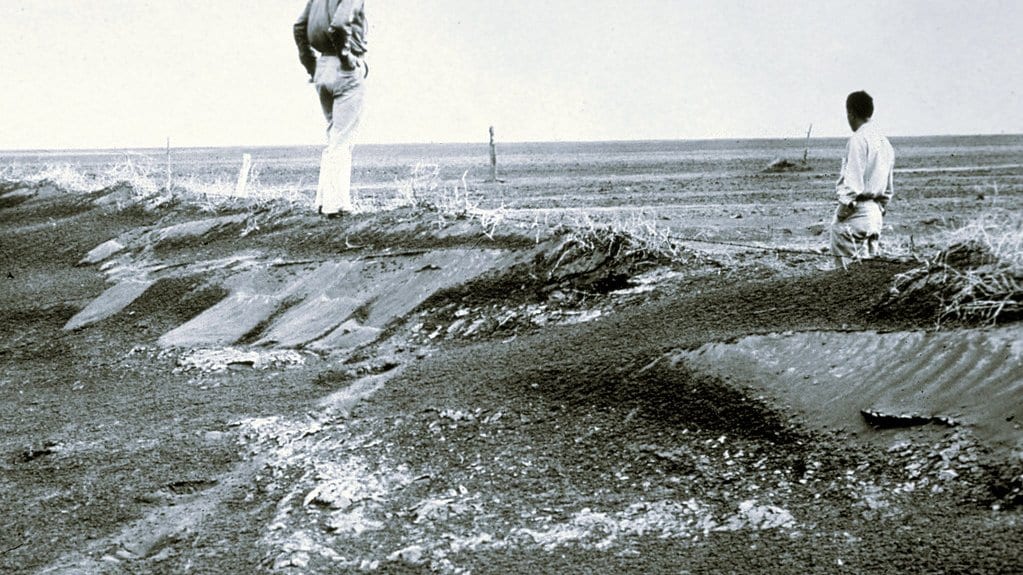
Farmers know the feeling before they can name it. A field that once filled the bins now comes up a little short, and then a little shorter, and the reason is not the weather this season or the seed. It is the ground itself, thinning out: eroded, compacted, drained of the nutrients and structure that a crop leans on. The loss is quiet. It does not arrive as a flood or a drought that makes the news. It shows up as a harvest that simply is not what it should be.
Putting a firm number on that quiet loss, at the scale of the whole planet, is what a team led by researchers at the University of Bonn set out to do. Their study, published on 22 July 2026 in Nature Food, pairs a global measure of land degradation with the "yield gap": the distance between what a field actually produces and what it could produce under good management on comparable land. The authors (Hadi, Ray, Borrelli, Gerber, Shokri, Roman and Wuepper, working with colleagues at Minnesota, Basel and TU Hamburg) asked a plain question with a hard answer: how much of the world's missing harvest can be traced to the state of the soil?
Their central finding is a ratio. A 10% increase in land degradation is associated with roughly a 2% increase in the average crop-yield gap. That may sound modest until you stack it up field by field across the world's farmland. Small, repeated shortfalls, summed over millions of hectares, become a real dent in what the planet grows.
The more hopeful half of the paper runs the ratio in reverse. If human-caused degradation were rolled back by just 10%, the authors estimate the recovered production would amount to about 52 trillion kilocalories, roughly the annual food-energy supply for 71 million people. That is not a promise of a fed world; it is an estimate of what better soil stewardship could put back on the table, expressed in the currency that matters most, which is calories people can eat.
Where do these missing harvests cluster? The paper's own named hotspots for the yield gap span a mix of rich and poor farming regions: northern and southern India, northeastern China, the U.S. Midwest, and parts of Central and South America, including northern Argentina. Notably, the estimated link between degradation and lost yield is not strongest in the poorest places. The authors find the signal is actually sharpest in high-productivity regions (the intensively farmed breadbaskets of Western Europe, North America and Southeast Asia), where land is pushed hardest and has the most to lose.
That last point is worth sitting with, because it cuts against the intuition that soil damage is mainly a story of marginal land in the poorest countries. The human toll of degradation certainly does fall heaviest on vulnerable farmers, but that framing comes from a companion effort, not this paper. In the same authors' earlier assessment for the Food and Agriculture Organization's State of Food and Agriculture 2025, released in March 2025, the team estimated that roughly 1.7 billion people live where crop yields fall short because of degradation, with the socioeconomic burden concentrated among smallholder farmers in Southern Asia and sub-Saharan Africa. Those figures describe who is most exposed. The Nature Food paper does something different: it formalizes, in peer review, the physical link between degraded ground and lost yield, and shows that on a purely agronomic measure the largest recoverable gaps sit in some of the world's most productive fields.
The evidence rests on scale. Rather than extrapolating from a handful of research plots, the analysis draws on a vast global record of cropland condition (on the order of tens of millions of satellite-based measurements) to relate degradation and yield across the planet's farmed surface. That breadth is what lets the authors move from anecdote to a mappable, statistical signal.
A few cautions belong on the reader's side of the ledger. This is a correlation-based, association-level result, not a controlled experiment: a 10% rise in degradation is associated with a 2% wider yield gap, and the recovery estimate is a modeled "on paper" figure, not a guaranteed harvest. And the two framings should not be blurred. The 1.7-billion-people count and the smallholder concentration come from the FAO work; the yield-gap ratio and the hotspot map come from Nature Food. Kept straight, they complement each other: one tells you where soil damage costs the most food, the other where it hurts the most people.
What the study offers, in the end, is a way to see the invisible. Soil degradation has long been the kind of problem that everyone agrees is serious and no one can quite put a figure on. Here is a figure: cautious, mapped, and tied to calories. Folded into it is the outline of a fix. Ten percent of the damage undone would not be nothing. Measured in meals, it would be a great deal.
Sources
- Nature FoodPeer-reviewed