A Longer Growing Season Does Not Give a Tree More Wood

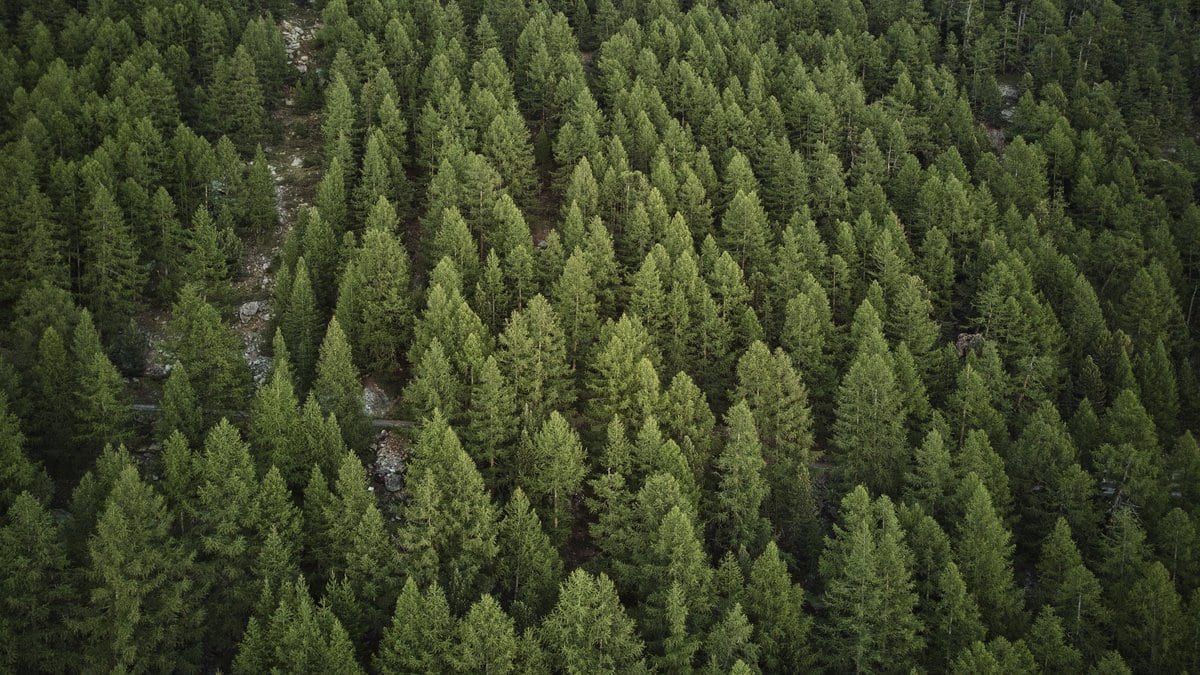
Every week through the growing season, for 20 years, researchers have walked into the Lötschental, a valley in the Swiss Alps. There they cut a pencil-thin plug of wood out of the same trees. Each plug is prepared in the laboratory, photographed under a microscope and read one cell at a time. It is a slow way to answer a question that a tree cannot be asked directly: when a warm year hands it extra days, does it end that year with more wood?
The question sits underneath a large assumption. Warming lengthens the part of the year when trees in cold and temperate places can grow, and a forest that grows for longer should lock away more carbon and slow the warming a little. A study published Sept. 10 in Science finds the extra days count for much less than what the tree does with them.
The work was led by Antoine Cabon, a forest ecologist at the Swiss Federal Research Institute WSL and at the Spanish National Research Council (CSIC), with partner institutes in several countries. Rather than measure finished tree rings at the end of the season, the team watched the wood being made. Samples taken through the season let them date each new wood cell, or xylem, as it formed: when the process started, when it stopped and how fast it ran in between. More than 50,000 wood samples from conifer forests on four continents went into the analysis, according to WSL's announcement of the study.
Across those sites the speed of wood formation varied enormously: from one new cell a month to two cells a day. Speed, not the length of the season, decided the year's total.
Temperature pulls the two apart. Warmer places do generally have longer seasons. But the speed of wood formation does not climb without limit. It peaks near a yearly average temperature of about 6 °C, an average over the whole year rather than a summer reading, and above that the cells form more slowly, most likely because there is less water to be had.
This is not a uniform loss. In the cold forests of the north, warmer conditions generally bring a longer season and faster growth together, and the trees gain on both counts. It is in warmer temperate and Mediterranean forests that the slowdown eats into the extra days, and sometimes more than cancels them.
Even that northern advantage may be temporary. "As temperatures continue to rise, even boreal forests could eventually form wood more slowly and lose the benefits of a longer growing season," Cabon says in the WSL announcement, translated here from German. That is what he expects, not something the samples show.
One thing the study does not measure is carbon. It counts cells. A cell can be built with thick walls or thin ones, so a count does not convert cleanly into a mass of wood, let alone of carbon. What it does bear on is the role forests play as carbon sinks, absorbing more carbon than they release. Patrick Fonti, a tree-ring scientist at WSL who runs the Lötschental sampling, explained in the same announcement: "Although carbon storage does not depend on xylem cells alone, slower wood formation ultimately reduces the ability of forests to act as carbon sinks."
The paper's own conclusion is carefully worded. The damage warming does to the pace of growth "can thus largely offset the benefit of longer growing season on future forest carbon storage." Can, not will. They also open by calling the evidence on this inconclusive, which is fair: earlier studies have landed on both sides, some finding the calendar sets the year's growth and some the pace.
What this one adds is reach and method: a peer-reviewed comparison that runs from the cold northern forests to dry ones at the edge of deserts, built on cells rather than on finished rings. The dataset behind it is deposited in the Dryad repository.
For anyone trying to forecast what forests will do with the warmer decades ahead, the practical message is about where to look. The length of a season is the easy half to watch. The speed at which wood appears inside a trunk is the half that has to be sampled week after week, under a microscope, in valleys like the Lötschental.
Sources
- SciencePeer-reviewed
- idw-online.de