Why "100-Year" Alpine Floods Are About to Become Far More Common

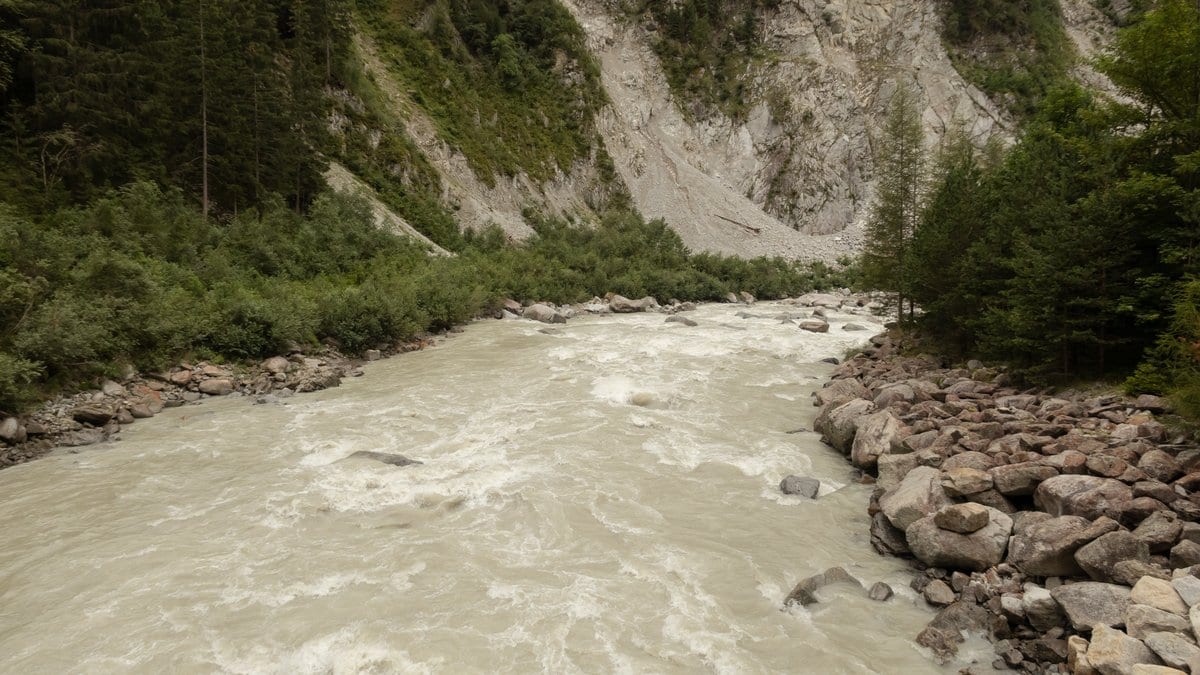
Ask how often a river floods catastrophically and the standard answer comes wrapped in a number: the 100-year flood, an event so severe it strikes, on average, once a century. It is the figure engineers build bridges around and insurers price risk against. And for the Alps, recent projections had softened it. As the climate warms, the reasoning went, spring snowpacks shrink, less meltwater surges into the rivers, and the worst floods might hold level or even ease off.
A team at the WSL Institute for Snow and Avalanche Research, part of Switzerland's Federal research institute WSL, suspected that reassurance was an artefact of the data. Past studies had judged flood risk from daily discharge records, one number for each day. But a river does not flood over a day. It floods over an afternoon, sometimes over an hour, when a downpour arrives faster than the ground and the channel can shed it. Averaged across twenty-four hours, that violent hour gets smoothed into something tamer than it was.
So the researchers, led by SLF hydrologist Paul Astagneau, went finer. They pulled hourly discharge measurements from 384 rivers across Switzerland and Austria, twenty-four readings a day where earlier work had one, and re-ran the projections. The work, commissioned by Switzerland's Federal Office for the Environment, appears in Science Advances under a title that names the problem directly: "Rethinking future flood hazard: Hourly data challenges daily flood projections in Alpine catchments."
The sharper resolution flipped the answer. Once the short, intense bursts of rain became visible in the data, they emerged as the main driver of future flooding, outweighing the easing that less snowmelt would bring. The physics behind it is well established and unforgiving: heavier rain rides along with warming, and hourly downpours intensify by roughly 7 percent for every additional degree Celsius. That is precisely the scale the daily averages were washing out.
The consequences land squarely on that familiar 100-year figure. By the end of the century, the team projects, today's 100-year Alpine flood could recur every 45 to 80 years, and the events themselves could run 7 to 15 percent more intense. As Astagneau's team frames it, the extremes shift more sharply than the moderate floods do; the rarest, most damaging events face the steepest increases. What is designed and priced today as a once-a-century catastrophe may, within many lifetimes, arrive closer to twice as often.
The underlying mechanism, where short and intense rainfall drives more frequent flooding, is independently supported by other work in the region. This includes a recent study of hourly rainfall and flood changes in Austria, confirming that the direction of Astagneau's findings is robustly backed by independent data.
The broader point does not hinge on the decimals. Study the Alps at the resolution their weather actually operates at, hour by hour rather than day by day, and a comforting forecast turns cautionary. The floods hydrologists file under "rare" look, on closer inspection, to be on their way to becoming a good deal less so.